United front urged for SE Asia's least developed areas









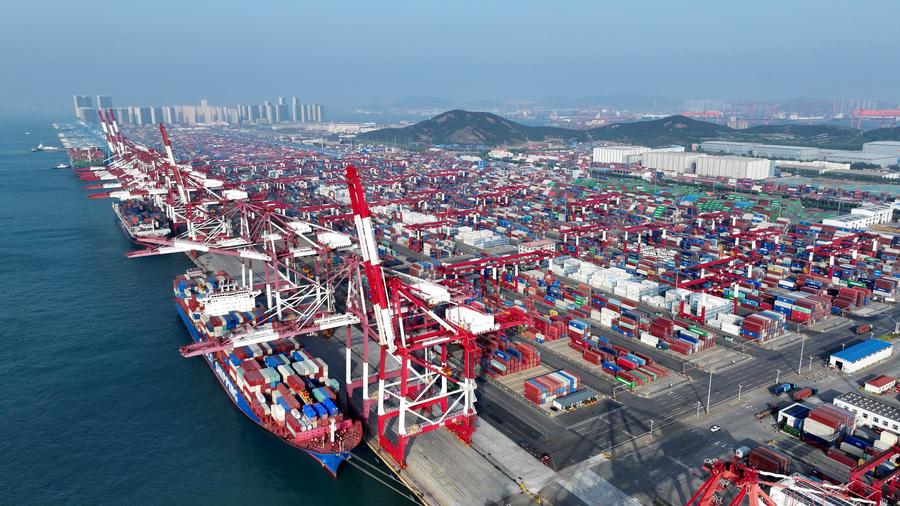
With the steep United States tariffs weighing on some of Southeast Asia's least developed areas, analysts said intra-regional trade and diversification can help mitigate the risks.
US "reciprocal tariffs" announced in April are seen as hurting the trade-dependent ASEAN region — which was slapped with some of the world's highest duties.
Hafiizh Hashim, assistant lecturer at the Academy of Brunei Studies at the University of Brunei Darussalam, said this is not just about tariffs and trade but also how the tariffs are "creating a ripple effect" on local livelihoods and communities in the Brunei Darussalam-Indonesia-Malaysia-Philippines East ASEAN Growth Area, or BIMP-EAGA.
BIMP-EAGA is a subregional economic cooperation initiative aiming to boost growth in ASEAN's less-developed areas. It encompasses Brunei; Malaysia's Sabah and Sarawak states, and the federal territory of Labuan; the Indonesian provinces of Kalimantan, Sulawesi, Maluku, and Papua; and the Philippine island of Mindanao and the province of Palawan.
"But ASEAN has always been resilient, so maybe this is a good time for ASEAN to actually widen the net (and) explore other markets," Hafiizh told China Daily.
The BIMP-EAGA held its 16th biennial summit on May 27 in conjunction with the 46th Association of Southeast Asian Nations summit in Kuala Lumpur. In a joint statement, leaders welcomed the subregion's "steadfast economic growth, which continues to thrive despite global challenges".
In 2023, BIMP-EAGA's GDP reached $401.6 billion, contributing over 18 percent to the combined GDP of its four member countries. From 2017 to 2023, inter- and extra-BIMP-EAGA exports totaled $674 billion, while foreign direct investment inflows hit $93.4 billion.
The leaders also focused on the critical importance of regional connectivity as a driver of economic growth and social inclusion across BIMP-EAGA. They welcomed the progress made under the Priority Infrastructure Projects, with 60 projects completed.
Mustafa Izzuddin, senior international affairs analyst at Solaris Strategies Singapore, said high US tariffs may have a "residual impact "on BIMP-EAGA.
However, Mustafa said regionalism is the "economic bedrock of this quadrilateral initiative", so the EAGA may be able to cushion any impact of the tariff hikes.
The BIMP-EAGA subregion is especially vulnerable as these areas are key commodity exporters — Brunei exports oil and gas, Sabah exports palm oil, timber, and seafood, and Sulawesi exports nickel.
Hafiizh said besides intra-regional trade, BIMP-EAGA can also rely on major trade partners, China and the Republic of Korea.
He said these two countries "have been the key advocates in pushing for a more equal level of growth" within BIMP-EAGA.
He noted major contributions such as Brunei's state-owned Darussalam Assets' partnership with China's Guangxi Beibu Gulf International Port Group to operate and expand Muara Port, the sultanate's only deep-water port.
China's role lauded
Chinese companies have also set up units in Sulawesi's Morowali Industrial Park, Indonesia's largest nickel production and processing site, and were involved in constructing hydroelectric-generating dams in Malaysia's Sarawak. South Korean companies, meanwhile, have also invested in Sabah and Sarawak.
BIMP-EAGA leaders said in a joint statement that they "deeply appreciate" China and the ROK for supporting the subregion.
They thanked China for providing various trainings and extending the BIMP-EAGA China Cooperation Special Loan to interested countries, and also complimented the ROK for the projects approved under the BIMP-EAGAROK Cooperation Fund.
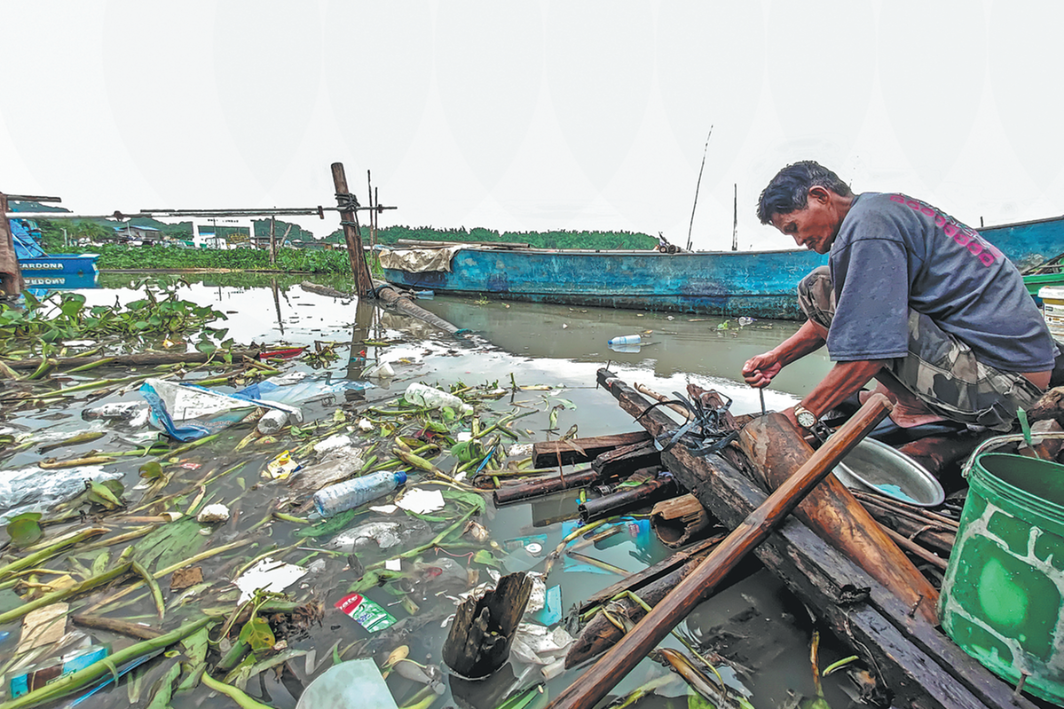
Despite gains made in the past three decades, poverty incidence remains high in the BIMP-EAGA regions in Indonesia, Malaysia, and the Philippines.
Official data from 2023 showed that in Malaysia, while national poverty incidence was 6.2 percent, poverty in the BIMP-EAGA areas — including Labuan, Sabah, and Sarawak — stood at 15.1 percent.
James Chin, a professor of Asian Studies at the University of Tasmania in Australia, said BIMP-EAGA leaders are yet to address security problems, including piracy in the Sulu Sea. Chin noted that without proper law and order, BIMP-EAGA policymakers will not be able to do development work.
Mustafa noted BIMP-EAGA's "moderate progress" in its goal to spur development in remote and less developed areas in the four ASEAN countries by boosting interconnectivity and championing sustainability.
He also said the subregion has "markedly underperformed, plausibly due to a focus on other strategic priorities of member countries and being susceptible to a turbulent global climate".
prime@chinadailyapac.com