



Snatch-and-grab does Australia no favors: China Daily editorial









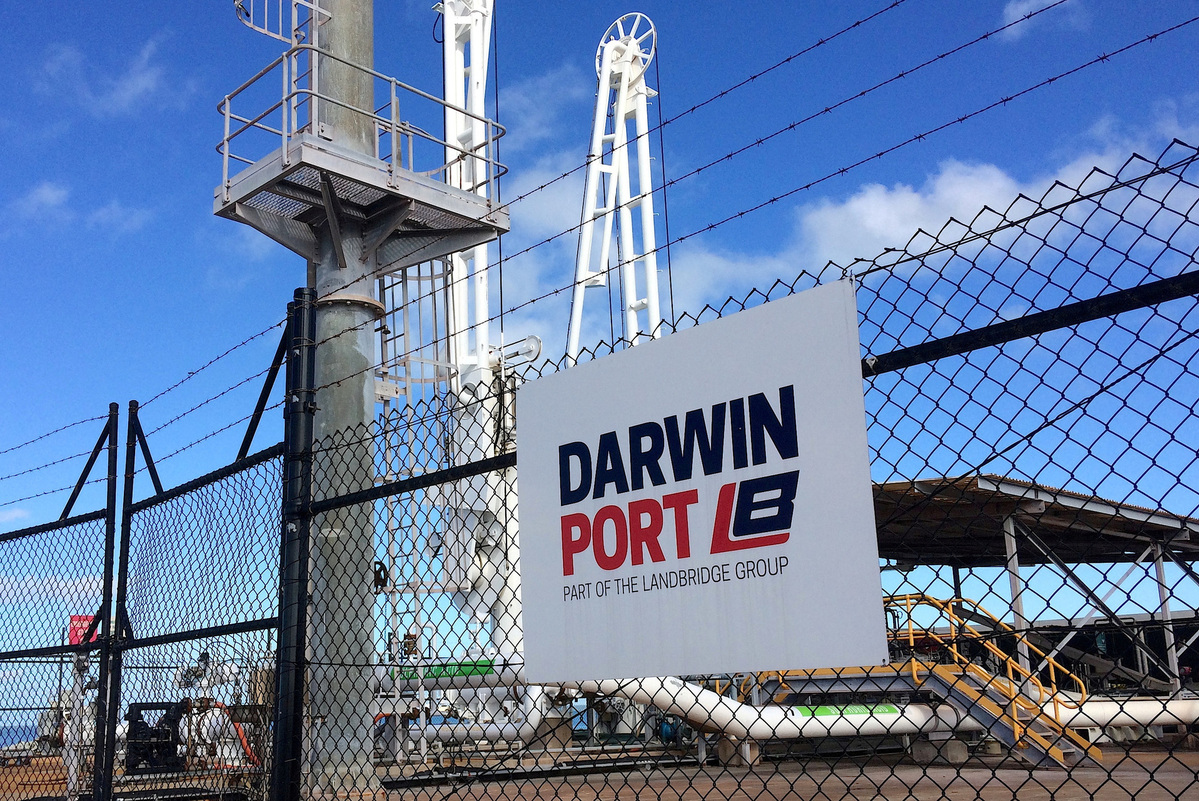
It has been a while since a US private equity firm started preparing a bid for Darwin Port in Australia, which is currently owned by a Chinese firm, Landbridge Group.
But it was not until last week that the Chinese side responded to the matter, after the Anthony Albanese government pledged during the election campaign to revoke the operating rights of the Chinese company over the Australian port, which prompted China to make clear its stance on the issue.
In an interview with Australian and Chinese media, Chinese Ambassador to Australia Xiao Qian made it clear that the Australian side should view the Darwin Port project objectively, honor its binding commitments under the contract, and respect the autonomous decisions made by businesses based on development needs.
The 99-year lease agreement between Landbridge Group and the port is a legal and binding commercial contract, which was reached a decade ago through an open and transparent bidding process, fully compliant with Australian laws and market principles. Over the past 10 years, the Chinese company has made significant investments in maintaining and building Darwin Port's infrastructure, optimizing its operations and management, and expanding its customer base. These efforts have brought remarkable improvements to the port, turning its financial situation from losses to profits and contributing positively to local economic and social development without posing any threat or risk to Australia.
Such win-win cooperation deserves encouragement, not punishment, as Xiao pointed out in the interview. "It is ethically questionable to lease the port when it was unprofitable and then seek to reclaim it once it becomes profitable."
Undoubtedly, it is the push from the US administration, taking advantage of the country's recent election, that has made the otherwise model project a "problem" for Australia. The United States is also making similar moves to control other strategically important international logistics hubs, including the ports on either side of the Panama Canal owned by a Hong Kong-based company, to try and control them for its own narrow ends.
Australia is well aware of the US' intention as well as the fact that continuing the contract with the Chinese company is not only legal, but also serves the interests of Australia. There is no reason for the Australian government to toe the US' line on Darwin Port. If Australia does try to politicize the issue by ending the lease contract and offering the port to the US company, it will only be shooting itself in the foot.
Although it is not known whether the US firm could operate the port well, it is highly likely to interfere in China's trade with Australia through the port if it controls it.
That will not only seriously damage Sino-Australian relations by ruining the tender mutual trust between Beijing and Canberra, but also show the world it is politics, not laws and legal contracts, that defines the business environment of the country. By taking this action, the Australian government risks undermining its global standing by aligning too closely with US interests, potentially facilitating policies that could disproportionately affect the operations of a thriving Chinese enterprise.
If so, China will by no means sit idle while its companies' legal rights and interests are trampled upon in such an open and humiliating manner. Although it has been China's consistent policy to maintain the healthy development of Sino-Australian economic and trade cooperation, it will never sacrifice its interests for the sake of sustaining the continuity of that policy if the other side is not genuine in its efforts to do the same.
Australia used to foot the bill for the US' China containment strategy, only to learn an expensive lesson that it cannot decouple from China. And the exploitative approach the US administration takes against Australia as well as its other trading partners in its tariff war should prompt Canberra to handle the Darwin Port issue prudently.
Since China and Australia are comprehensive strategic partners, they should foster mutual trust, as mutually beneficial cooperation aligns with their shared interests.
It is to be hoped that the Australian federal government and the government of the Northern Territory, where the port is located, will create a fair, transparent and predictable business environment for Chinese enterprises operating in Australia.





