With foot in past, museums eye future
Experts reimagine role of institution as innovators to keep up with rapidly advancing technology, Lin Qi reports.









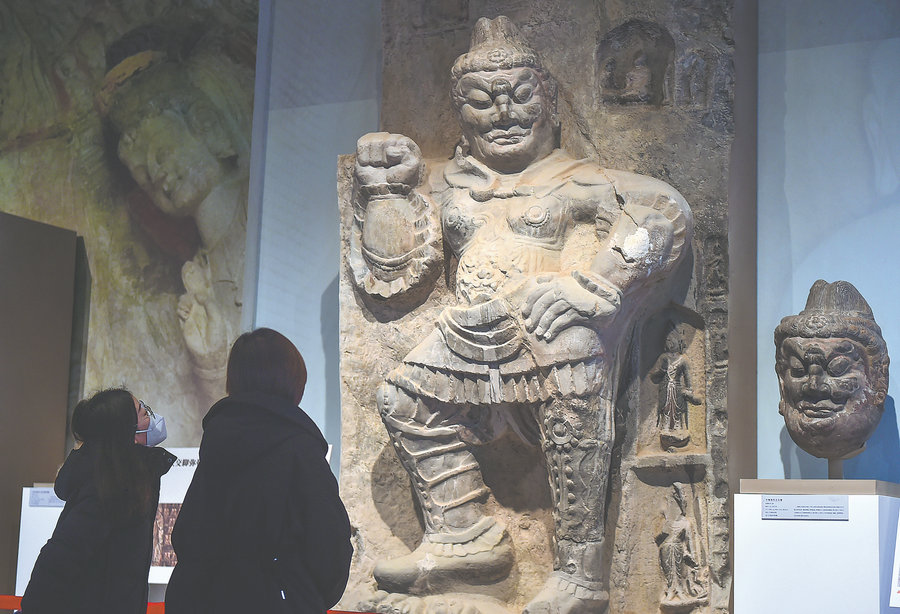
An avid calligrapher, Emperor Qianlong of the Qing Dynasty (1644-1911) left a great deal of his work in the palaces of the Forbidden City. In 1772, he ordered the construction of Fo Ri Lou, a two-story structure housing Buddhist statues.
He wrote a couplet for the building, the first line of which reads, "Birds that frequently listen to sutra chanting here will eventually become intelligent", a metaphor for the way in which arts and culture cultivate the heart and mind.
Qianlong was also known for his collection of art. Once exclusively the preserve of royals, objects from his treasure trove are now on show to the public at his former residence, today's Palace Museum, as well as at other museums in China and abroad.
These days, people are increasingly less willing to spend a long time on one thing, and so museums are being forced to reimagine their role and approach to competing for attention in this era of digital life and social networking.

International Museum Day (which falls on Sunday) has taken "the Future of Museums in Rapidly Changing Communities" as its theme this year. It seeks to chart a collective path to empower museums to thrive in the face of rapid change, by exploring how they can protect intangible heritage, harness youthful energy and adapt to new technological frontiers.
The International Council of Museums has held International Museum Day every year since 1977 to encourage people to re-envision the future of museums, especially now that they are at the forefront of change.
In the traditional sense, museums are places where objects are stored and exhibited as a means of public education, but according to Zhao Feng, a member of the Executive Board of the ICOM and head of the School of Art and Archaeology of Zhejiang University, that role has become more diverse, with museums repositioning themselves to exert an influence on the future and development of society.
He says that a major concern for those working at museums is to make good and proper use of digital technology, particularly artificial intelligence.
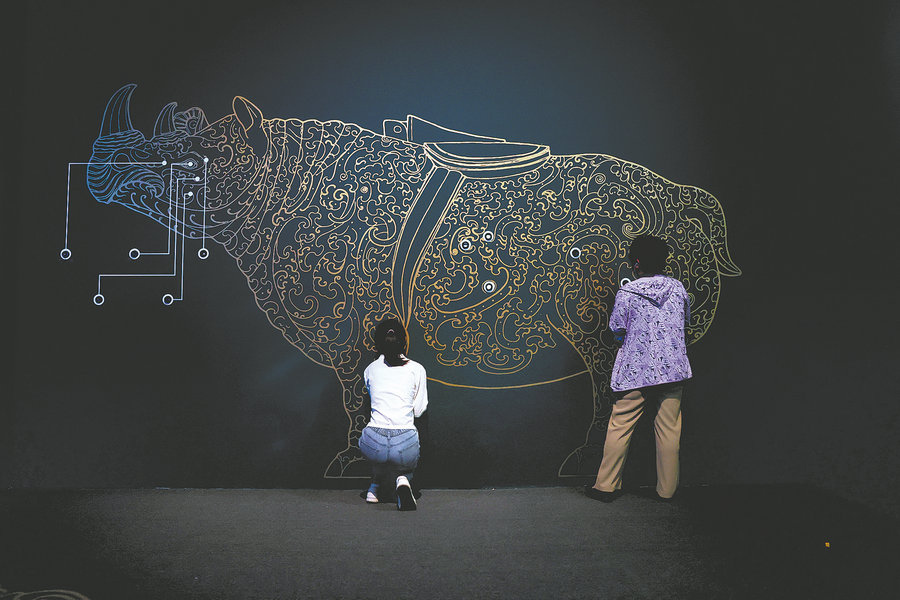
A vivid example can be seen at Beijing's National Museum of China where The Digital World of the Rhino-shaped Vessel, a long-term exhibition based around a single artifact — a bronze zun vessel dating to the Western Han Dynasty (206 BC-AD 24) — offers a rich historical and cultural presentation augmented by videos, interactive installations, high-resolution images and 3D sculptures to display the details of the vessel's embedded gold and silver work (cuojinyin) and other aesthetic features.
The exhibition has been made possible thanks to the museum's efforts to build a digital database of its collection, especially objects of importance and rarity like the rhino-shaped zun vessel.

"Since 2019, we have acquired the images of some 720,000 artifacts in the collection, and constructed 3D models of about 7,500 objects.… Since the exhibition opening (in May 2023), it had received more than 2 million visits by the end of last year, including from people working at other museums in China and abroad," says Ding Pengbo, deputy director of the National Museum of China.
She says that digitalization has also deepened cooperation between the museum and other institutions in terms of promoting exchange and learning among civilizations.