


Classical act has success in its DNA









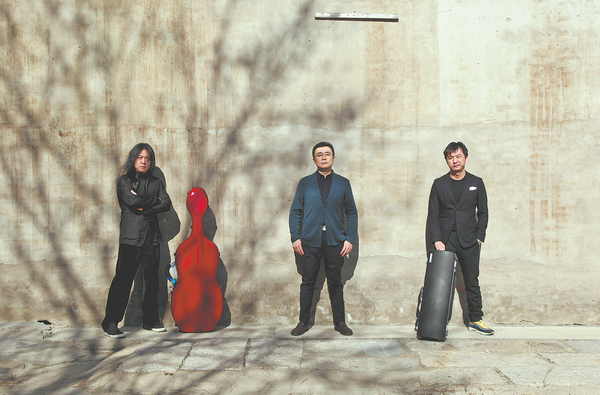
When the trio formed in 2005, they chose a name that was both playful and prophetic: DNA Trio. It wasn't about biology — it was about connection. They felt they shared a kind of musical DNA, a common artistic instinct, even though they were three distinctly different individuals.
Their shared journey traces back to childhood. In September 1988, Zhang Jialin and Song Zhao met in a classroom at the affiliated primary school of the Central Conservatory of Music in Beijing. In September 1990, Zhang Jingye entered the same school, continuing the thread of their intertwined musical paths.
In March 2005, the three came together in Room 317 of the conservatory's practice building to rehearse a Beethoven trio for the first time. On April 24,2005, they made their performance debut with Beethoven's Ghost Trio. A month later, they gave their first full concert — an all-Beethoven program at Tianjin Normal University.
"Setting aside our basic emotional bonds as classmates and friends, the most defining trait we share is a sense of grounded simplicity," says cellist Song.
"That's what allows the DNA Trio to maintain a rare kind of purity in our approach to music."
Zhang Jialin says: "If a string quartet seeks fusion, then a piano trio aspires to mutual brilliance — coexisting without sacrificing individuality. Even though we're three very different people, there's a deep resonance among us — a natural, intuitive connection that allows us to blend and create expressive, cohesive music together."
He recalls that in 2005, when the trio was founded, chamber music had yet to find a wide audience in China. Outside music conservatories, both the market and general public had limited exposure to the genre.
Striking a balance between artistic integrity and market appeal was a major challenge in their early days.
But over the past two decades, with increased government support and the rise of new concert venues, China's chamber music scene has gradually flourished.
Public understanding of the genre has transformed. More concerts are being staged, audiences are becoming more musically literate, and appreciation for classical repertoire continues to grow.
Throughout this journey, the DNA Trio has also cultivated a devoted fan base.
Many of the listeners who first discovered them in their youth have since grown up, started families, and now return to concerts with their loved ones — continuing to support the trio across generations.
Contact the writer at chennan@chinadaily.com.cn