Deep-sea vault built to capture CO2
Carbon storage project beneath South China Sea set to secure millions of tons of greenhouse gas










Homegrown technologies
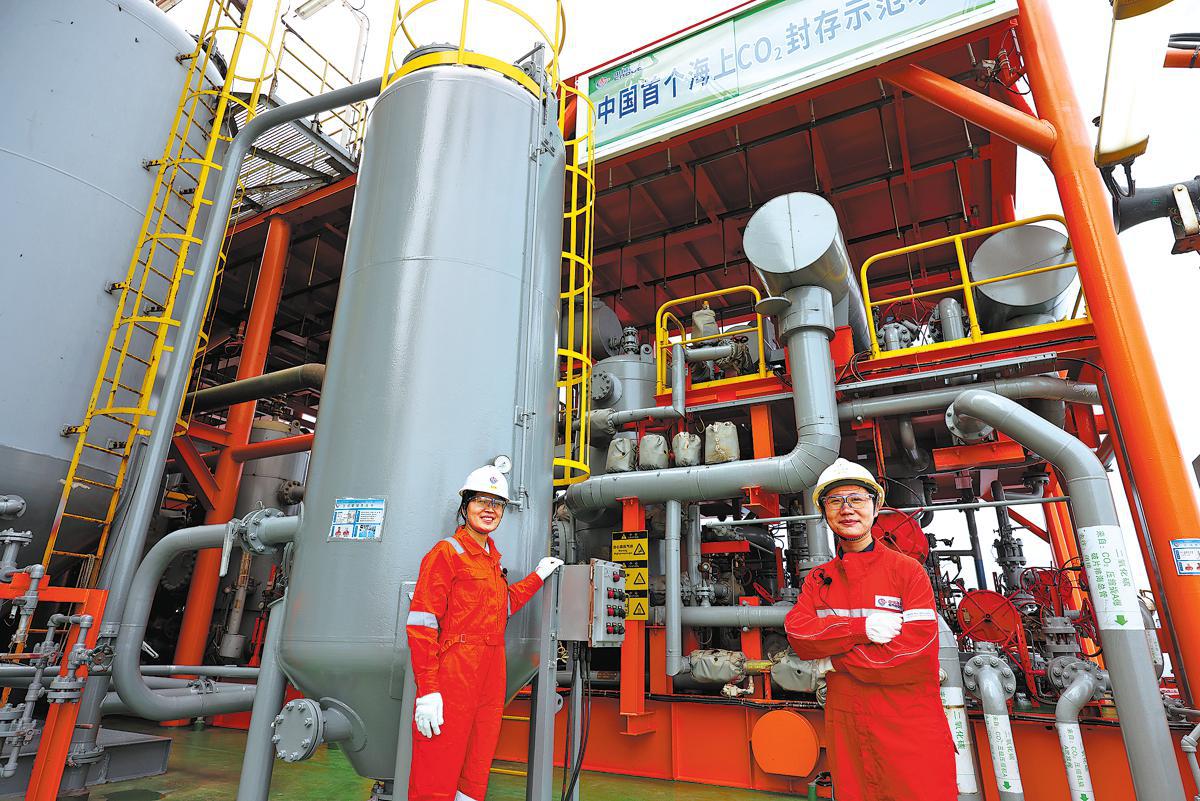
The Enping 15-1 CCUS project features seven key technologies developed domestically that enable China to independently execute such offshore operations.
Sun Xiaona, senior reservoir engineer at the Nanhai East Petroleum Research Institute of CNOOC's Shenzhen branch, said the project provides a critical technological foundation for future large-scale offshore CCUS initiatives.
These breakthroughs are pivotal for CNOOC's larger endeavor — a 10-megaton CCUS project in Daya Bay, Huizhou, Guangdong. This ambitious project is being developed in collaboration with Guangdong authorities, ExxonMobil, and Shell.
The partners signed a Memorandum of Understanding in June 2022, outlining plans to construct China's first offshore CCUS cluster, with an eventual annual sequestration capacity of 10 million tons.
The first phase of the project is designed to handle a capacity to capture up to 1 million tons of CO2 a year. The second project phase will see the capacity increased to 2 million tons annually.
The project is located in the Daya Bay Petrochemical Industrial Zone — China's top petrochemical hub for the past five years. The zone has a high concentration of refineries and chemical plants with high carbon dioxide emissions and strong decarbonization demands, making it an ideal choice for this CCUS hub.
Under the plan, industrial CO2 will be captured onshore, transported offshore, and permanently stored beneath the seabed.
China National Offshore Oil Corporation will transport and sequester captured CO2 offshore, likely in the eastern South China Sea, Xie said.
"As a State-owned enterprise, CNOOC must help the Greater Bay Area address climate change while pursuing sustainable development," she said.
However, she acknowledged there are significant challenges for the project to overcome. Offshore sequestration, while safer than land storage, requires massive investment due to the South China Sea's 100-meter average depth. Deeper waters further increase technical and financial hurdles.
"CO2 storage itself isn't profitable," Xie noted. "The economic incentive comes from finding productive uses for captured carbon."