


Vase offers a glimpse of intrigue
Chinese artwork in Bulgaria, with intricate decorations, suggests creative genius and a capacity to forge connections across borders, Yang Feiyue reports.









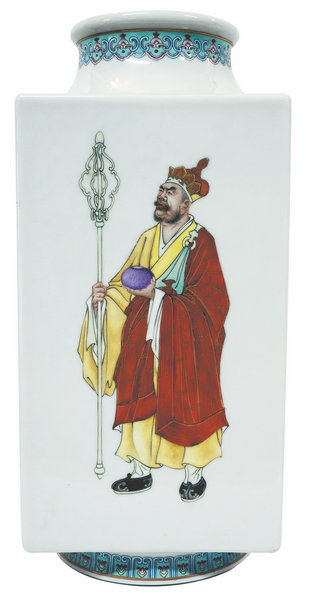
"These all represent a typical style imitating the Qing Dynasty (elements) that has continued to be produced in Jingdezhen," Lian notes.
To Lian, these details not only signal a tribute to tradition but also reveal the genius of its creator, Wang Xiliang (1922-2023), a man who bridged imperial-era artistry and innovation in modern period.
Born into a family of master artisans in Jingdezhen, Wang inherited the mastery of traditional blue-and-white techniques. Yet, he was not content to simply follow in his ancestors' footsteps. Instead, he pushed the boundaries of porcelain painting by revolutionizing the overglaze enamel technique.
"Wang committed himself to elevating porcelain painting beyond tradition, and this Bulgarian-held masterpiece shows his early brilliance," Lian says. Further insights from labels on the vase and explanations provided by the museum staff suggest that the vase may have been part of international exhibitions held across Eastern Europe.
"The 1950s was a key period in Wang Xiliang's artistic development and transformation, during which he participated in the 'Jianguo Porcelain' project led by the China National Light Industry Council," Lian says.
The Jianguo ("founding of New China") Porcelain movement played a foundational role in revitalizing the ceramic industry in the years following the founding of the People's Republic of China in 1949.
The initiative spearheaded the recovery of major kiln sites, such as those in Jingdezhen, and aimed to reclaim China's global reputation in porcelain art.
Preceding this national campaign were the Export Exhibition Porcelains, which embodied China's early efforts to initiate a cultural renaissance on the world stage through art and diplomacy.
"This vase may be the first identified example of Export Exhibition Porcelains in Central and Eastern Europe, which was a tangible witness to cultural diplomacy among the socialist countries," Lian says.
These export pieces were deliberately dispersed globally, making intact discoveries exceptionally rare, he emphasizes.
It was during this transformative period that Wang began experimenting with new techniques in sketching, coloring, and life drawing, often guided by seasoned artists of the era. He merged traditional Chinese themes with contemporary forms, drawing on observational sketching to produce works rich in emotion and visual dynamism.