



Quake-hit Myanmar could do with aid much more than tariffs right now









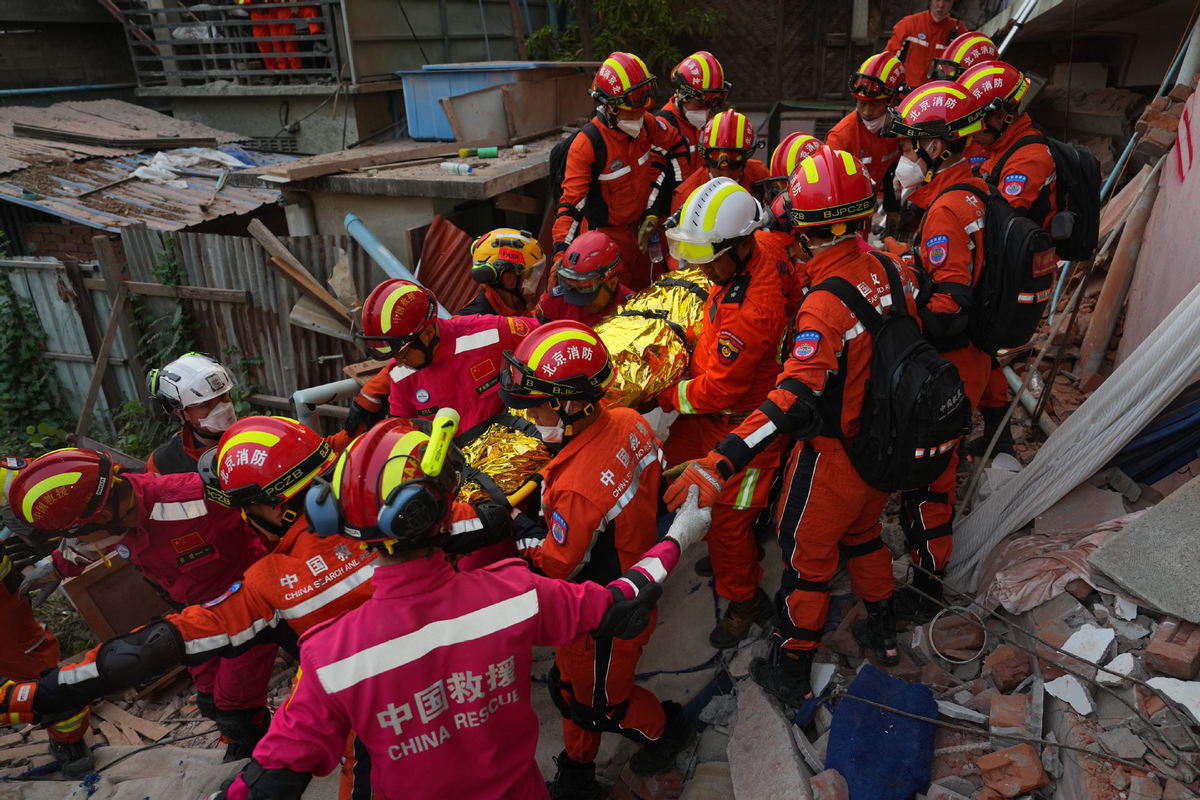
Rescue teams from China, India, and other nations are mobilizing assistance to help quake-hit Myanmar, while the European Union has launched its Humanitarian Air Bridge program, delivering 80 metric tons of emergency supplies. In contrast, the United States Agency for International Development sent a three-member delegation to evaluate the devastation wrought by a magnitude 7.9 earthquake that hit Myanmar on March 28.
If that wasn't dismal enough, according to an April 5 Reuters report, the three USAID personnel received termination notices upon their arrival in Myanmar, following a decision taken during an April 4 all-hands meeting.
Though their formal termination won't take effect until maybe months later, the psychological toll this will have on the people working amid the rubble is immeasurable. As told by former senior USAID official Marcia Wong to Reuters, "This team is working incredibly hard, focused on getting humanitarian aid to those in need. To get news of your imminent termination — how can that not be demoralizing?"
This callous treatment, coupled with Washington's failure to channelize any substantive aid, reveals the US' disturbing indifference to international humanitarian obligations. For the US administration, assisting disaster victims clearly ranks lowest among its priorities.
Soon after the quake that claimed more than 3,500 lives as of Monday, the US administration had pledged $9 million in aid; which now remains conspicuously unfulfilled. Instead, the White House has stuck to and prioritized the draconian "reciprocal tariffs" it unleashed last week against over 180 economies, including some of the world's most vulnerable ones.
The policy's cruel irony is most starkly evident in Myanmar's case. At a time when search teams are still recovering bodies there, the US administration has imposed a crushing 44 percent tariff hike.
Worse still, Myanmar is on the UN-designated list of Least Developed Countries together with Cambodia and Laos, which have been slapped even steeper tariff rates of 49 percent and 48 percent respectively.
This punitive approach goes against established economic norms. Modern trade theory emphasizes mutual prosperity through complementary specialization, but the US administration has deliberately inverted this paradigm to follow a 19th century mercantilist worldview that treats developing nations not as partners, but as resources that can be exploited.
The people of Myanmar are in immediate need of health personnel and equipment, shelter and clean water systems, reconstruction funding and debt relief, and technical assistance for infrastructure repair. Instead, what it has received from the US is punitive tariffs and canceled aid programs. This dissonance between stated "American values" and actual policy reveals profound institutional hypocrisy.
The human cost of this regressive agenda is painfully clear in Myanmar today. While survivors dig through rubble with their bare hands, awaiting clean water and medical supplies, there are additional economic burdens to be borne. More than US policy failure, this amounts to moral abdication.
Geopolitical analysts recognize deeper stratagems at work. The tariff onslaught functions as a crude compliance mechanism, testing Southeast Asian nations' willingness to submit to Washington's economic and security dictates. This heavy-handed approach, reminiscent of colonial-era gunboat diplomacy, has no place in 21st century international relations.
The Myanmar earthquake is but only one of the challenges facing mankind today, besides which there is climate change and global instability. Employing a zero-sum game mentality while tackling these issues will only leave all nations poorer and less secure.
For now, the people of Myanmar continue their desperate struggle for survival. Their resilience deserves more than empty rhetoric and economic punishment. They have every right to expect substantive assistance from the international community, the US included.





