


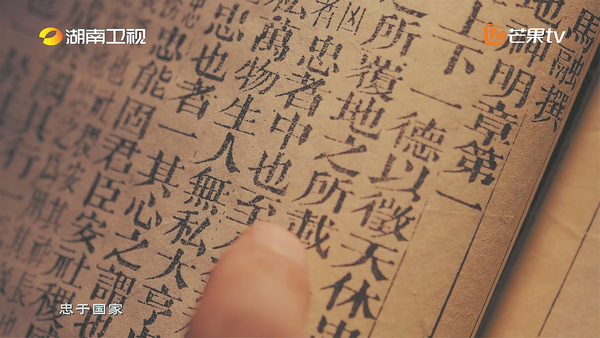
The Chinese term guanzhen refers to the moral principles and behavioral guidelines of ancient Chinese officials that emphasize integrity, impartiality, diligence and care for the people, an outline used to govern justly and responsibly for societal benefit.
The earliest recorded and enduring examples of these guidelines date back to the Spring and Autumn Period (770-476 BC).
A recently aired documentary on Mango TV delves into this ancient wisdom, using historical books and records to explore the origins, evolution and lasting influence of classic guanzhen principles, particularly highlighting how this ancient wisdom continues to shape China's modern governance.
The seven-episode series focuses on major themes as loyalty, fairness, integrity, trustworthiness, frugality, wise associations and moral integrity.
"These themes not only embody the core principles of governance and public service in China but also resonate strongly with the value systems of modern society," says Wang Binren, the documentary's producer.
By blending historical narratives, interviews with descendants of key figures, and insights from historians, the documentary aims to show viewers the enduring wisdom of ancient texts.
For instance, the episode themed on frugality begins with the story of general Tao Kan (259-334). Tao collected wood shavings produced during lumber processing and spread them on snowy paths to prevent slipping.
By transforming seemingly useless items into something practical, Tao demonstrated his wisdom in frugality.
His historical anecdote is linked to the modern concept of "cost reduction and improving efficiency", resonating with today's audience. By bridging ancient wisdom with contemporary themes, viewers can appreciate the relevance of traditional values in modern life.
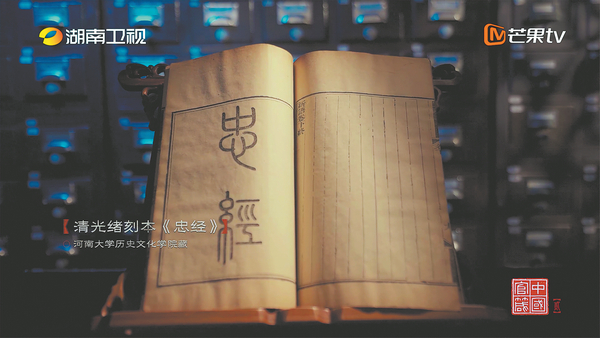
The documentary employs cutting-edge virtual shooting technologies using native 4K ultra-high definition for a seamless production process. It has enhanced the viewing experience with superior image and sound quality, blending on-location footage with reenactments, which vividly narrate the stories.
For the virtual shoot, three grand scenes were meticulously prepared — a battlefield teeming with soldiers and horses, the royal palace, and a snowy street from the Eastern Jin Dynasty (317-420). Despite tight deadlines and budget constraints, the production team leveraged cutting-edge technologies to achieve historical accuracy and filming requirements of 4K 50fps (frames per second), according to Li Daping, director of Mango TV's virtual reality department.
"By employing crowd modeling, AIGC model generation, 3D scanning, and rendering optimizations, we created lifelike virtual environments. These advancements allowed for precise scene control and immersive historical recreations, ensuring a high-quality viewing experience," Li says, adding that the technical team played a pivotal role in designing scenes, art direction, and planning lighting and cinematography for the documentary.
Wang Jie, a professor with the Party School of the CPC Central Committee, comments that this documentary revives ancient codes of conduct by exploring hidden historical details from classical texts and presenting them digitally.
"It bridges traditional values with modern society, making the ancient culture of clean governance more accessible and relatable to a broader audience. By doing so, it ensures that these cultural values are shared widely and endure for generations," Wang says.
xingwen@chinadaily.com.cn





