



Guizhou mountain recognized by IUCN for conservation efforts









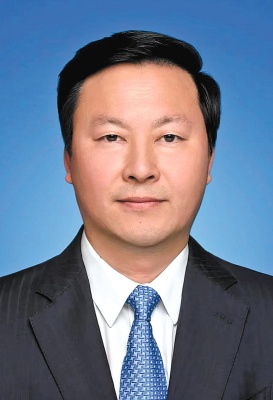
Fanjing Mountain in Tongren, Guizhou province, has been added to the green list of the International Union for Conservation of Nature, with Mayor Mu Rongkun calling it a testament to the city's success in balancing conservation and tourism.
The green list is a global program established by the IUCN to promote biodiversity conservation based on natural protected areas.
"The charm of Fanjing Mountain lies in its unique ecological resources," said Mu, who is also a deputy to the 14th National People's Congress. "Careful conservation of its biodiversity is essential."
Ninety-seven percent of the mountain, the highest peak in the Wuling Mountain Range at 2,572 meters, is covered by woodland, making it Guizhou's premier tourist destination.
Dubbed an "ecological island", it is home to 7,925 species — some of which are rare or endangered — and is the sole habitat of the Guizhou golden snub-nosed monkey and the Fanjing fir. It was inscribed as a UNESCO World Heritage Site in 2018 and named one of the world's most exciting destinations by National Geographic in 2019.
Last year, the scenic area set a record for visitation, welcoming more than 1.97 million visits, a 7.18 percent increase year-on-year, with international visits surging by 119.55 percent.
Tourism now accounts for 28 percent of Tongren's GDP, directly creating 230,000 jobs and generating more than 40 billion yuan ($5.5 billion) across the agriculture, manufacturing and service sectors, Mu said. The green economy has grown to comprise 51.2 percent of the overall economy.
The growth has also boosted rural per capita disposable income by 7.5 percent, the fastest in the province.
With Guizhou now included in China's visa-free transit policy that allows foreign visitors to stay for up to 240 hours, Mu said the city plans to enhance supporting facilities for international tourists, streamline entry payment processes and improve connectivity with dedicated tourist flight routes.
Mu said inbound tourism is expected to grow this year, with international visits projected to increase by more than 40 percent.
He also outlined plans to integrate sports events, wellness tourism and matcha products into Fanjing Mountain's development. The area will continue hosting marathons, make use of its abundant hot springs and ecological resources to expand the wellness industry, and develop a matcha-themed town at its base.
Facing the pressure of rising tourism and environmental preservation, Mu said the mountain's development must adhere to the principle of "ecology first, protection prioritized", while also innovating to enhance visitors' experiences.
To protect the ecosystem, the local government has implemented comprehensive conservation measures and enacted legislation, he said.
A big data management platform provides round-the-clock intelligent fire detection in key areas, and 46.82 million yuan has been invested in infrastructure projects to protect the Guizhou golden snub-nose monkey and other wildlife.
"We have enacted local regulations for the protection of Fanjing Mountain and the Jinjiang River Basin, established a coordinated law enforcement and resource management mechanism, set up a Fanjing Mountain police district and an ecological court, and are intensifying efforts against environmental crimes," Mu said.
The scenic area has also introduced a reservation system with capacity control and timed entry. An ecological observation station for Guizhou golden snub-nosed monkeys welcomes an average of 800 visitors daily.
Beyond its natural wonders, the region is home to 28 ethnic groups, including the Tujia, Dong, Qiang, Miao and Gelao. In nearby traditional villages such as Yunshe, Zhaisha, Taohuayuan and Qishuping, locals preserve their cultural heritages.
"In these villages, visitors can immerse themselves in the slow pace of life at the foot of Fanjing Mountain and experience traditional arts such as Tujia lantern-making and ritual dances," Mu said.
Liu Boqian contributed to this story.
yangjun@chinadaily.com.cn


- China launches immersive aerospace science center for kids, teenagers in Beijing
- Intl delegates inspired by Shanghai robotics innovation, human connection
- Art project fuses technology, imagination at Guangdong Museum of Art
- Zhejiang to focus on innovation, role as 'strategic pivot'
- Revision to Prison Law helps protect inmate rights
- Book acts as window on China's governance philosophy





