



Essential to allocate resources to less developed regions









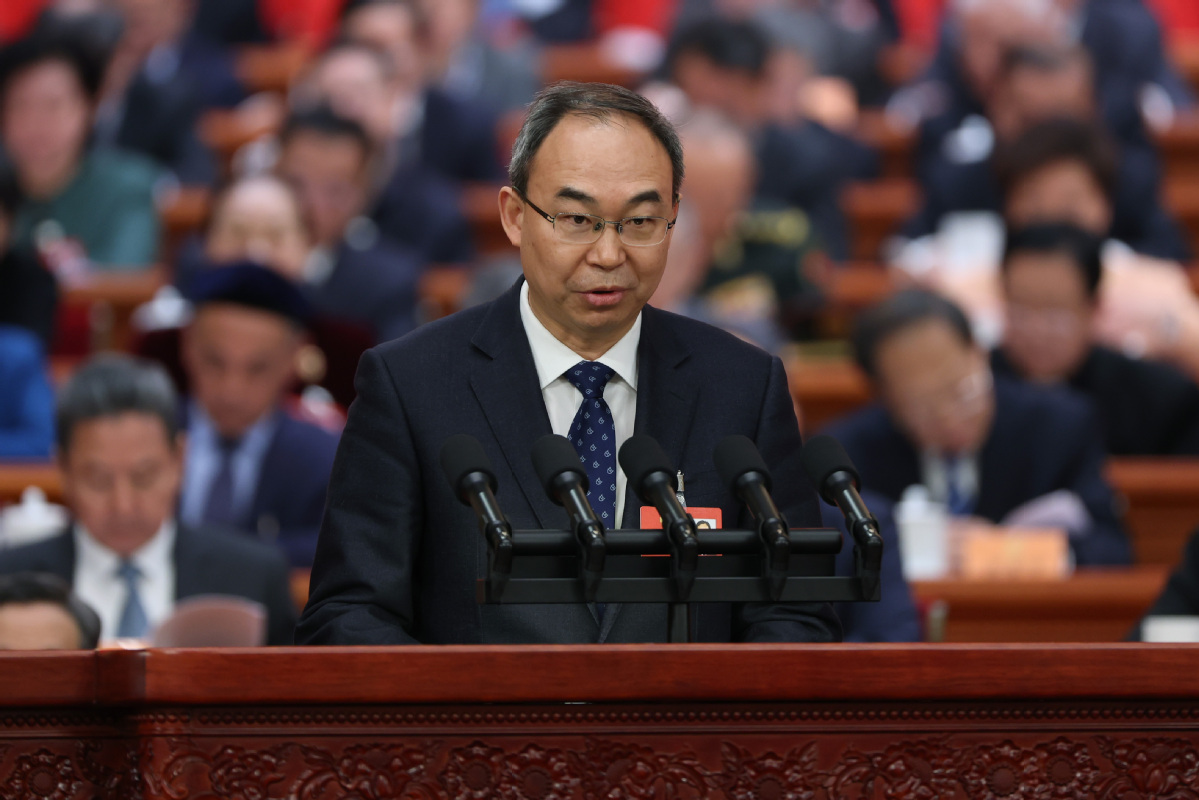
To expand access to high-quality medical services, it is essential to allocate resources to less developed regions and strengthen collaborations between major hospitals and county-level institutions, a national political adviser said on Friday.
China has established 13 national medical centers dedicated to handling rare and severe cases of specific disease categories, along with 125 regional medical centers aimed at providing quality healthcare services closer to patients' homes.
Additionally, nearly 2,190 county-level medical partnerships have been formed to address the increasing healthcare needs of the population, said Wang Jun, a member of the National Committee of the 14th Chinese People's Political Consultative Conference and president of Peking University People's Hospital.
Wang, who is also an academician at the Chinese Academy of Engineering, made the remarks at a group meeting of the CPPCC National Committee on Friday.
However, Wang highlighted persisting issues such as inadequate designs and low efficiency of some medical partnerships.
Wang suggested directing more resources toward the central and western regions, northeastern provinces, as well as cities with a large population.
"Regional medical centers should ramp up efforts in enhancing disciplines with high patient transfer rates so as to build trust among patients and reduce interprovincial hospital visits," he said.
China currently has 1,795 tertiary-level hospitals — the highest tier in a three-tier hospital system — and 2,846 county-level medical facilities, according to Wang.
Following the principles of voluntary participation, spatial adjacency and prioritizing the central and western regions, Wang suggested pairing each top-tier hospital with one to three county-level counterparts and dispatching more medical professionals from larger institutions to improve medical expertise at grassroots level.
He also suggested local governments concentrate on establishing systems to ensure scientific and efficient management of regional medical centers, including providing subsidies for medical experts deployed to smaller hospitals and supporting the training of young healthcare professionals.


- 5.4-magnitude quake hits waters off China's Taiwan region: CENC
- Shanghai offers 'first cup of coffee' to May Day arrivals at airports
- China predicts over 344m inter-regional trips on first day of holiday
- Enjoy the May Day holiday
- Authorities warn of heavy rain, flood risks during holiday
- China launches immersive aerospace science center for kids, teenagers in Beijing





