



The two sessions reflect the strength of whole-process people's democracy: China Daily editorial









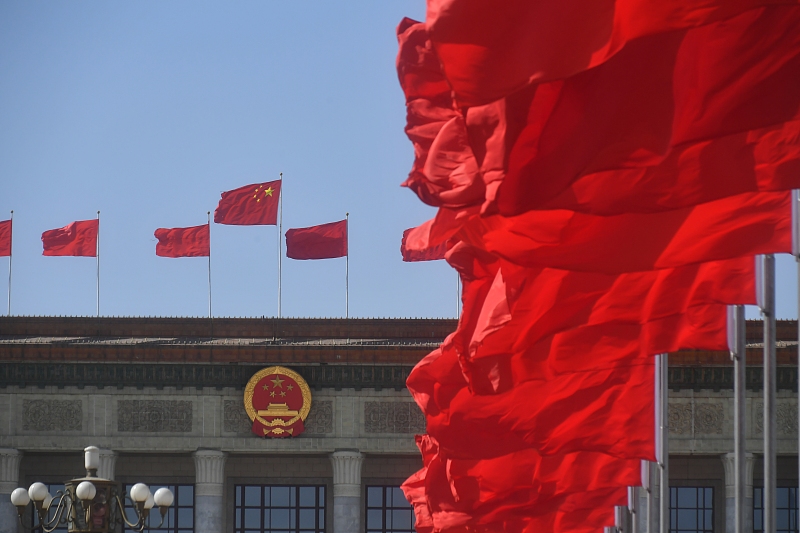
The two sessions stand as a cornerstone of China's political calendar. The meetings of the National People's Congress, China's highest legislative body, and the National Committee of the Chinese People's Political Consultative Conference, the country's top political advisory body, far from being ceremonial are a dynamic platform for the setting of national priorities, addressing key issues, and showcasing China's political system and governance.
The sessions are a key occasion for deputies to the NPC and members of the CPPCC National Committee to review and air their views on what the country has achieved in the past year, as well as put forward proposals or motions on economic development, social policies, legislative changes, and national strategies. These proposals are not abstract ideas but are rooted in the realities of Chinese society, reflecting the voices and concerns of people from all walks of life.
As a country ruled by the Communist Party of China with the support of multiple non-Communist political parties, the NPC and the CPPCC play a pivotal role in the country's whole-process people's democracy, which emphasizes democratic principles and practices throughout all stages of governance, decision-making, and public participation. Unlike traditional models of democracy that focus primarily on periodic elections as the main mechanism for citizen participation, China's whole-process people's democracy seeks to embed democratic values in every aspect of governance, from policy formulation to implementation and evaluation.
The deputies to the NPC and members of the CPPCC National Committee play important roles in this distinctive political advancement that guarantees people have extensive rights to be informed, to participate, to express and to supervise. They are entrusted with the duty of delving deep into what ordinary people think of a particular policy the central authorities have implemented and shoulder the responsibility of collecting public opinions about how a local government has implemented the policies of the central government. To this end, the CPPCC organizes various types of fact-finding missions, during which members will visit particular enterprises or local regions or even a particular project to find out how things are going and what problems need to be addressed.
Deputies to the NPC are representatives of various sectors of Chinese society. That migrant workers were elected as deputies to the NPC in 2018 speaks volumes about what the NPC has done to make the congress a platform in which all strata of society can voice their concerns.
The strength of this participatory, responsive and inclusive form of governance finds expression in the resilience of the Chinese economy, the growth of which stood at 5 percent in 2024 despite the sluggishness of global economic development, as well as the uncertainties of the international situation.
The proposals and motions from both the NPC deputies and members of the CPPCC National Committee provide the CPC Central Committee with enough reference to target and fine tune the decisions they make. The centralized and unified leadership of the CPC Central Committee make it possible for decisions to be made as soon as possible without hesitance or any foot-dragging owing to the lack of consensus.
Both the supervision within the Party and oversight by the NPC and the CPPCC National Committee provide a guarantee for targeted economic policies that can make a difference to the growth of the economy.
The trade-in policy is a typical example. It is designed to stimulate domestic consumption. During the Spring Festival period in early February, the sales revenue of motor vehicles, home appliances, and digital products such as mobile phones reached 31 billion yuan ($4.26 billion) within eight days, thanks to the trade-in policy.
China's total GDP surpassed 134 trillion yuan in 2024, which would not have been achieved without the timely adjustment of policies, which is an inherent strength of the country's political system.
In a world grappling with uncertainty, China's whole-process people's democracy offers a compelling example of how participatory, responsive, and inclusive governance can deliver stability and growth. The two sessions are a vivid demonstration of this system in action, ensuring that the voices of the people are heard and that their aspirations are translated into reality.





