New quality productive forces an innovative engine









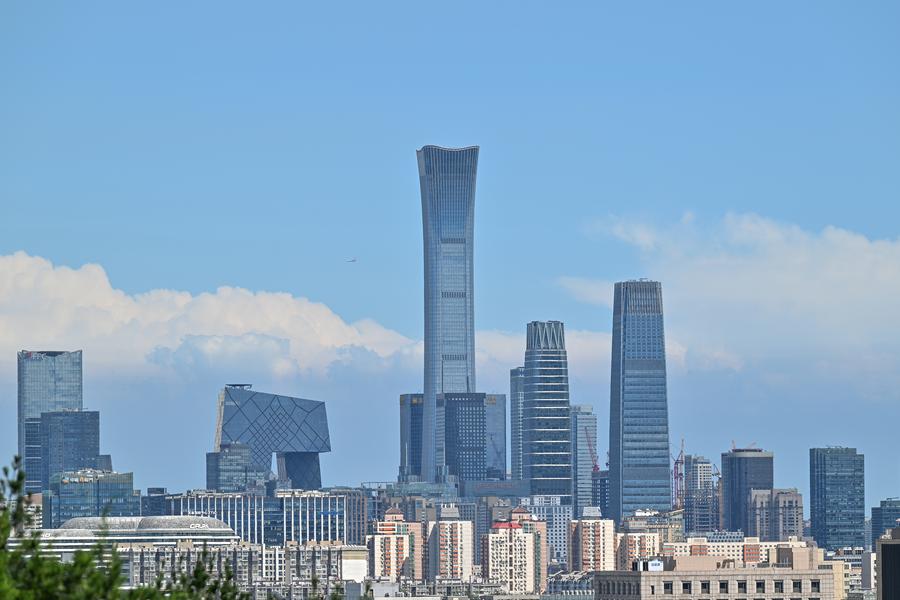
New quality productive forces are advanced productive forces, a new development paradigm, which help improve labor resources and objectives, leading to improved total factor productivity.
President Xi Jinping proposed the concept of new quality productive forces in 2023, and the third plenary session of the 20th Communist Party of China Central Committee in July 2024 has been promoting the development of new quality productive forces based on local conditions to propel high-quality development.
Developing new quality productive forces is crucial for achieving high-quality development, and promoting high-level openness can cultivate a favorable environment for the development of new quality productive forces. Technological innovation will lead the construction of a modern industrial system, which is key to transitioning from traditional to modern productivity systems and advancing new quality productive forces. And promoting higher-level openness will break down the barriers hindering the flow of innovative elements across the world, and unleash domestic innovation potential.
China should therefore take measures to create a high-level international business environment conducive to attracting global elements of new quality productive forces. To create such an environment, China can learn from high-standard global market rules, regulations and management, and expand institutional openness.
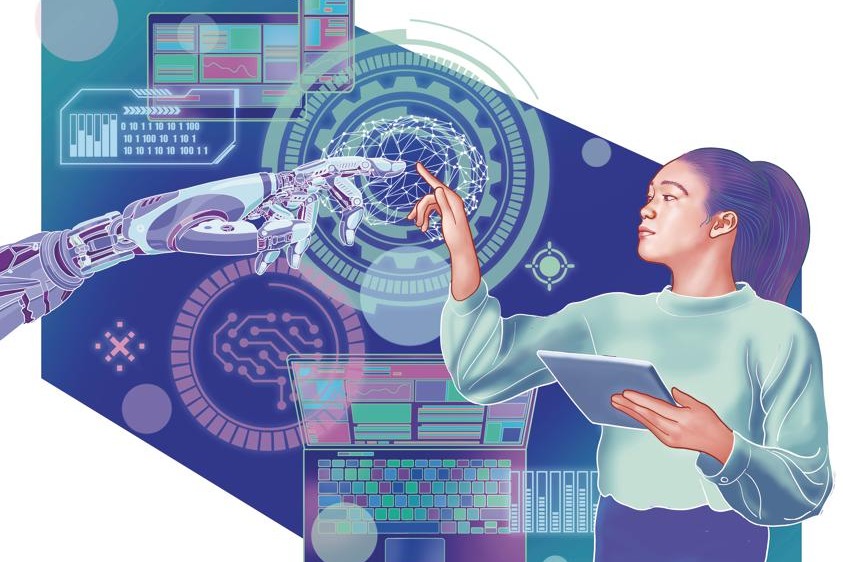
To build a transparent, stable and predictable institutional environment, China needs to strengthen regulations for intellectual property rights (IPR) protection, industry subsidies, environmental standards, labor protection, government procurement, e-commerce and finance. To attract talents, it should explore high-level talent immigration systems across the world, especially in sectors such as artificial intelligence (AI) and quantum computing. And to advance technology, it should build world-class element transaction markets, and develop new transaction methods for fields such as intellectual property securitization, technology options trading, and carbon financial derivatives.
Besides, China can attract global digital giants if it embraces high-standard trade rules such as those adopted by the Comprehensive and Progressive Agreement for Trans-Pacific Partnership and the Digital Economy Partnership Agreement — which is a pioneer in digital economy and green trade — strengthen IPR protection, establish world-class IPR dispute resolution centers, update the negative list for cross-border service trade, expand pilot projects for service sector openness, and encourage professional global services.
The country also needs to build a modern industrial system by strengthening cooperation in global industry and supply chains, while leveraging its massive market demand, rich application scenarios, and comprehensive industrial supporting systems to provide favorable conditions for transnational corporations' innovative development.
Besides, China ought to expand openness and reduce limits to foreign investment in manufacturing, high-tech, energy conservation and environmental protection, and introduce pilot programs for foreign investment in the fields of technological innovation, foreign-funded R&D centers, and foreign companies in national projects. It needs to improve foreign investment management and protection mechanisms to strengthen cooperation in global industry and supply chains.
Through a "scientist-entrepreneur-investor" development mechanism, and a global innovation chain of "research-tech breakthroughs-achievements-tech finance", the country can create a new global industrial ecology.
On the research front, China should build a global research and development network by attracting multinational companies to invest or set up shop in the country, and support local companies to participate in global science projects to keep up with the global development of cutting-edge technology. Also, it should push forward the high-quality development of the Belt and Road Initiative, and science and technology innovation action plans under the Belt and Road framework, in order to promote multilateral and multi-industrial cooperation in green development, the digital economy, AI, energy, taxation, finance and disaster mitigation.
Moreover, pilot free trade zones should be developed into high-standard global networks that can pioneer exploratory hubs of innovation, and become testing grounds for high-standard rules. The experiences gathered by the pilot free trade zones will help maintain the multilateral trading system centered on the World Trade Organization, and enable China to proactively participate in the reform of the global economic governance system, and provide more global public goods.
Equally importantly, the country should establish "data customs" in pilot free trade zones, facilitate cross-border data flow, and explore the possibility of setting up data authenticity rights, trading and security systems. By leveraging platforms such as the Hainan Free Trade Port and the Guangdong-Hong Kong-Macao Greater Bay Area, China should develop offshore R&D and manufacturing. And by strengthening Hong Kong's position as a global financial, shipping and logistics hub, and supporting Hong Kong and Macao to attract global high-end talents, it can enable the two cities to play a greater role in advancing new quality productive forces.
In short, the orderly and free flow of international and domestic elements, more efficient resource allocation, and deeper integration of domestic and international markets can create a conducive global environment for the development of new quality productive forces, raise total factor productivity, and inject new momentum into the Chinese economy.
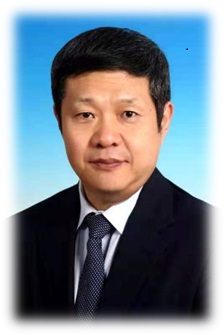
The author is a professor at the School of Economics, University of Chinese Academy of Social Sciences, and a CPPCC National Committee member. The views don't necessarily represent those of China Daily.
If you have a specific expertise, or would like to share your thought about our stories, then send us your writings at opinion@chinadaily.com.cn, and comment@chinadaily.com.cn.