



Cooperation in Shenzhen Bay protects mangroves









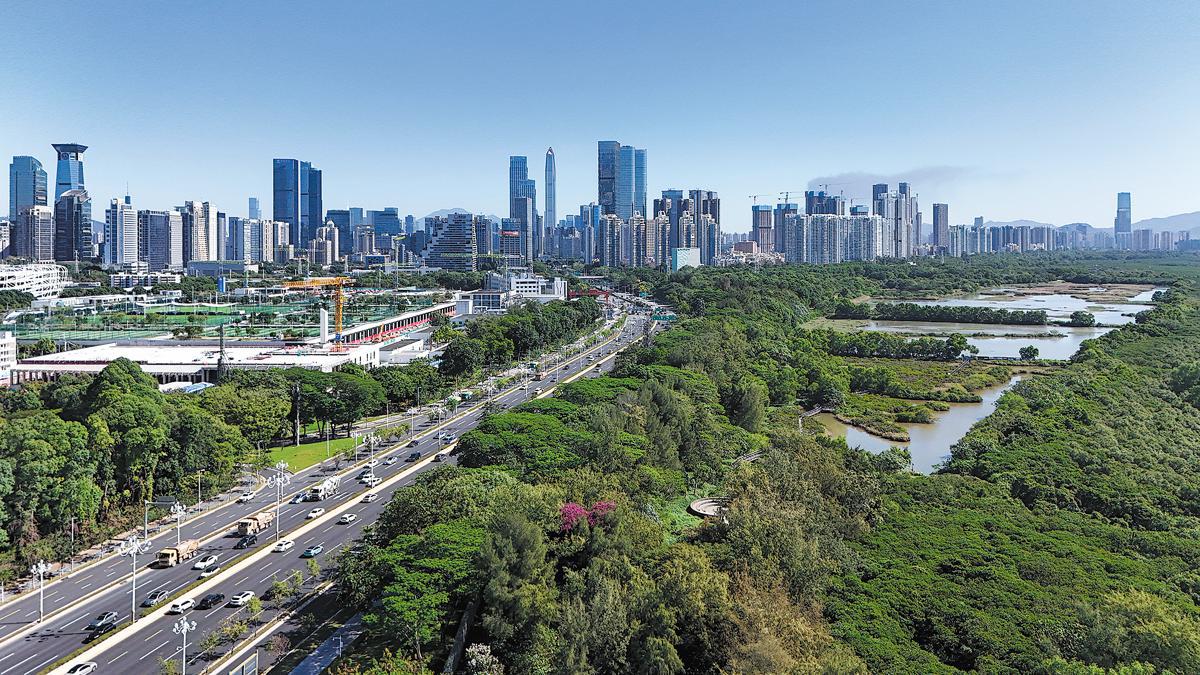
SHENZHEN/HONG KONG — In the heart of the Guangdong-Hong Kong-Macao Greater Bay Area, the Guangdong Neilingding Futian National Nature Reserve in Shenzhen and the Mai Po Nature Reserve in Hong Kong are safeguarding a vibrant expanse of mangrove wetlands.
These wetlands are ecologically linked and integral parts of the Shenzhen Bay (Deep Bay) wetland ecosystem, which serves as an internationally important overwintering site and a refueling station for waterbirds on the East Asian-Australasian Flyway.
In February 2023, Shenzhen's Futian mangrove was designated as Wetlands of International Importance under the Ramsar Convention on Wetlands. Together with the wetlands in Mai Po Nature Reserve, Shenzhen Bay hosts two internationally recognized wetlands of significance. "Mangroves are unique and complex ecosystems, often difficult for humans to access. Their dense canopy provides birds with quiet, undisturbed nesting areas, making them vital for wildlife conservation," said Simon Wong, a nature officer at the agriculture, fisheries and conservation department of the Hong Kong Special Administrative Region government.
Moreover, mangroves protect coastlines from erosion caused by waves, while the mudflats they create harbor countless species and provide feeding and resting areas for migratory waterbirds, benefiting surrounding regions and other habitats, he added.
According to Wong, mangroves and their soil have a high capacity for carbon sequestration through microbial activity, helping reduce atmospheric carbon dioxide concentrations and mitigating the impacts of global warming and climate change. Mangroves can also accumulate heavy metals, help degrade organic pollutants and exhibit an ecological interception effect against microplastics.
The wetlands of the nature reserves in Futian and Mai Po not only support rich biodiversity but also symbolize the close cooperation between Shenzhen and Hong Kong.

Since signing a framework arrangement for the conservation of Shenzhen Bay (Deep Bay) wetlands in January 2023, the cities have made significant strides in protecting mangroves and wetlands, offering valuable insights into the harmonious coexistence between humans and nature.
"Shenzhen Bay is essentially a shared wetland between Shenzhen and Hong Kong. Despite being separated by the Shenzhen River, the ecosystem remains consistent," said Yang Qiong, a senior engineer at Guangdong Neilingding Futian National Nature Reserve Administration Bureau.
According to the framework, Shenzhen and Hong Kong will collaborate on ecological baseline and waterbird monitoring, synchronized surveys of black-faced spoonbills and their habitats, protection of inter-tidal mudflat and native mangrove species, capacity building and experience sharing on environmental education.
The framework provides an excellent platform for sharing experiences in the wetland ecosystem conservation in Shenzhen Bay, said Toby Cheung, a nature reserve officer at the agriculture, fisheries and conservation department.
The black-faced spoonbill, a key species in Shenzhen Bay and one of species under the State class-one protection, has experienced a notably impressive recovery in its population. From fewer than 300 individuals in the 1990s to 6,988 counted globally in January last year, the growth of the black-faced spoonbill highlights the importance of Shenzhen Bay's role in their protection.
To accurately monitor the numbers and distribution of black-faced spoonbills, Shenzhen and Hong Kong conduct synchronized surveys and smart monitoring. Monthly data reflects the status of the black-faced spoonbill throughout Shenzhen Bay, while annual global surveys provide a comprehensive understanding of population dynamics. High-definition cameras and AI-powered bird recognition technology are used for automated monitoring, particularly at night, reducing disturbance to resting birds.
On Nov 6, an agreement was signed to establish the International Mangrove Center in Shenzhen, marking the beginning of deeper cross-border efforts in wetland conservation. The cities aim to build a more comprehensive protection model and extend their cooperation to global mangrove conservation.
Yang said that Shenzhen and Hong Kong can learn from each other's experiences and practices in wetland protection and implement joint conservation efforts. She noted that the model in Shenzhen Bay could serve as an example for exchange at the International Mangrove Center.
Xinhua


- Visit to Eswatini in spite of earthquake at home criticized
- Xinjiang entrepreneur Li Jianhong killed in Albanian car crash
- Henan massage parlor fire claims six lives
- Hebei hosts unmanned flight contest
- Artisans from across Hebei gather for woodblock contest
- Intl influencers applaud Hefei's innovation prowess





