'Ne Zha 2' reflects rise of Chinese animation









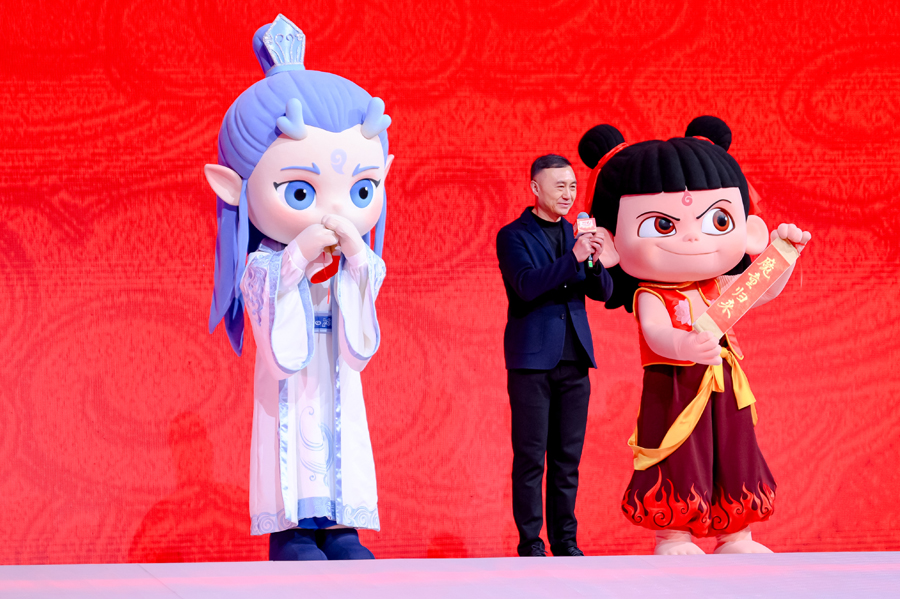
The sequel to the blockbuster Chinese animation film, Ne Zha, was released on Chinese New Year's day, that is, Jan 29. It seems the general audience can't get enough of Ne Zha: Demon Child Conquers the Sea (Ne Zha 2), as many of them have returned to the theater a second, and even a third, time. Its total box office revenue of 5.8 billion yuan ($796 million) has surpassed The Battle at Lake Changjin, ranking first on the all-time Chinese box office chart, according to online platform data.
Like many other Chinese movies, Ne Zha 2 is also based on a Chinese mythological figure — protective deity Ne Zha. The film's script is based on a popular 17th century Chinese novel, The Investiture of the Gods, which is one of the first major literary works to feature "deities" and "demons" in Taoism and Buddhism.
How come films based on Chinese mythology have become massive hits at the box office?
Ne Zha 2 symbolizes rebellion. The image of Ne Zha has been modified from the traditional tragic hero "returning to his father" to a modern rebel who "changes his destiny against God's will", which is in line with the spiritual aspirations of today's youths and their determination to fight against labeling and pursue their goals. This kind of modification breaks the character's "sacredness" myth, enabling it to resonate with the audience.
The film is a fusion of cultural symbols. It combines punk style, modern colloquialism, memes and other elements such as the "Sichuan-style Mandarin" accent of Master Taiyi who is the tutor of Ne Zha. This practice grafts traditional cultural symbols with popular culture, making the film appealing to the audience. At the same time, it fosters a unique cultural identity.
Ne Zha 2 is a great innovation in visual aesthetics. The movie drives GenNext internet of things with 5G and smart technology, with fascinatingly innovative art direction, especially the misty landscape, which enhances the experience of going to the theater. That Ne Zha has been created with utmost care is evident from the fact that the character on the screen retains its oriental aesthetic mood. Indeed, Ne Zha could become a new cultural brand of China.
The movie, its protagonist in particular, empathizes with the "marginalized". Ne Zha's experience of being discriminated against is a metaphor for the rejection of "outliers" by contemporary society, instilling in people the verve to "end prejudice".
The film also illustrates changing family ethics. By transforming Ne Zha's parents, Mr and Mrs Li Jing, from traditional, strict parents to loving father and mother who "go against God's will to protect their son", the filmmaker reconstructs Chinese family relationships, echoing the younger generation's pursuit of "family roots" and building a cross-generational emotional connection.
The film demonstrates the technological prowess of Chinese animators, reflecting Chinese filmmakers' cultural confidence. Furthermore, the production team has increased the character count threefold from the prequel, a feat that seems to have impressed audiences. The number of special effects shots in Ne Zha 2 alone surpasses the total number of shots in Ne Zha, giving audiences a visually spectacular experience. This reflects a commitment to create a more immersive and awe-inspiring cinematic journey.
The individual and the collective have reconciled in the film. Ne Zha transforms from a rebellious individual to one carrying great responsibilities on his shoulder, vowing to "destroy heaven and Earth" and "save Chentangguan Pass". But the spirit of individualism is not totally lost, as Ne Zha embodies the traditional chivalrous spirit, drawing more and more people to the cinema.
The movie is a game between fatalism and free will. Ne Zha's assertion "I am the master of my own fate" combines the Taoist notion of "changing one's own destiny against God's will" reflects the philosophy of existentialism. The film also injects modern vitality into traditional culture.
Ne Zha 2 has once again showcased the brilliance of Chinese state-of-the-art animation, compelling cultural storytelling and national confidence. The film has raised hopes of Chinese animation movies becoming increasingly popular in the future both at home and abroad.
The author is a research fellow at the Office of Academic Research, Xiamen University of Technology. The views don't necessarily reflect those of China Daily. The views don't necessarily reflect those of China Daily.
If you have a specific expertise, or would like to share your thought about our stories, then send us your writings at opinion@chinadaily.com.cn, and comment@chinadaily.com.cn.