



ASEAN best served by strategic autonomy: China Daily editorial









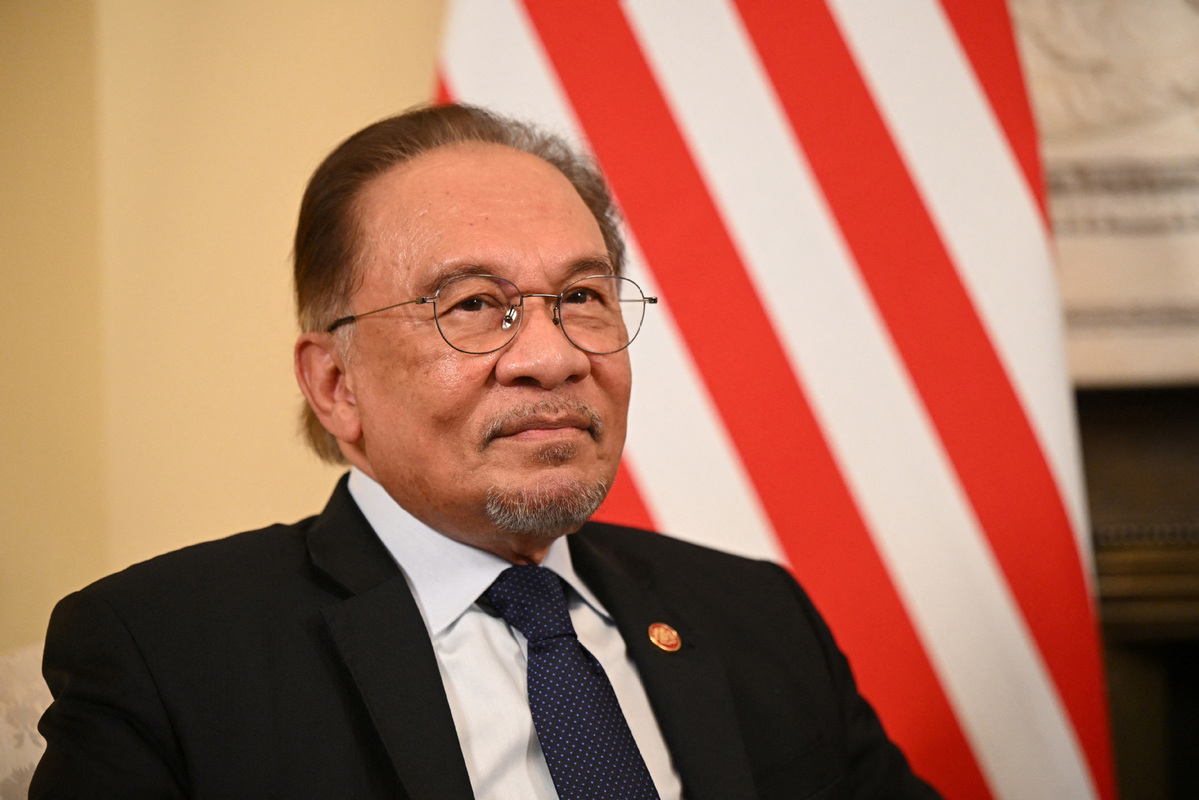
In a recent interview with the Financial Times in London during his visit to the United Kingdom, Malaysian Prime Minister Anwar Ibrahim raised a good point: that upholding strategic autonomy amid tensions between China and the United States serves the interests of smaller economies best.
The comeback of the "America first" Donald Trump administration, as indicated by a considerable part of his interview being dedicated to the impacts of that, has undoubtedly provided a context to better understand the Malaysian leader's remarks.
Even the Philippines, a close ally of the US that has actively thrown itself to the front to provoke China over their South China Sea maritime disputes, cannot deny the rationality of Anwar's remarks.
In Southeast Asia, Anwar remarked, the West has delivered endless lectures on democracy and reform but delivered little practically to help. "Nothing was done to assist (the region). There's engagement only in trade and investment."
That explains why the former US administration was generally met with a cold shoulder from the Association of Southeast Asian Nations whenever it tried to drag the bloc on to its anti-China bandwagon over the past four years.
It was after meeting collective resistance from the organization, which is seeking to maintain its centrality in regional affairs, that the former US administration resorted to a divide-and-rule approach, trying to press the Ferdinand Marcos Jr government of the Philippines to drive a wedge between the ASEAN members and China by hyping up their maritime disputes in the South China Sea.
Regional countries have long seen through these US tricks that ironically have served to stimulate them to pay more attention to strengthening their solidarity and speak in one voice on the world stage, and spurred them to promote their respective dialogues and negotiations with China to resolve their maritime disputes in a proper way while markedly boosting their pragmatic cooperation and trade with the world's second-largest economy.
That is further evidenced in the wide-ranging joint statement the ASEAN foreign ministers issued after their meeting in Langkawi, Malaysia, on Sunday, which can be seen as the organization's reiteration of its independent foreign policy as a new US administration takes office.
The document clearly demonstrates ASEAN's determination to stay clear of the US' geopolitical game and focus on promoting regional common development, peace and stability with its neighbors, including China.
Asked if ASEAN under his leadership would be as tough on China as under some of his predecessors, Anwar said: "Why do we need to be tough? We disagree on many foreign policy issues with the US but we want them to be an important ally. Similarly with China. I don't think it's a matter of being tough against a strong, big neighbour."
These remarks ring true for the region and beyond.
Fully respecting their autonomy, Beijing has never pressed the Southeast Asian countries to make an either-or choice between it and Washington, and it will never do so in the future, as promoting the healthy development of Sino-US relations is also China's consistent policy. It is well aware the US remains a valued investor in the high-tech industry of all emerging economies, as it is in that of China.
The new US administration should pay heed to the welcome Anwar gave to increased Chinese investment in infrastructure and other areas, and at the same time to US investment in the high-tech industry. This reflects the complementarity between China and the US in their respective contributions to the world's common development and the broad space that exists for their cooperation in third-party countries, toward which Beijing remains open.





