



High-tech sectors to attract more FDI









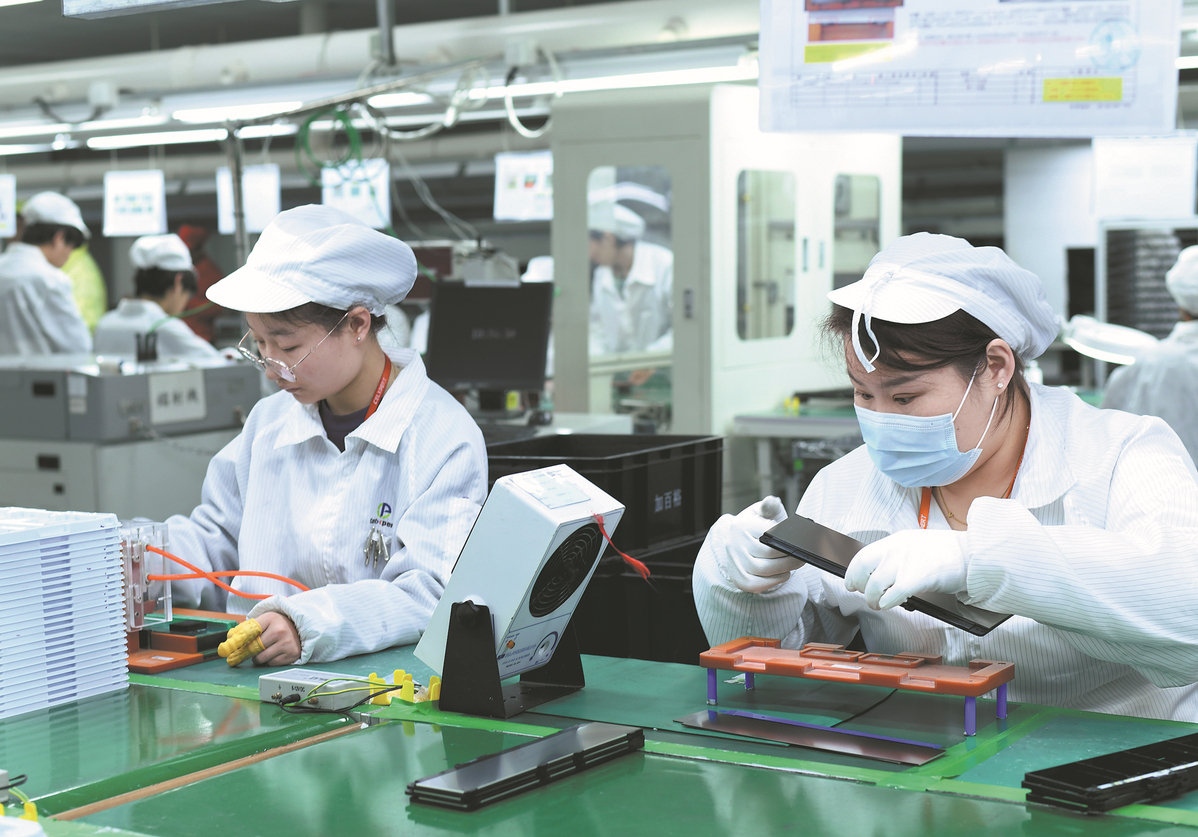
Fueled by advancements in high-tech manufacturing, green energy and consumer goods industries, foreign direct investment (FDI) into China will continue to recover this year, market watchers and business executives said.
Despite challenges like disruptions in global supply chains, escalating geopolitical tensions and a slow economic recovery in several regions, multinational corporations have shifted their investment focus from building factories to fostering innovation, developing supply chains and advancing green industries in China, they said.
A total of 52,379 new foreign-invested enterprises were established across China in January-November, representing a year-on-year growth of 8.9 percent. This marks the highest level ever for the same time frame, data from the Ministry of Commerce showed.
FDI in actual use in the Chinese mainland climbed 6 percent year-on-year in November from the same period the previous year, in a sign of growing foreign investor confidence in the nation's market potential and the effectiveness of policies supporting foreign investment.
"The immense opportunities for investing in China are not only found in new technologies and emerging fields, but also in the continuously upgraded and evolving modern industrial system," said Wan Zhe, a professor at the Belt and Road School of Beijing Normal University.
Since last year, China has removed all market access restrictions for foreign investors in the manufacturing sector, and has continuously relaxed market access in industries such as telecommunications and healthcare.
Foreign investments in China are increasingly concentrated in high-tech sectors, accelerating integration into the high-quality development framework, Wan said.
Henkel, a German industrial and consumer goods company, has been heading in that direction. The company's new plant, built with an investment of 900 million yuan ($122.75 million), is expected to begin test production in Yantai, Shandong province, in early 2025, strengthening its ability to supply high-end adhesives for industries such as electronics and automotive.
"We are also planning to launch our new inspiration center for adhesive technologies in Shanghai this year, boosting our innovation capabilities for industrial businesses across China and the broader Asia-Pacific region," said Anna An, president of Henkel Greater China.
An said that Henkel is optimistic about the long-term potential of the Chinese market, driven by the country's economic resilience and commitment to innovation and opening-up.
"The tone-setting Central Economic Work Conference held in December emphasized technological innovation and the promotion of consumption, creating significant opportunities for multinational companies like Henkel," she added.
Also upbeat about the Chinese market, Treasury Wine Estates, Australia's largest winemaker by sales revenue and the parent company of Australian wine brand Penfolds, announced last month that it had entered into an agreement to acquire a 75 percent equity stake in Ningxia Stone & Moon Winery Co Ltd in Ningxia Hui autonomous region for 130 million yuan.
"This acquisition aligns with our vision to grow our presence in luxury wines in key international markets while strengthening our commitment and investment in China's wine industry," said Tim Ford, CEO of TWE, noting that the transaction will be completed in the first half of this year.
The national commerce work conference, held in Beijing over the weekend, highlighted the government's commitment to enhancing efforts to attract foreign investment, reducing restrictions in the negative list, improving business environment and steadily advancing institutional openness this year.
Through comprehensive efforts, China has steadily expanded the scope of international cooperation, inviting more global partners to share in the benefits, said Liu Chunsheng, an associate professor at Central University of Finance and Economics in Beijing.
China has decided to abolish the terms of a previous circular in 2011 and lift restrictions on foreign companies using domestic loans to carry out equity investments to encourage multinational companies in establishing headquarters-type institutions in the country, the Ministry of Commerce announced last week.
The scale of reinvestment by foreign-funded companies in China has continued to grow in recent years, and some foreign businesses have expressed hope for the removal of restrictions to address their capital needs for reinvestment through domestic loans.
- Biden administration trying to straitjacket its successor into carrying on its China policy: China Daily editorial
- Shanghai to invest $32b in major projects in 2025
- Shanghai to make itself highland for industrial innovation in AI
- China aims for more ambitious space missions in 2025
- 'Beibei' brings crowds to famed Bear Cave Street











