



Three parties need to show shared wisdom: China Daily editorial









Addressing the Boao Forum for Asia New Year Outlook event for 2025 on Jan 8, Chinese Vice-Foreign Minister Sun Weidong reiterated Beijing's view that to maintain peace and stability in Asia and promote its economic development requires countries in the region to pool their wisdom, and make joint contributions and concerted efforts to make it a better common home.
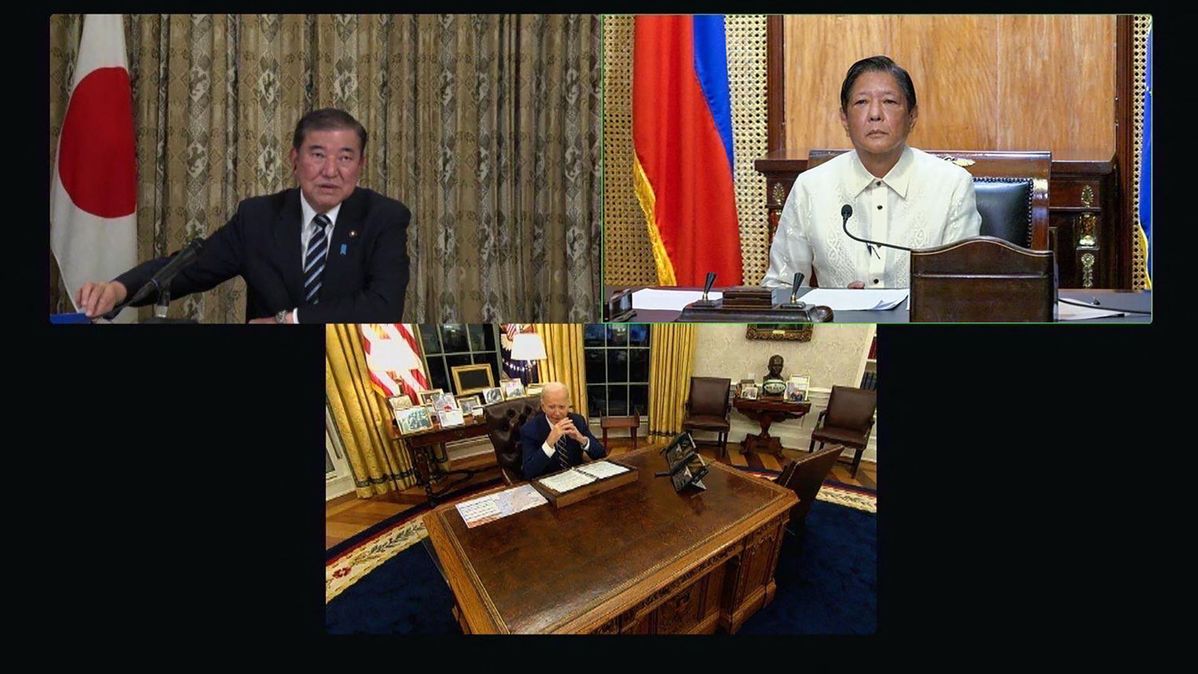
The virtual meeting of United States President Joe Biden, Japanese Prime Minister Shigeru Ishiba and Philippine President Ferdinand Marcos Jr that was held on Monday morning Asian time showed the necessity for such remarks.
According to a readout issued by the White House after their talks, the three leaders discussed trilateral maritime security and economic cooperation, as well as China's "dangerous and unlawful behavior in the South China Sea" and they agreed on the importance of "continued coordination to advance a free and open 'Indo-Pacific'".
The outgoing US president made clear the intention behind the meeting when he said, "Simply put, our countries have an interest in continuing this partnership and institutionalizing our cooperation across our governments so that it is built to last. I'm optimistic that my successor will also see the value of continuing this partnership, and that it is framed the right way," President Biden said. So basically it was a call for his successor to continue to orchestrate "provocations" of China in the South China Sea.
Indeed, apart from agreeing to further deepen their trilateral economic, maritime and technology cooperation, the three leaders also discussed what they alleged to be China's "dangerous and unlawful behavior in the South China Sea", and to work together to uphold international law in the waters.
There is nothing more hypocritical and absurd than this: Out of their own strategic calculations, the three countries have been making malicious accusations concerning China's strengthened law enforcement in its territorial waters; actions that have been necessitated by the provocative moves of the Philippines, which has been emboldened by the support of the US and Japan to gravely infringe upon China's territorial sovereignty and maritime rights and interests in the South China Sea.
If the US wants to talk about dangerous and unlawful behavior in the South China Sea, it should first start with the Philippines and then look in the mirror. When it comes to "aggressive and coercive activities", it is the US that has militarized the waters and is encouraging its two regional allies to beef up their military posture targeting China.
China's law enforcement activities in relevant waters are lawful, justified and beyond reproach, as China's sovereignty and rights in the South China Sea are solidly grounded in history and international law. The territory of the Philippines is defined by a series of international treaties, and so defined it does not include Huangyan Island and the Nansha Islands.
The US, Japan and the Philippines are peddling a false, misleading narrative that portrays China as a bully and the Philippines as a victim bravely standing up to it. This narrative has been fabricated by the US as a means to whitewash its formidable military deployment in the region and to encourage its allies, both regional and extra-regional, to employ their military assets alongside it to contain China.
Sensing an opportunity to cement its land grab, the Philippines has foolishly allowed itself to be used as a bridgehead for the US' "Indo-Pacific" strategy.
If it accepts the legacy of the Biden administration's South China Sea destabilization initiative, the incoming US administration will only further disrupt and even undermine regional efforts to build peace and stability in the waters, which will have a detrimental impact on the dynamism of the regional economy, of which the US is also a beneficiary.
Like an old Chinese saying goes, before correcting others, one should correct his or her own behavior first. What the current US administration has done in the past year in the South China Sea with its encouragement of the Philippines' lawless antics and its soliciting of Japan to act as a bracer is more than enough to establish the fact that it is the warlock conjuring troubles in the South China Sea. Any forces who work hand in glove with it are putting themselves on the opposite side of peace-loving people in the region and beyond.





