



Washington's 'national security' farce undermines global trade









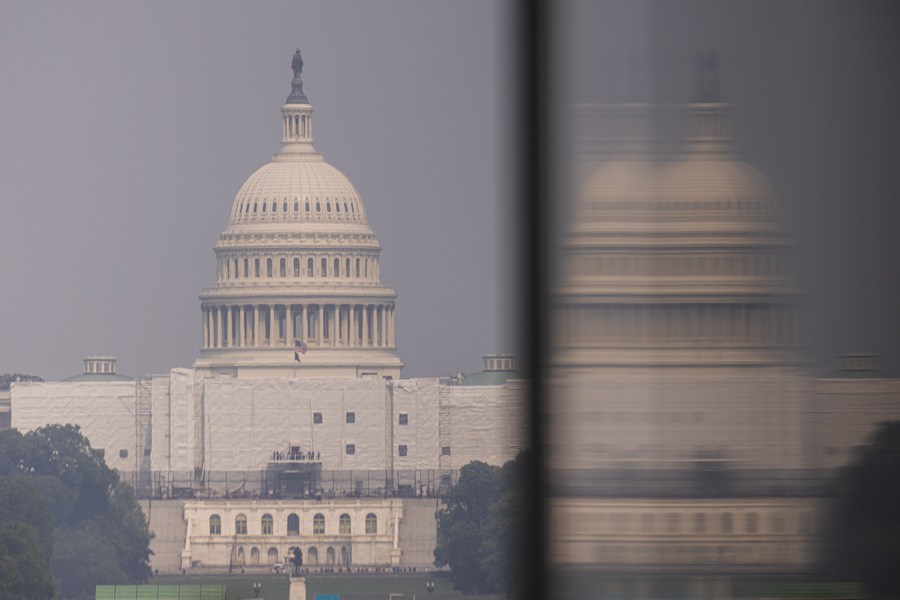
Washington, once an architect of the global economic order, now seems intent on dismantling it, one "national security" excuse at a time.
For US politicians, foreign investment and economic competition have been conveniently labeled as "threats" to national security. That is how the White House recently justified its blocking of Japan's Nippon Steel from acquiring US Steel.
While the US protectionist tactics against Chinese companies stem from framing China as a "primary strategic competitor," the blockage of the US Steel merger is more rooted in domestic politics. The Democrats promised to kill the transaction — a sensitive political issue — in the 2024 US presidential campaign.
Regardless of the motivations — whether domestic political calculations or an attempt to reinforce US economic hegemony, the message is clear: Washington has no qualms about resorting to protectionism.
This obstinate adoption of protectionist policies not only jeopardizes the future of the US economy, but also strikes a serious blow to the stability of the global trade system.
History is replete with examples of Washington chanting "free trade" in sectors where America dominates, but wielding protectionist sticks on the pretext of national security where it does not.
From using coercive tactics such as the 1985 Plaza Accord to counter Japan's economic influence, to implementing measures like extraterritorial jurisdiction to dismantle iconic French manufacturing company Alstom, and continually finding pretexts to hurt competitive Chinese high-tech enterprises, Washington has long been indulging in dressed-up protectionism, for which national security is repeatedly used as a handy excuse.
For Washington, tariffs, sanctions, and unilateral measures have replaced cooperation. This is not just detrimental for other countries; it is disastrous for the United States itself.
As Nippon Steel and US Steel pointed out, the blockage of the deal sent "a chilling message to any company based in a US allied country contemplating significant investment in the United States." The New York Times also argued that the decision is "a departure from America's long-established culture of open investment, one that could have wide-ranging implications for the US economy."
By closing the door on foreign investments and rejecting economic and technological competition, the United States risks isolating itself from the global marketplace, undermining its competitiveness, and stalling the very innovation and capital influx that have historically fueled its economic strength.
Blocking foreign investments and rejecting competition will not revive American industry; it will only cripple it. Washington must stop using "national security" as a blanket excuse to stifle competition.
Protectionism is a dangerous game of economic self-sabotage. In the end, it is American consumers and workers who will pay the price.





