Growth momentum needs financing, housing, consumption










As the world grapples with the changing economic landscape, China is pursuing healthy, high-quality economic development amid rising challenges while trying to maintain stability. The central leadership's vision of "pursuing progress while maintaining stability" has become the guiding principle for economic recovery.
According to economics theory, GDP is the sum of investments, consumption and net exports, and to pursue "progress while maintaining stability", China has to ensure sustained growth in these key areas despite several destabilizing factors, including shrinking investment, underperforming industrial sector, rising local government debt, insufficient consumption, and a sluggish real estate market.
However, the Chinese economy is resilient and can overcome the challenges.
To begin with, China needs to optimize the investment structure to realize stable growth. Measures should be taken to attract more investments to sectors that enhance long-term productivity, particularly those that improve total factor productivity, and greater attention should be paid to public welfare sectors such as healthcare, education and infrastructure, as these will help boost consumption.
Supporting private enterprises is also essential for creating more employment opportunities and sustaining overall economic vitality.
Weak consumer spending stems largely from people's concern over economic stability, especially the creation of jobs, availability of affordable housing, access to healthcare and social welfare. Once the above public needs are met, savings will reduce and consumption increase. Therefore, policies aimed at stimulating consumption should focus on long-term solutions to alleviate social concerns.
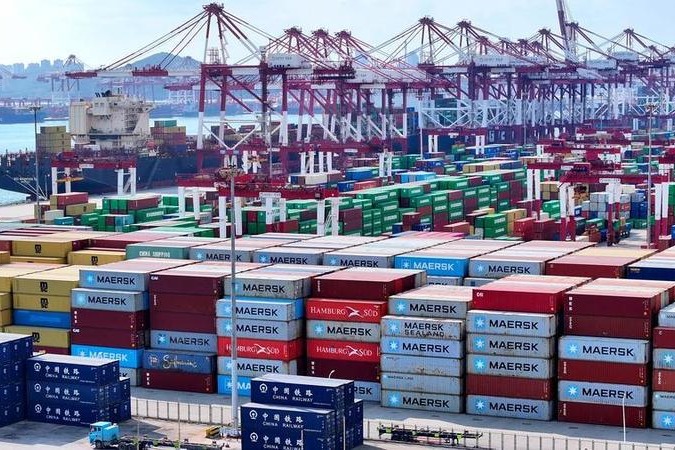
From January to November 2024, China's total trade volume grew by 4.9 percent, with exports rising by 6.7 percent. But much of that growth was driven by businesses preemptively shipping products to avoid high tariffs the Joe Biden administration vowed to impose on Chinese goods. Given the risk of renewed trade tensions with the return of Donald Trump to the White House, China should prepare to deal with serious trade disputes by adjusting the fiscal policy, taxation and the overall trade structure.
To address these contradictions, the authorities should adhere to the principles outlined by the central leadership. For example, fiscal policy should focus on balancing local government revenue and expenditure. Local governments account for 86 percent of national spending in 2023, while central government expenditure accounts for only 14 percent of the general public budget.
Therefore, central government spending should be increased to reduce local governments' debt burden and free up fiscal resources, which could be used to address people's livelihood concerns. As for fiscal policy, it should focus on transferring money and offering housing subsidies to middle-income families with stagnant income, addressing structural unemployment, and balancing education and labor market needs.
With 309.71 trillion yuan ($42.3 trillion) lying idle in banks, the authorities should implement a moderately loose monetary policy, especially reduce interest rates at proper timings, in order to allow idle capital to be used as investment to boost consumption and thus expedite economic recovery.
The real estate market directly impacts investment, fiscal revenue, local government debt and household consumption, as a significant percentage of household wealth is tied to real estate, and more than 4,000 banks are exposed to the real estate and local government debt crisis. With the shift from a seller's market to a buyer's market, investment in new housing should be reduced, so as to reduce excess inventory.
Policies such as the 350 billion yuan special loan for housing delivery, 200 billion yuan housing loan support plan, and 100 billion yuan rental housing loan support plan should be implemented to prevent the abandonment of housing projects and suspension of mortgage payment.
Besides, measures should be taken to ensure the stock market serves the real economy and investors, instead of just helping raise capital for listed companies. For instance, in 2022, the overall delisting rate of A-shares was just 0.91 percent, which is much lower than that of mature markets, where the delisting rates on the NYSE and NASDAQ have consistently exceeded 6 percent. From 2000 to 2021, the US stock market saw 9,391 companies delisted, surpassing the number of IPOs by 6,481. In contrast, A-shares had only 145 delistings, a number significantly lower than the 3,836 IPOs, highlighting the need to further improve the balance between market entries and exits. Therefore, to improve market quality, it is essential to enhance the delisting mechanism, ensuring that companies that no longer meet market standards are effectively removed, fostering a healthier, more dynamic market environment.
There is also significant disparity in the profitability and market value of Chinese and US companies. For instance, the combined market value of just three US companies-NVIDIA, Microsoft and Apple — is more than the total value of China's stock market. The market cannot be stabilized without raising the profitability of listed companies.
Furthermore, market reforms are needed to address issues such as fraud, unfair trading rules and limited access to short selling tools for retail investors. In fact, temporarily suspending short selling tools could help restore market confidence to boost economic growth.
The author is a researcher at the Institute of World Economics and Politics, Chinese Academy of Social Sciences.
The views don't necessarily reflect those of China Daily.
If you have a specific expertise, or would like to share your thought about our stories, then send us your writings at opinion@chinadaily.com.cn, and comment@chinadaily.com.cn.