Nation's renewables know-how crucial to Global South









As green transformation and climate adaptation become more urgent, officials and experts have praised China for its pivotal role in building global climate resilience through South-South cooperation.
During his visit to China in December, Ahsan Iqbal, Pakistan's Minister for Planning, Development, and Special Initiatives, expressed his appreciation for China's partnership in tackling climate change. He said Pakistan has greatly benefited from this collaboration, particularly in developing renewable energy capabilities.
"Thanks to our collaboration with China, Pakistan has, for the first time, developed renewable energy capabilities that are crucial for scaling up green energy in our country," Iqbal told China Daily.
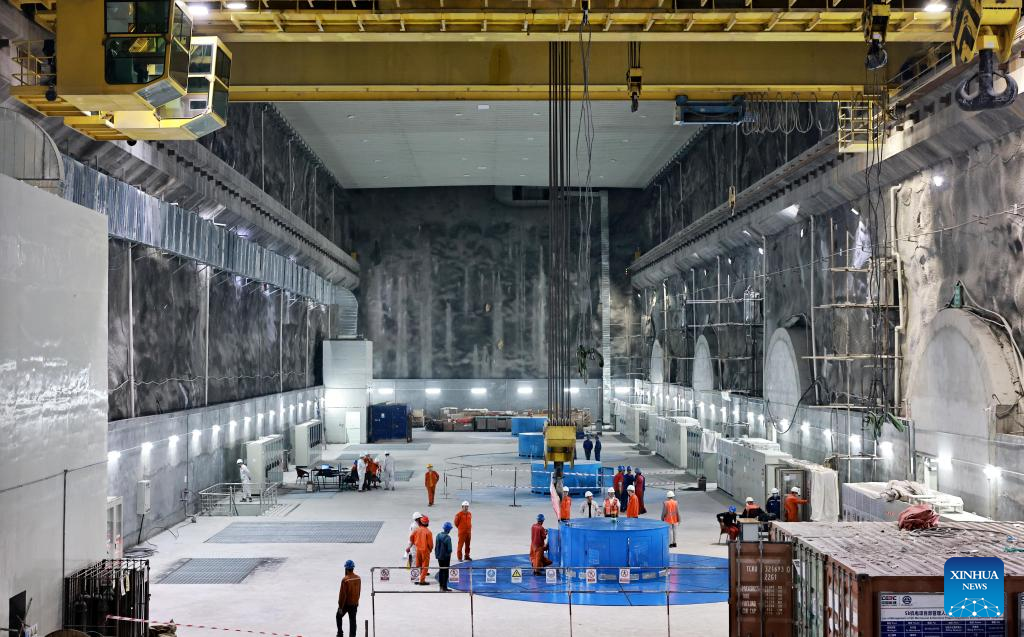
According to the official website of the China-Pakistan Economic Corridor Secretariat Office, China has completed several renewable energy projects in Pakistan, including a solar park, four wind farms, and two hydropower projects.
"Pakistan is one of the most vulnerable countries to climate change. We want to use China's help to prepare for climate challenges," Iqbal said. "We hope this collaboration will help make our energy sector more efficient, affordable, and green. China has already provided us with the know-how in renewable energies by helping build these projects."
Beijing has also helped enhance Pakistan's ability to prevent and mitigate meteorological disasters. At the third China-Indian Ocean Region Forum on Blue Economy Development Cooperation in December, China signed an agreement on building projects for early warning and response to climate-induced disasters in Pakistan.
This cooperation is vital for Pakistan's northern areas, where glaciers are at risk of melting and generating fatal floods, Iqbal said. The early warning system will be useful in preparing for and mitigating the effects of climate disasters, he added.
Iqbal said South-South cooperation in sharing experiences is important, as many countries facing climate disasters are in the Global South. "China has been at the forefront of helping its partners develop their capacity to face climate challenges, particularly in relief, rescue, and early warning systems," he said.
By October, China had signed 53 memoranda of understanding for South-South cooperation on climate change with 42 developing countries, and conducted nearly 100 climate change mitigation and adaptation projects.
Zhang Jianyu, chief development officer of the BRI International Green Development Coalition, said Global South nations make relatively low contributions to global emissions. However, they are still in the process of industrializing and have the right to further development, which suggests potential emissions increases.
"Given their significant populations and importance, supporting their green transition is crucial for global climate goals," Zhang said.
Since 2016, China has provided and mobilized more than 177 billion yuan ($24.25 billion) in climate-related financial support for developing countries, covering a wide range of mitigation and adaptation projects.
Zhang said green financing and technology support for developing countries had accelerated their green transition and helped them industrialize at a lower carbon level. "This process also brings additional benefits such as improved governance, technological advancements, and enhanced public welfare, contributing to achieving sustainable development goals," he added.
Developing countries also represent a vast potential market. "Investing in this potential green market can boost China's green industries. This benefit can extend globally, as a larger market can stimulate technological innovation and speed up the advancement of green technologies," Zhang said.
Ma Jun, director of the Beijing-based Institute of Public and Environmental Affairs, said many countries from the Global South have abundant renewable energy resources.
"By leveraging China's renewable energy technology, we can help these nations transition to green energy and achieve the goal of tripling global renewable energy capacity by 2030, from a 2022 baseline, as established in the historic UAE Consensus at COP28," he said.
Ma also highlighted the potential for green economic growth in developing countries through South-South cooperation. "Developing countries are keen on addressing climate change and achieving economic development. China's experience in these areas can be highly useful," he said.