


Fostering an awareness of 20th-century architectural heritage










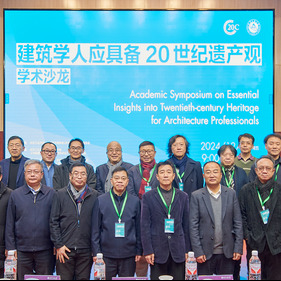
Renowned architects, scholars, professors and architecture students gathered at the North China University of Technology in Beijing on Friday for a symposium promoting essential insights into 20th-century heritage among architecture professionals.
Experts at the event emphasized that when it comes to architectural heritage, people often only think about ancient architecture and regard it as a field solely for professionals engaged in archaeology and museum studies.
They argued that fine architectural pieces made in the last 100 years, though often ignored for being young, stand as a testament to the historical changes in Chinese society and crystallize the wisdom of the country's modern architects, carrying collective memories.
The event cited the stepped garden residence complex on the North China University of Technology campus as an example. Designed in 1984 by Lyu Junhua, an architecture professor at Tsinghua University, the residence became an immediate sensation in residential design upon its completion for breaking the monotony of the general multi-story apartments at that time, which were one-size-fits-all and arranged in rows.
Still in use, Lyu's project was inscribed on the fourth batch of Chinese 20th-century architectural heritage sites, co-presented by the Chinese Cultural Relics Society and the Architectural Society of China in 2019.
According to the symposium, over the last 30 years, more than 150 20th-century buildings by famous Modernist architects such as Frank Lloyd Wright, Walter Gropius, and Le Corbusier have been named UNESCO World Heritage Sites to recognize their unique contribution to architectural design and encourage their preservation.
To keep up with the international trend of studying and safeguarding 20th-century architectural heritage, the Chinese Cultural Relics Society established the Committee on 20th-Century Architectural Heritage in 2014. The committee comprises 110 members, including academicians, veteran architects and archaeologists, making it the country's largest academic body for researching and promoting 20th-century architectural heritage.
Based on international practice, the committee rolled out standards to appraise China's 20th-century architectural heritage in the year of its creation. Since its inception, it has extensively surveyed China's architectural works produced between 1900 and 1999. It has so far culled 900 representative works in nine batches from across the country that speak volumes of China's modernization endeavors and Chinese architects' genius.
In addition, to increase general awareness of this area of expertise, the committee has published a series of books, such as 20th Century Architectural Heritage Reader (2023) and The Outline of China's 20th-Century Architectural Heritage (2024), targeting architecture experts and enthusiasts alike.
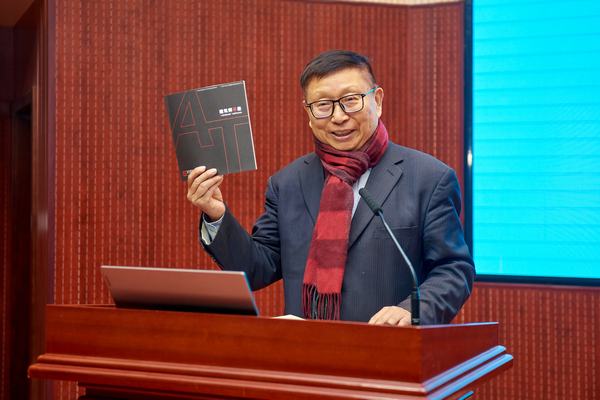
"Even though our committee has been working hard to promote 20th-century architectural heritage over the last decade, public awareness of it is still lacking, and it remains an emerging subject in China," said Jin Lei, secretary general of the committee, which co-hosted the symposium with North China University of Technology.
"As such, we held the event intending to promote the concept of 20th-century architectural heritage among the architecture and urban planning community, particularly its teachers and students," he said.
As urban renewal is in full swing in Chinese cities, Jin said new generations of architects, urban planners and heritage workers must have a good understanding of 20th-century architectural heritage, which will guide them in approaching their work differently.