



HK must act decisively to cement its I&T push
Ken Ip says the city is at a crossroads, with the opportunity to lead globally in third-generation semiconductors and other high-tech industries within reach.









Hong Kong has long been synonymous with finance, trade and commerce, serving as a gateway between East and West, and a key player in the 11-city Guangdong-Hong Kong-Macao Greater Bay Area.
However, as the global economy shifts and technological innovation accelerates, the special administrative region faces a critical opportunity to redefine its economic future. At the heart of this transformation is the race to lead in third-generation semiconductors and advanced manufacturing, areas that promise to drive the next wave of global technological progress. As global competition heats up, the SAR must act decisively to realize its aspiration to be an international hub for innovation and technology.
Central to this effort is Hong Kong Science and Technology Parks Corp (HKSTP), which has undertaken a series of initiatives to strengthen the innovation ecosystem. One of the most significant steps forward is the expansion of its facilities to support industries like microelectronics and semiconductors. The Microelectronics Centre (MEC) in Yuen Long is set to be a critical driver of this growth. Equipped with cutting-edge infrastructure, the MEC is designed to accelerate research and development, providing the necessary tools for small-scale production and testing in the semiconductor sector.
Third-generation semiconductors, which leverage advanced materials such as gallium nitride and silicon carbide, are expected to drive the next wave of technological breakthroughs. These semiconductors are superior to earlier versions, offering greater efficiency and thermal stability, which makes them indispensable in areas like electric vehicles, telecommunications, and renewable energy. As global industries increasingly rely on these technologies, Hong Kong must continue to invest in developing a robust ecosystem that can compete on the world stage.
The MEC's role is part of a broader vision to create a strong foundation for high-tech manufacturing. Historically, one of the challenges for local innovation has been the lack of suitable mid-stage production facilities that allow research to be commercialized. While Hong Kong's universities are known for producing top-tier research, translating these innovations into commercially viable products has been more difficult.
HKSTP's focus on developing the necessary infrastructure aims to bridge this gap and help Hong Kong transition into a hub for high-tech manufacturing.
In this context, HKSTP has re-imagined its industrial estates as "InnoParks", equipping them with the latest technology to meet the needs of advanced industries. The parks are home to facilities that cater to sectors requiring specialized equipment, from clean rooms to robotics labs. These facilities are designed to solve the challenges posed by limited production space and the need for high-tech equipment, creating an environment where businesses can scale up their innovations.
The development of high-performance infrastructure is not limited to semiconductors alone. Hong Kong's broader push into digital transformation includes offering high-performance computing (HPC) services, which are crucial for industries, such as artificial intelligence, robotics, and health technology. These sectors rely heavily on advanced computational power, and the availability of HPC services helps local enterprises accelerate innovation. The move is aligned with Hong Kong's goal of becoming a leader in data-driven industries, reinforcing its commitment to supporting a sector that is central to the future of global technology.
The reconfiguration of industrial estates into InnoParks also underscores Hong Kong's ambition to support new forms of industrialization. These parks, located in key areas of the city, are designed to foster collaboration among businesses, research institutions, and universities. By offering a space where ideas can move from concept to production, InnoParks are critical in attracting international partnerships and investment. The advanced facilities also help solve the long-standing problem of insufficient production infrastructure, which has historically limited the potential of Hong Kong's innovation ecosystem.
As Hong Kong seeks to carve out a leadership role in third-generation semiconductors and advanced manufacturing, its ability to attract foreign investment and foster local innovation will be critical. The strategic development of the MEC and other high-tech facilities places the city on the right trajectory, but success will depend on the continued commitment to nurturing this ecosystem.
With third-generation semiconductors poised to revolutionize key industries, Hong Kong is well-positioned to capitalize on these opportunities, provided it maintains a focus on innovation and infrastructure.
The broader push towards high-tech manufacturing is part of the city's long-term vision to diversify its economy and reduce its reliance on traditional sectors. The shift to advanced industries will not only strengthen the SAR's global competitiveness but also provide a new growth engine in the face of shifting global economic conditions. HKSTP's efforts are critical to this transformation, offering the infrastructure, resources, and expertise needed to support the next generation of technological innovation.
As the world races toward advancements in technology, Hong Kong finds itself at a crossroads. The opportunity to lead in third-generation semiconductors and other high-tech industries is within reach, but we must move quickly to solidify our position. By investing in infrastructure like the MEC and re-imagining industrial spaces as hubs for innovation, Hong Kong is laying the groundwork for a future where it can not only compete, but thrive in the global technology landscape.
In an era defined by rapid technological change, Hong Kong's success will hinge on its ability to embrace these new opportunities and foster a culture of innovation. The race for semiconductor supremacy is intensifying, and with the right strategies in place, the SAR is positioning itself to become a leader in this critical sector.
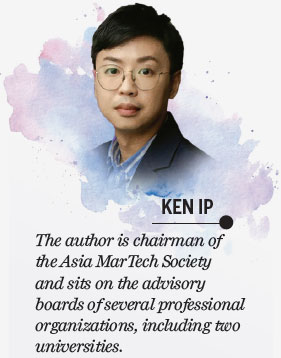
The author is chairman of the Asia MarTech Society and sits on the advisory boards of several professional organizations, including two universities.
The views do not necessarily reflect those of China Daily.





