


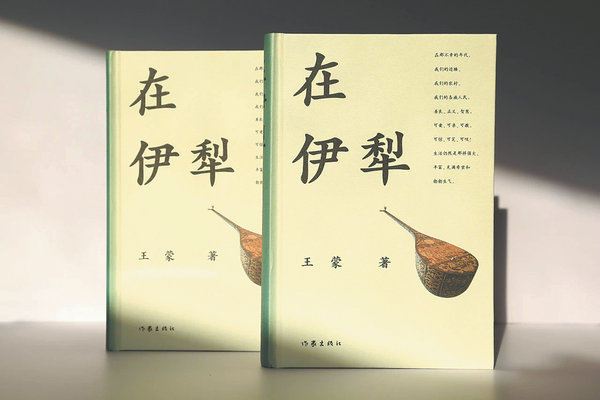
One reviewer, Gulnar Obul, a member of the Party leadership group and vice-chairman of the Xinjiang Association for Science and Technology, says, "Because Lao Wang can speak both Mandarin and the Uygur language, he is a typical 'two tongues' person. Through his bilingual ability, I always sense the presence of two Lao Wangs, and this way of telling stories navigates between two cultures, showcasing dialogues and contemplation within Uygur culture."
Furthermore, Gulnar also highlights that the book unveils several distinct ethnic characteristics that may be unfamiliar to readers. There are many cultural differences between northern and southern Xinjiang. For example, women in Ili, located in northern Xinjiang, prefer to tie their headscarves at the back. Conversely, people in southern Xinjiang lead a more traditional lifestyle, tying their headscarves under the chin. Wang captures these subtle details of Xinjiang residents' lives, vividly portraying the images of the Uygur ethnic group.
Wang, born in October 1939, was honored with the title of People's Artist by the country in 2019. His notable works include Qingchun Wansui (Long Live Youth) and The Butterfly and Other Stories. Celebrating his 90th birthday recently, Wang's passion for writing spans seven decades, with a total character count exceeding 26 million. Reflecting on the republication of In Ili, he reaffirms his continued exploration of the theme of happiness.
Recalling his time in Ili, Wang comments, "Though my circumstances in Ili could be deemed challenging, I ventured there by my own choice, driven by a desire to immerse myself in the local culture and language.
"How to understand the pain is a vital topic of literature. The problem is that many people feel too much pain, even heavier than the actual pain itself," he adds. "From my point of view, experiencing happiness is a responsibility for everyone, at all times. During my days in Ili, I couldn't envision the future that lay ahead, but I didn't feel depressed. I simply drank copious amounts of milk tea, laughed and enjoyed the moment. Together with my Uygur friends, I embraced unity, contributing to the vibrant tapestry of the Xinjiang community."
Tu Jiayi contributed to this story.





