Bridging the continental gap, from railway to rice










After the founding of the People's Republic of China in 1949, the nation quickly forged strong political relations with African countries. The relationships between China and African countries were built on the shared historical experience of fighting against colonialism and imperialism. This common struggle prompted both China and Africa to pursue political autonomy and economic self-sufficiency.
During the 1955 Bandung Conference in Indonesia, then Chinese premier Zhou Enlai held detailed talks with African leaders to understand the needs and aspirations of the African countries.
Equally important, the conference's final communique endorsed the China-proposed Five Principles of Peaceful Coexistence. These principles have since become the cornerstone of China-Africa relations.
By 1963, more than 30 African countries had gained independence from the European colonial powers, with 12 of them establishing diplomatic relations with New China. Zhou Enlai led a Chinese delegation on a groundbreaking tour of 10 African countries, which began in late 1963 and ended early the following year. The visits helped build a new type of China-Africa relationship.
During his visit to Ghana, Zhou introduced the "Eight Principles for Economic Aid and Technical Assistance to Other Countries", laying emphasis on respect for the sovereignty of recipient countries and the absence of political conditions or special rights. Despite its relatively weak economic position at the time, China made serious efforts to help the African countries, exemplified by the construction of the TAZARA Railway, which links the port of Dar es Salaam in Tanzania with the town of Kapiri Mposhi in Zambia.
On their part, many African countries supported Beijing's rightful representation at the United Nations and advocated for the expulsion of Taiwan's representatives from the UN.
In the 1980s, as China's reform and opening-up policy expanded and its economic strength grew, the focus of China-Africa cooperation shifted toward economic and social fields, while the two sides continued to maintain close political and strategic relations. And by the 1990s, about 90 percent of African countries had recognized and established diplomatic relations with the People's Republic of China.
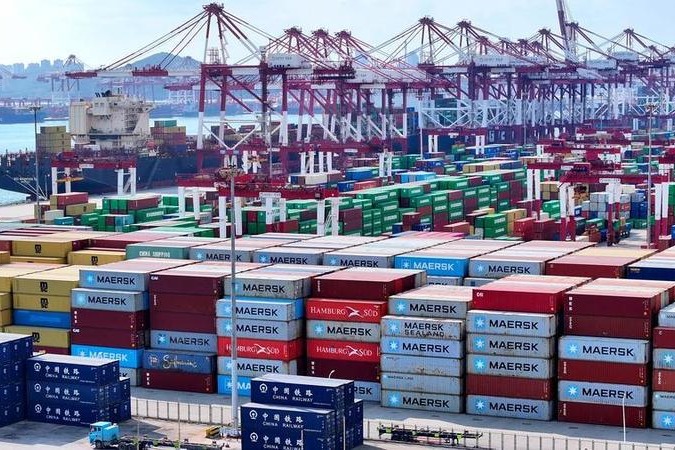
That led to China identifying economic and trade cooperation with Africa as a strategic priority, leading to significant growth in trade and investment. In 1950, China-Africa trade was worth just $12.14 million. By 2008, two-way trade had surpassed $100 billion. And from 2009 to 2024, China has remained Africa's largest trading partner, with their trade volume reaching $282.1 billion in 2023.
The high level of complementarity between China and Africa in terms of resources and industrial structure has been a key factor driving the growth of trade, which has contributed to both sides' development. As China's economic power continues to grow and the concept of a China-Africa community of shared future evolves, cooperation between the two sides has entered a new phase.
Leveraging the Belt and Road Initiative, China is now making substantial investments in Africa's infrastructure sector. It is applying the principle of "to get rich, first build roads" to build major infrastructure projects, including highways, railways, power stations and industrial parks. The Belt and Road Initiative offers African countries a compelling alternative to Western aid, as Chinese loans and investments come without any political strings attached and focus on large-scale infrastructure projects.
Chinese-built industrial parks, such as the Eastern Industrial Zone in Ethiopia, have created many jobs, increased local tax revenues, and even promoted gender equality. To further boost trade, China in 2021 announced zero tariffs on 98 percent of products from Africa's least-developed countries.
With the circumstances changing, the China-Africa partnership is set to deepen, transitioning from large-scale projects to smaller, more refined initiatives. By focusing on projects that cater to local needs, China aims to provide practical benefits for African communities. And on Thursday China has also proposed 1,000 "small and beautiful" projects aimed at improving local African residents' livelihoods, as well as strengthen agri-cooperation to benefit more local farmers.
For example, amid the global food security crisis exacerbated by the Russia-Ukraine conflict, China has used its expertise in agriculture to help African countries increase their rice and millet production, and established farms tailored to local conditions.
Moreover China's super rice variety has been successfully introduced in more than 20 African countries, significantly enhancing food security. This evolving partnership promises to enrich and expand the shared future of China and Africa.

The views don't necessarily reflect those of China Daily.
If you have a specific expertise, or would like to share your thought about our stories, then send us your writings at opinion@chinadaily.com.cn, and comment@chinadaily.com.cn.