


Xiplomacy: How Chinese hybrid grass technology is changing the world for the better










A WAY OUT OF POVERTY
Before known as "the father of Juncao", Lin grew up in the impoverished rural mountains of Fujian. His personal experiences with poverty profoundly shaped his commitment to Juncao technology.
After decades of work, Lin and his team succeeded in selecting and breeding a type of high-yield, drought and salinity-resistant herbaceous plant that can be used as a substitute for wood to grow edible and medicinal mushrooms.
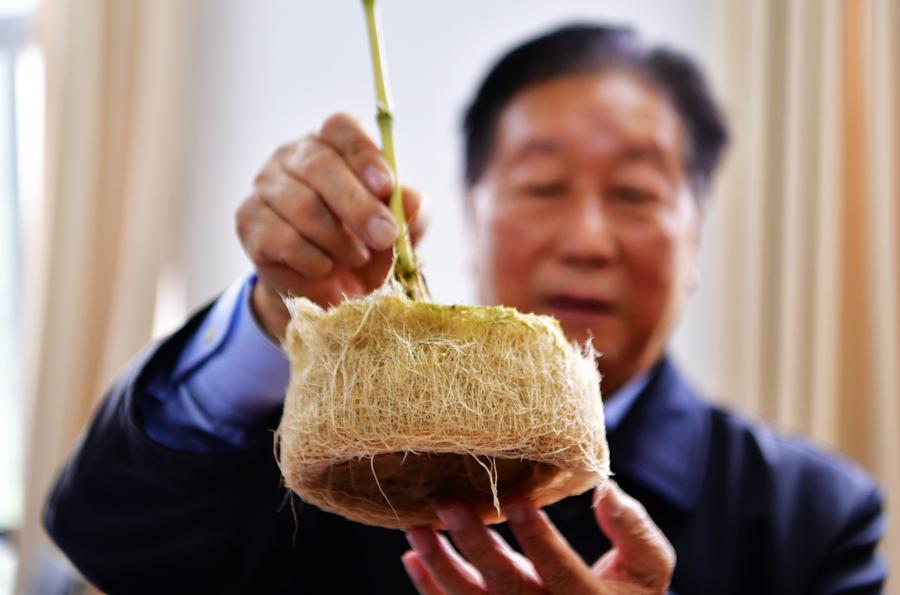
At the ninth Aid-for-Trade Global Review Conference held by the WTO in Geneva in June, Lin reflected on how Juncao technology began its global journey. It was back in 1992 when Lin first presented Juncao to widespread acclaim at an international exhibition on inventions, also in Geneva. There in Switzerland, Lin received many calls to learn more about the technology.
Lin recalled how Xi has passionately supported using scientific and technological means to combat poverty.
In 1997, Xi, then deputy secretary of the Communist Party of China Fujian Provincial Committee, listed Juncao technology as part of the province's poverty reduction efforts with the Northwest China's Ningxia Hui autonomous region. Upon receiving the assignment, Lin immediately took his team, as well as grass and fungus seeds, to Xihaigu, a poverty-stricken region in Ningxia.
Today, Juncao technology is used in 31 provinces across China and has significantly contributed to ending poverty and revitalizing rural areas.
With Xi's support, a pilot project to introduce Juncao technology in Papua New Guinea was launched in 2000, becoming one of the first applications of Juncao technology overseas.
Fuelled by their dedication and pioneering spirit, Lin and other Chinese researchers have since introduced the technology to 106 countries and regions across the globe.
With a mission to end poverty around the world, Chinese scientists have applied Juncao technology to some challenging environments. In Papua New Guinea's Eastern Highlands, they witnessed tribes still practicing slash-and-burn agriculture. In Rwanda, families without access to cattle or tractors labored in muddy fields using only hoes. In the Central African Republic, they observed the devastating impact of post-conflict famine.
Throughout these years, Lin has faced gunpoint robberies, malaria, altitude sickness and long periods in remote outposts without electricity or water. Witnessing extreme poverty in developing countries further strengthened Lin's commitment to Juncao.
"We go to the poorest places with a genuine intent to help the people," Lin stated.





