



Tightening grassroots emergency response key to handling calamities









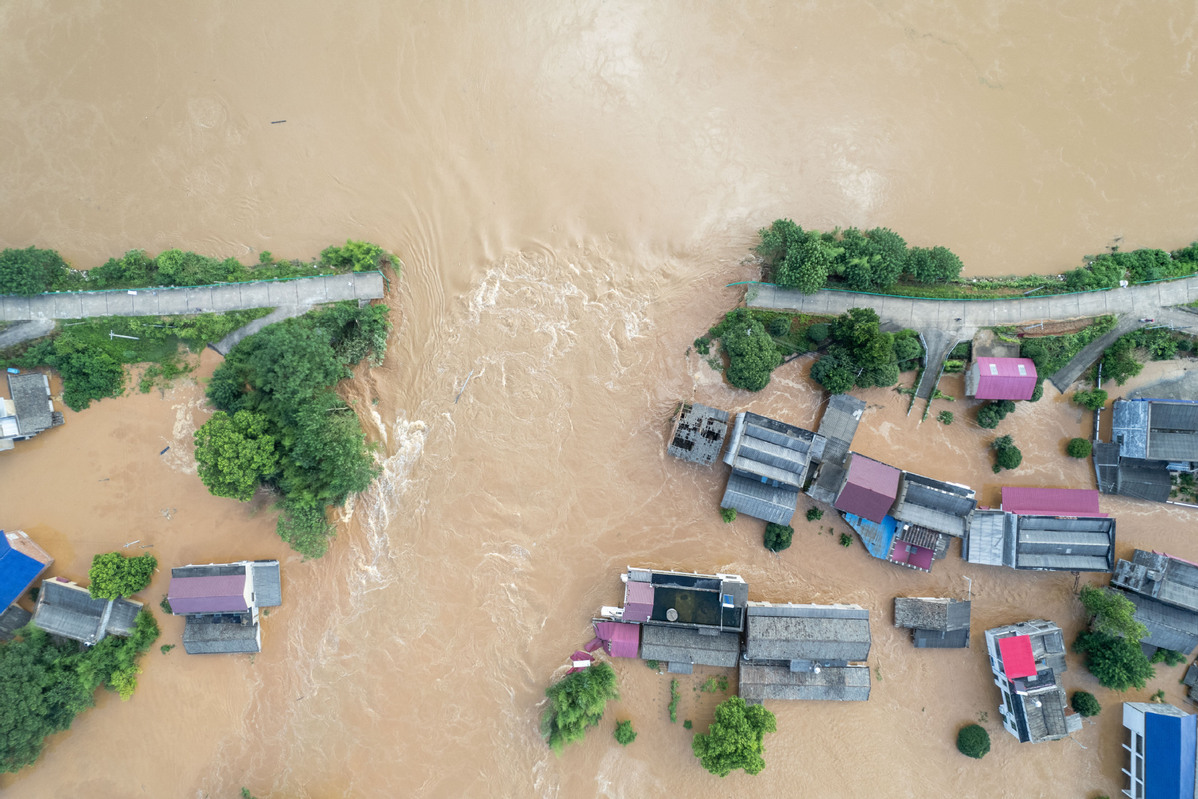
Since the start of the flood season this year, many places in China have been repeatedly hit by heavy rainfall. The Yangtze River basin, in particular, has been under growing pressure to prevent floods, dike breaches and waterlogging.
The central authorities have issued a directive requiring greater efforts to strengthen the country's grassroots emergency response, and constantly improve the comprehensive disaster reduction capacity in the region.
The grassroots government is like the "first line of defense" and bears great responsibilities for dealing with sudden calamities. If it detects an impending disaster early and issues early warnings, it can win precious time to minimize the loss of lives and property. It is thus imperative to temper the capabilities of disaster prevention and reduction at the grassroots level.
The grassroots government should further improve the level of infrastructure protection, improve grassroots emergency organizations, and enhance the public's disaster prevention and self-rescue and mutual rescue skills, so as to plug potential risks at the source. The country also needs to improve the urban capacity for flood control and drainage, and fortify flood control projects such as dangerous reservoirs, dikes on small and medium-sized rivers, and flood storage and detention areas, as well as weak points in farmland for flood drainage.
China should make good use of technology to prevent flood and other disasters. It should better utilize the results of the national natural disaster risk surveys, connect the survey data with its emergency command platform, and analyze local population density, emergency shelters, material reserves and other information in the event of an emergency situation to form an emergency rescue plan.
China has so far built a five-tier disaster information release system covering the whole country, and targeted training should be carried out regularly to give full play to the role of more than 1 million "scene detectors". All kinds of social forces such as scientific research organizations, industry associations, and enterprises should be absorbed to create an emergency management team with timely response and improve the professionalism of hidden danger investigation, emergency rescue and volunteer services.
Disaster prevention is a systemic project that needs the participation of all sectors of society. Only after people's awareness and participation rate of the masses are raised effectively, can the country respond quickly to natural disasters.
ECONOMIC DAILY





