



Time for Beijing, New Delhi to collaborate for shared goals









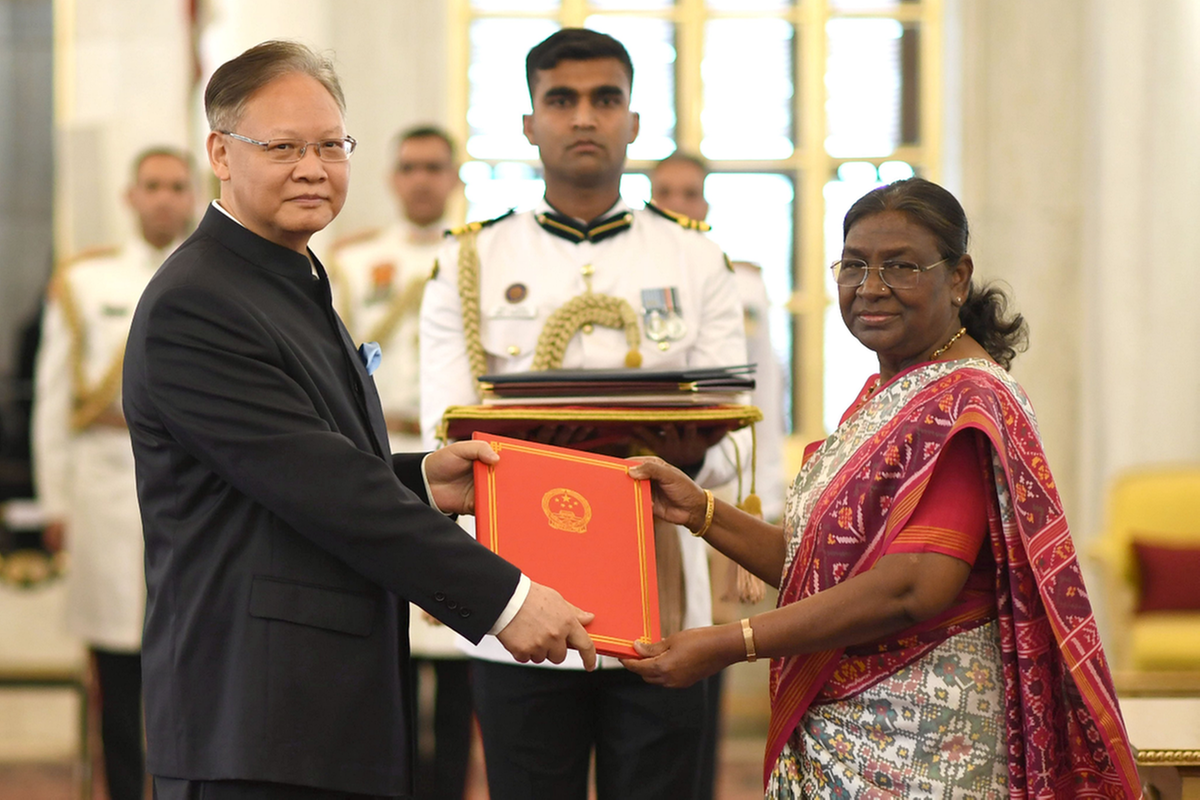
Xu Feihong, China's new ambassador to India, arrived in New Delhi in May. For more than one reason, his initial media interactions and reports on his arrival have raised hopes of an early normalization of India-China ties since the border standoff in 2020.
What makes Ambassador Xu's arrival so promising is the fact that it ends the longest interlude for India not having a Chinese ambassador over the four-plus decades.
Xu's predecessor, Sun Weidong, left India in October 2022, but his three years in India largely coincided with the COVID-19 pandemic and border face-offs which stymied the implementation of the decisions both countries' leaders had reached at their informal meetings in Wuhan and Chennai in 2018 and 2019 respectively. Since then, both the actual and assumed opportunity cost of this mutually harmful stalemate had been accumulating for both sides. Ending this deadlock through an apex-level meeting remains the key.
But to put things in perspective, the four years of border tensions have not been devoid of official level dialogue, though these existing mechanisms have revealed serious fatigue in ensuring peace and tranquility on the Line of Actual Control. In the past four years, the two countries have held 21 rounds of military commander-level talks and 29 work meetings on border affairs. These have resulted in reviving peace and tranquility through military withdrawals at least at four friction points. Three other such points remain under discussion but this piecemeal progress has seen patience eroding on both sides.
These four years have also seen the two countries' leaders meeting in multilateral forums and even holding two rounds of bilateral talks on their sidelines.
More importantly, India-China trade continues to grow, with China still being India's largest trading partner, with bilateral trade volume reaching $136 billion last year. India's largest ever imports from China have created a surplus of more than $100 billion for China. In investments as well, in spite of added restrictions, through India's national security filter, China continues to be an aggressive investor in India, especially in its e-commerce platforms, start-ups and infrastructure.
Therefore, this is a historic opportunity for the two sides to mould emerging global narratives and initiatives to restore long-term peace along their border. Being the world's two most populous countries — as also peer civilizations with powerful militaries, leading countries in technology and largest emerging economies — they have inordinate stakes in making global governance democratic and representative.
Both India and China remain committed to democratizing global decision-making and, as such, they are deeply engaged in helping other developing, including least-developed, countries, to boost their economic growth. Also, both India and China seek to bring the Global South to the center stage of the global governance system. The G7 industrialized nations profit- and market-driven industrialization and urbanization have resulted in the unequal distribution of resources, greatly harming the Global South.
Their shared drive for democratizing global governance, by ensuring the Global South plays a key role in global decision-making, has seen China proposing the Belt and Road Initiative 11 years ago, and following it up by proposing the Global Development Initiative, the Global Security Initiative and the Global Civilization Initiative, while India has launched the "International Solar Alliance", the "Global Coalition of Biofuels" and so on with similar concerns.
Of course, there are divergences in the two countries' strategies, but by working on their shared objectives, they can maximize their combined appeal and efficacy to address common challenges, which will help them maintain mutual peace partnership. This 70th year of Panchsheel, or the Five Principles of Peaceful Coexistence, should be an apt occasion for the two sides to explore the possibilities of laying a fresh foundation for a peaceful partnership grounded in their shared ancient wisdom of the world being one big family.
The author is professor of international relations at Jawaharlal Nehru University, New Delhi.
The views don't necessarily reflect those of China Daily.
If you have a specific expertise, or would like to share your thought about our stories, then send us your writings at opinion@chinadaily.com.cn, and comment@chinadaily.com.cn.





