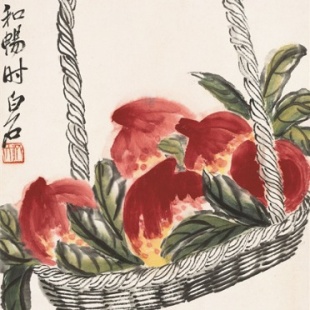



Paper trail shows master's technique
Exhibition sheds light on how Qi Baishi was able to produce incredible work on bits and scraps, Lin Qi reports.









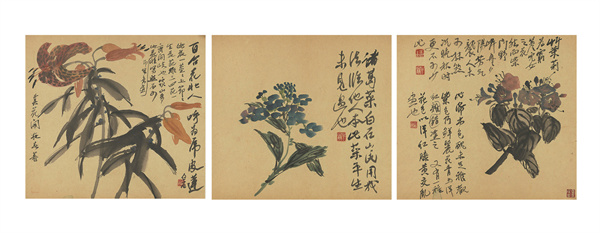
The latter part of Qi's work has been shown less but still, they are brilliant in technique and aesthetics, deserving of appreciation as stand-alone works of art.
Rustic Paper, Great Art, an exhibition running at the Art Museum of the Beijing Fine Art Academy until October, provides a unique perspective of Qi's world of art, says the exhibition's curator, Du Yuxin.
The many works on show are on paper used for packaging, writing practice, or leftover scraps for various purposes, all of which were deficient in their water absorbing capacity and ink diffusion. They were crumbled and above all, improper for public display. They are in juxtaposition with works done on fine paper for comparison and show clues to Qi's thoughts while creating.
"All his life, Qi left a lot of paintings and casual drawings on such paper, which he found easily and was affordable," Du says. "He didn't throw the paper away because they were more accessible and convenient when he was struck by a thought, or when he traveled extensively to get inspiration from nature. It was also to do with his early life experiences."
Hailing from the countryside of Xiangtan, Hunan province, Qi made a living from carpentry and gained expertise at carving out intricate patterns on architectural structures. He was, meanwhile, a self-taught painter, and it was not until his late 20s that he began painting and studying poetry under learned scholars in his hometown.
The first and primary breakthrough in his career was five journeys across the country after he turned 40, where he was enthralled by distinctive landscapes and made friends in cultural circles that expanded his vision of the world and art.
Before he gained initial fame in his 60s, Qi struggled for years first as a rural artisan and later, after he moved to Beijing in 1919, being sidelined by the elites in the art circles. Du says: "He quite understood the painstaking needed to achieve something. He didn't waste things. He valued every piece of paper for use to improve his art skills, as much as he prized any small chance of progress in his career."