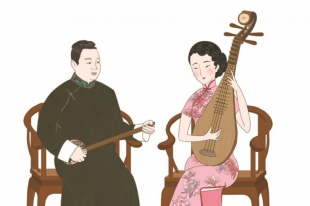



Opening a door to a timeless world









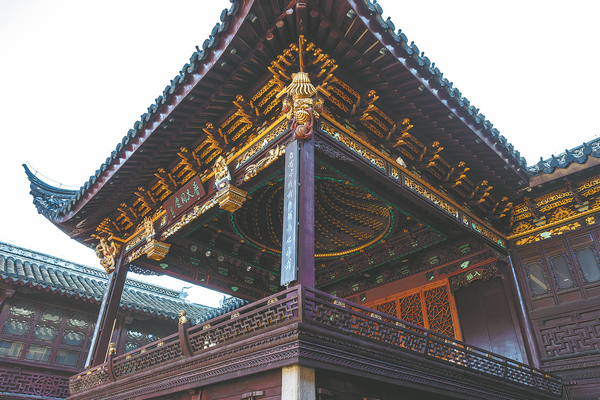
Many of them have probably visited one of the pingtan performance venues located within the historical district, or have paid their homage to the Suzhou Pingtan Museum, which opened in 2004 inside the one-time residence of a retired Qing official, just a few steps away from the Kunqu Opera Museum.
"What constitutes our collective memory? The waters and the bridges, of course, but then there are also the sounds — the words spoken and sung and whispered — that we sometimes tend to forget, yet instead have clung to intuitively," says Hu, who, these days, as a certificated Suzhou dialect teacher, has given lessons to both adults and younger learners. Sometimes she is invited by the management of the historical district to do so.
The 36-year-old was born in Cangjie Street, or the Granary Street, on the western edge of the historical district. For those in the know, the street name is a reflection of ancient Suzhou's — and by extension, the surrounding region's — role as a major supplier to the national granary during the Ming (1368-1644) and Qing dynasties.
About 300 meters east of Cangjie Street is a section of the moat that surrounds the Old Town of Suzhou, the construction of which can be traced back to the fifth century BC.When the Grand Canal was built in the early seventh century to connect the country's north with its south, water from the canal started to feed directly into the moat. Ever since, Suzhou, despite the occasional war and intermittent upheavals, had been consistently on the rise, becoming China's incontestable center of commerce in the 18th century, during the reign of Emperor Qianlong, who visited the city six times.
Since the 1990s, the senior members of Hu's family, almost all of whom are involved with the silk weaving industry, have gradually moved out of the city's Old Town, where the historical district is located. "But I stayed, as well as many of my younger friends," says Hu. "Why? Because that way, we are more aware of the change of seasons."
She is referring to the many architectural features of the old residences, including tianjin, a well-like open courtyard located within a building which, by allowing in cool breezes, defuses a hot summer day that would otherwise have been unbearable in the days before air conditioning.