Bridging the gap between now and then










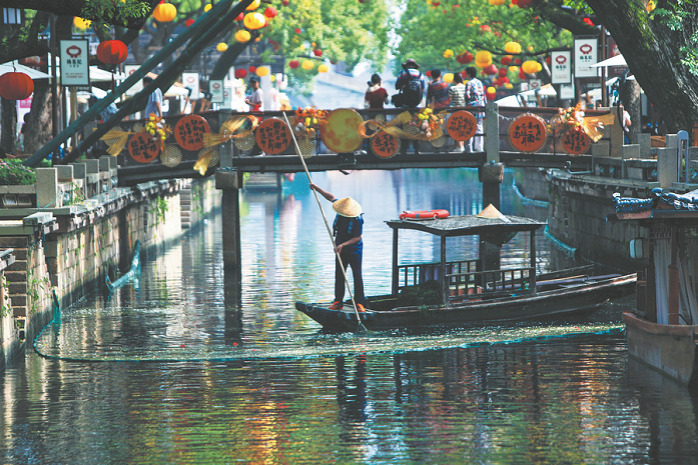
"Whatever time it takes to make an ancient canal disappear, it takes ten times longer to put it back on the map," says Ruan, reflecting on the more recent history of the Zhongzhangjia River (canal) that once ran alongside the Zhongzhangjia Lane to the east of the Pingjiang Road, before it, too, was filled up in the 1950s. In 2005, three years after the establishment of the Pingjiang Historic District, construction commenced on the canal's site and lasted for the next 15 years, until water started to run the same course again, in the spring of 2020.
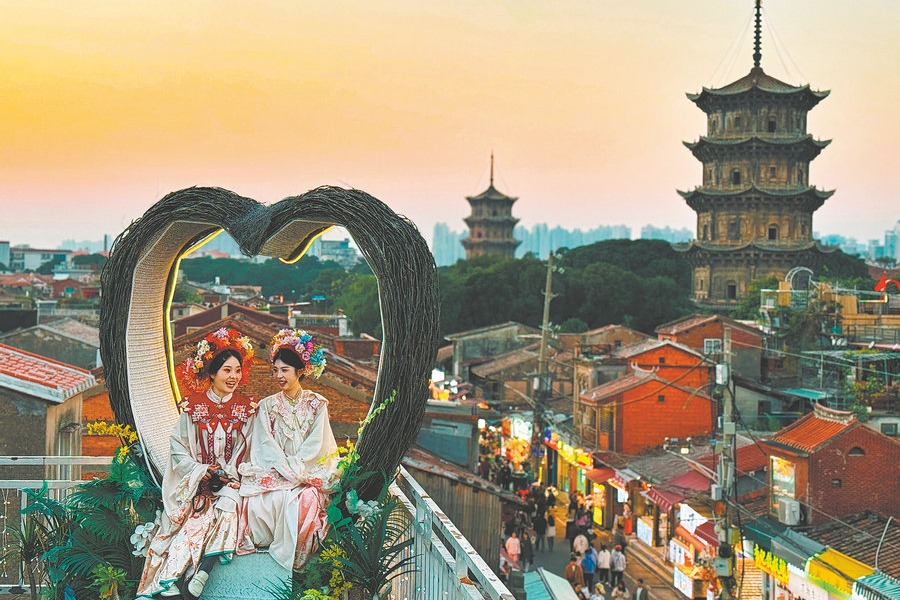
Today, the Zhongzhangjia lane and canal constitute a major attraction within the Pingjiang Historic District, which, on an average day in early summer, is crowded with visitors, including many young women donning period costumes with the intention of getting the perfect pictures.
The scene is a far cry from what Suzhou was left with when, in 1130, the city was ravaged by nomadic Jurchen troops from the north, who were an archnemesis of the Song court.
According to Pei, in the immediate aftermath of the tragedy — the Jurchen army didn't stay — the governor of Suzhou ordered every boat leaving the city be loaded with debris from the canals, so that the waterways, which Pei calls "the city's blood vessels", could be declotted and put back into use as soon as possible.
Yet, the rebuilding required much more prolonged and assiduous effort: when Pingjiang Tu was made in 1229 to record the results of the effort, 99 years had passed.
"For its contemporaries, the map was a display of resilience. For us, and every visitor to the Pingjiang Historic District, it's a reminder that whatever the city has been subjected to in history, it always bounces back."
For Ruan Yisan, an elder brother of Ruan Yongsan and one of China's leading preservationists, the waterways are time tunnels leading to much-cherished childhood memories, when his family was living on the Niujia Lane.
"In the summer, boatloads of watermelons would be arriving at our doorstep; in the winter, it would be stacks of soft hay which we put underneath our bedding," he says.