Urbanization needs more money on public services









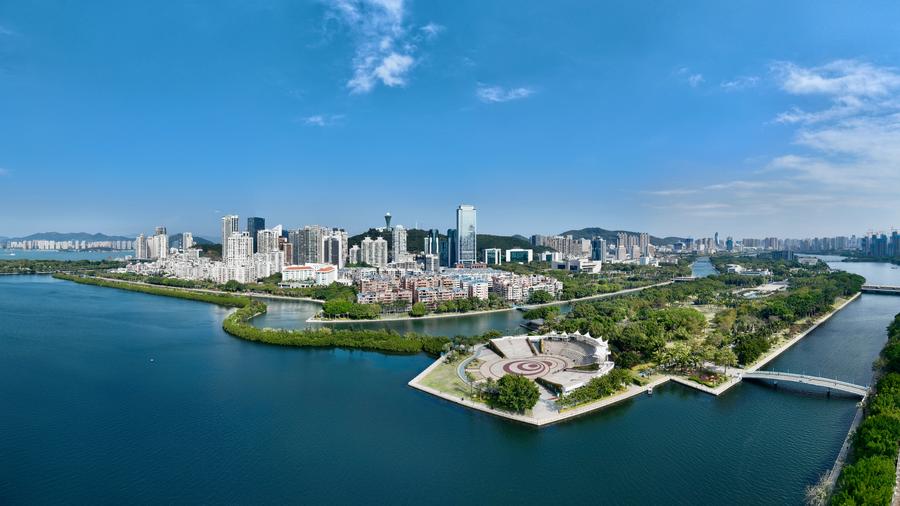
Xiamen, a coastal city in Fujian province, is offering free accommodation to graduates from other cities' universities seeking employment in the city. About 2,400 beds are being offered to applicants looking for a job or working as an intern free of cost for six months, according to a recent news report.
Xiamen, however, is not the only city to offer such facilities to attract highly skilled or educated workers, in order to enrich its talent pool as well as increase its population.
For long the world's most populous country, China witnessed negative population growth in 2022 — its population decreased by 850,000 in 2022 and 2.08 million last year despite a series of government measures to increase the fertility rate.
But while China's total population is decreasing, its urban population has been increasing at about 1 percentage point each year over the past few decades. The government is pursuing modernization to give the Chinese people, especially rural residents, a better life. Accordingly, many towns and small cities have lifted hukou (household registration) restrictions against migrant workers who are employed there.
Some big cities, too, are lifting some of the hukou restrictions, though they tend to be choosier when it comes to granting housing registration. Some cities grant hukou to people with higher educational qualification and a stable job, while others grant it to those who purchase local housing or start a business. Quite a few cities are offering PhD holders and national/international award winners settlement subsidy and project-support funds which can run into millions.
Thanks to such policies, the populations in almost all the big cities increased despite the fertility rate in cities usually being lower than in rural areas. For instance, the population of Hefei, Anhui province, increased by 219,000 in a year — the highest in the country — with the populations of four other cities increasing by more than 100,000 each.
In 2023, Chongqing, which has a population of 32.13 million, was the only big city that witnessed negative population growth last year. It is believed that a big rural population — which makes up nearly one-third of Chongqing's total population — is behind the population outflow from the city because young farmers can easily find a job in other cities. Chongqing's population decreased by 219,000 in 2023.
But while many cities have succeeded in attracting talents and increasing their population, both government officials and market observers have warned that local authorities should not go too far in attracting talents. Top talents need the right environment to hone their skills and deliver results but, unfortunately, the right environment is not available everywhere, the market observers have warned. Also, city authorities have to create the right jobs for people with higher educational qualification, or else they cannot retain them.
So, more efforts should be made to improve the investment environment of cities, for example, by ensuring investors bring with them money, technology and scientific projects, and platforms are established and suitable jobs are created for them. Better infrastructure including reasonable housing prices and convenient transportation services can also add to a city's attraction for outsiders.
More money should be spent on improving the local environment, as it is increasingly becoming a primary consideration for youths in deciding which city to work and live in. The populations of both Hangzhou, Zhejiang province, and Chengdu, Sichuan province, increased by about 140,000 each last year not only because of their talent-attracting policies but also because of their relatively mild climate and beautiful natural surroundings.
More money should also be spent on improving public services such as providing more efficient services in hospitals and elevating the quality of teaching in schools apart from building good schools and hospitals. Survey results show most people, especially middle-career professionals, are most concerned about such issues when considering about settling down in a new city.
If China's urbanization continues even at the current rate, about 160 million rural residents — equivalent to almost half of the US' total population — will settle down in cities and towns in the next decade. Which is not an easy job. We have to be well prepared for it.
The author is former deputy editor-in-chief of China Daily.
kangbing@chinadaily.com.cn