Looking beyond the chorus of Chinese overcapacity









Before concluding her recent official visit to China, Treasury Secretary of the United States Janet Yellen's warning to the host not to hobble Western firms by flooding markets with cheap exports was indeed a rude shock that defied the general understanding of modern economics.
Yellen was virtually chorusing state actors in the US and European Union who have been fretting about Beijing's over-investment in its "new triumvirate" of innovations — electric vehicles, solar photovoltaic panels and lithium-ion batteries — that are purportedly driving output levels beyond domestic demand.
This is now framed "the Chinese overcapacity" across the West while entire humanity is still in dire need for more varieties of new innovations deemed conducive to decarbonization.
Yellen was quick to justify her stance by cautioning the world against the potential recurrence of China Shock, referencing the "below-cost dumping" of Chinese steel at the turn of millennium that "flooded the global market and decimated industries across the world, including the United States".
In hindsight, she was playing Jekyll and Hyde for international optics. While the Chinese people were impressed by her unassuming persona while savoring local culinary delights among ordinary diners, little did they expect that hours later the same person would issue a prescient warning that was a harbinger of more sanctions by Washington in the face of so-called "Chinese overcapacity".
Prior to this, innuendoes that the inexpensive Chinese electric vehicle imports are benefiting from state subsidies had been abuzz, but so far remain unsubstantiated. While the European Commission's probe into the "state subsidy" allegations is still inconclusive, Yellen's prophecy of upcoming "China Shock 2.0" is, in itself, an impudent accusation of dumping.
Perhaps, Yellen's perception of China is still stuck in a time tunnel, turning a blind eye to the realities of Chinese technological advancement, and the huge domestic market that brings along the dividends of economies of scale that made the competitive pricing possible.
Before the international audience could recover from the bewilderment caused by Yellen's statement, The Wall Street Journal ran an opinion piece of similar argument in lockstep with Yellen's in its online bulletin after May Day.
It argues that "China has the ability to produce some 40 million vehicles a year, though it sells only around 22 million cars domestically. That has led to Tesla and others cutting prices in China, triggering fears in the US and Europe that Chinese automakers will flood other countries with unsold cars, and the question: Why does the country keep making more cars than it needs"?
This is certainly not a question raised out of naivety, but more of a question that defies the conventional norms of international trade. Under the lens of market economy espoused by the West, labeling exports of surplus products as "overcapacity" is an outright breach of the concept of division of labor, introduced by economist Adam Smith in 1776.
For centuries, nations have been exporting products in which they have a comparative advantage and importing those they have a comparative disadvantage in, thereby maximizing overall production and consumption efficiency through international trade.
This has long been the practice across established economies, but why now is China exclusively being discouraged, if not deterred, from ascending the value chain when it endeavors to transition from conventional manufacturing to a more innovation-driven economy?
From the perspective of the US-led West, this is tantamount to mounting an unprecedented challenge to the West's technological hegemony. In its pushback, Washington and its allies' responses have indeed taken the world by surprise. Instead of picking up the self-perceived gauntlet with their confidence and technological prowess, they resorted to collective bid of suppressing the alleged overcapacity through either sanctions or punitive tariffs.
Put it plainly, this is no different from "goal post shifting" targeting China solely in the dynamics of global trade — a form of prejudicial discrimination likely predicated upon ideological differences.
As the affordable Chinese electric vehicles reach the West, the purported prodigious production capacity of China in the new triumvirate of technological innovations is now the new scapegoat for precipitating a downward spiral pricing of the products, thereby putting the relevant industries in the West at stake. Reading between the lines, the hidden message is conspicuously clear — its market competitiveness is in jeopardy in face of competition from Chinese products. To this end, the alleged "state subsidy" is nothing but a convenient justification framed to invoke global Pavlovian reflex against Chinese products.
Indeed, the nomenclature of overcapacity makes a perfect geopolitical lever deemed usable by the West in stifling the technological rise of China.
In reality, the fact remains that exporting 12 percent of Chinese-made electric vehicles is still relatively a new kid on the block, far lagging behind the 80 percent exports of German automotive products, followed by Japan's 50 percent and the US' 25 percent. Yet, "overcapacity" has never been an issue raised against these nations.
To mitigate the increasingly pronounced climate crisis, global demand for clean energy and insatiable quest for green sustainable development is poised to remain robust. China, as a responsible international player, has every reason to beef up its own technological prowess and innovativeness to meet the mounting challenges. This is particularly relevant in view of the shaping of a hostile geopolitical environment against China by the West under the garb of de-risking from the so-called security threats.
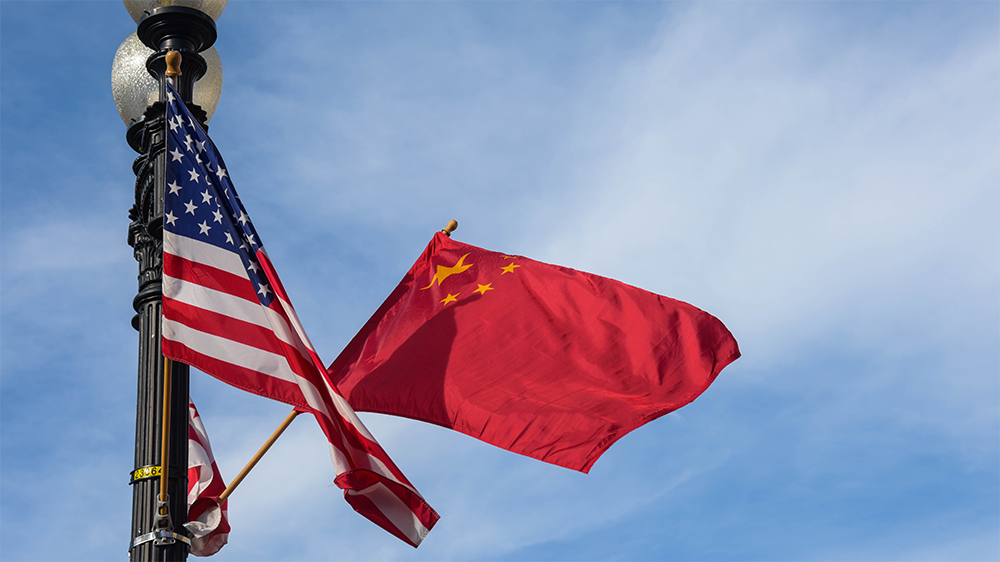
Against the present global backdrop of Sino-US relations, Beijing is dubbed the systemic challenger and competitor to Washington in all respects, with or without the alleged overcapacity claim. Yet, Beijing has in response been reluctant to acknowledge Washington's framing of Sino-US relations, ostensibly seeking to avoid any outright collision with the unipolar superpower.
Over the years, the Sino-US economic relations have remained tense. China has been incessantly grappling with a seemingly endless chain of hostile and discriminatory actions by the US. The restrictive export controls imposed on cutting edge technologies and the threatening of decoupling and de-risking against China are concerted moves orchestrated by Washington. All converge to the ultimate goal of containing, encircling and subjugating China.
For China, it won't certainly come as a surprise if more rounds of Sino-US rivalry cloaked in the outfit of competition are coming up. In this context, perhaps the present overcapacity claim is just the beginning heralding a new wave of initiatives designed to stymie the rise of China as the US' anguish of holding its waning primacy intensifies.
The author is president of the Belt and Road Initiative Caucus for the Asia-Pacific and former transport minister of Malaysia.