



Recycled products shatter old ideas about ceramic waste
New approaches, regulations ensure greener, cleaner industry









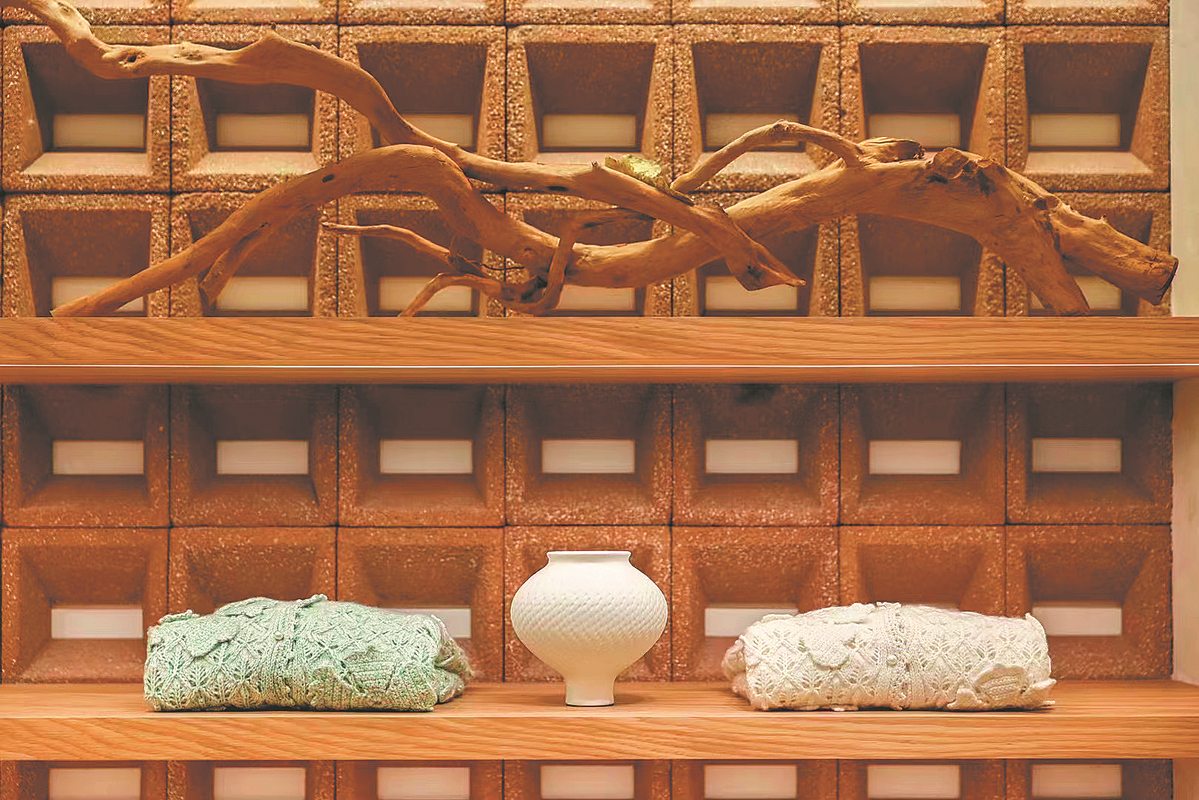
Every two months, Yan Chunyang hauls the accumulated ceramic waste from his studio to two large green bins, which serve as designated recycling points for ceramics.
"It has been about two years since I started taking ceramic waste to the recycling point. Many other studio owners in Jingdezhen also go there to dispose of their waste ceramics," he said.
Yan is a 33-year-old freelance artist who set up his ceramic 3D-printing studio in Jiangxi province's Jingdezhen, the country's porcelain capital, in October 2021.
He quickly became a vendor at the Pottery Workshop Creative Market, showcasing and selling his products every Saturday along with other vendors.
"When I started making ceramics in Jingdezhen, I couldn't bear to throw away flawed pieces," Yan said. "But as I produced more, I began to have higher standards for product quality, and that's when the need to deal with waste ceramics arose."
Soon after, Yan discovered a ceramic waste recycling point at the market.
After each ceramic-making session, he collects waste materials and fills up a large box. Once the box is full, he takes it to the recycling point. Many other vendors at the market follow the same practice and take their ceramic waste to the recycling point.
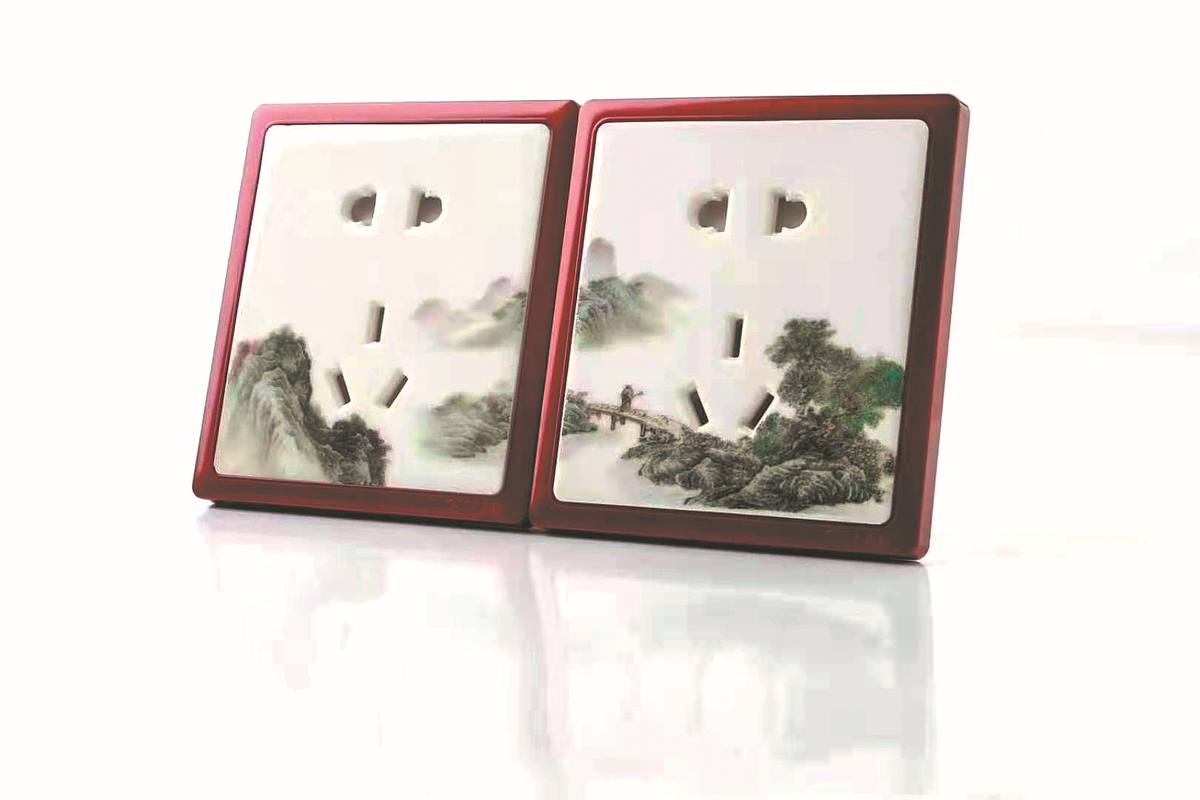
Waste into wealth
China has been the world's main producer of traditional ceramics for many years.
In 2017, China produced approximately 10 billion square meters of architectural ceramics, 220 million pieces of sanitary ceramics, and 50 billion pieces of daily-use ceramics, according to research by Wang Yongqing, a professor at Jingdezhen Ceramic School of Materials Science and Engineering.
The Central China region accounted for 25 percent, 55 percent, and 45 percent of these outputs respectively, while Jiangxi was the third-ranked province in traditional ceramic production.
However, the thriving ceramic industry has created a problem: How to deal with the large amount of non-degradable ceramic waste produced by manufacturing companies?
Jingdezhen alone produces more than 60,000 metric tons of ceramic waste annually, with an estimated 18 million tons produced nationwide.
"There are many types of ceramic waste, not just traditional daily-use ceramics, but also architectural ceramics, sanitary ceramics and more," said Wang. "Currently, some ceramic waste is recycled, but many companies still resort to traditional landfilling."
Ceramic production has always been a hit-and-miss process. In the past, wood-fired kilns had a success rate of only 30 percent in ceramic production, and failures were common.
As a result, a significant amount of ceramic waste was dumped as landfill into low-lying areas of Jingdezhen to prevent flooding and waterlogging. This led to the development of densely populated areas with extensive construction after hills and streams were leveled and covered.
Ceramic waste and kiln bricks were also used to construct Jingdezhen's sewers. Even today, walls from the Qing Dynasty (1644-1911) and pools from the Ming Dynasty (1368-1644), built with discarded ceramics, kiln bricks, and other fragments, can be seen among the ruins of the Imperial Porcelain Factory in Jingdezhen.
However, as industrial ceramics production has grown, it has become necessary to handle ceramic waste in a more environmentally friendly manner.
"In the past, Jingdezhen recycled only a small amount of ceramic waste, while the rest was buried. But because the amount of ceramic waste was small, the environmental impact was far less than it is today," Wang said.
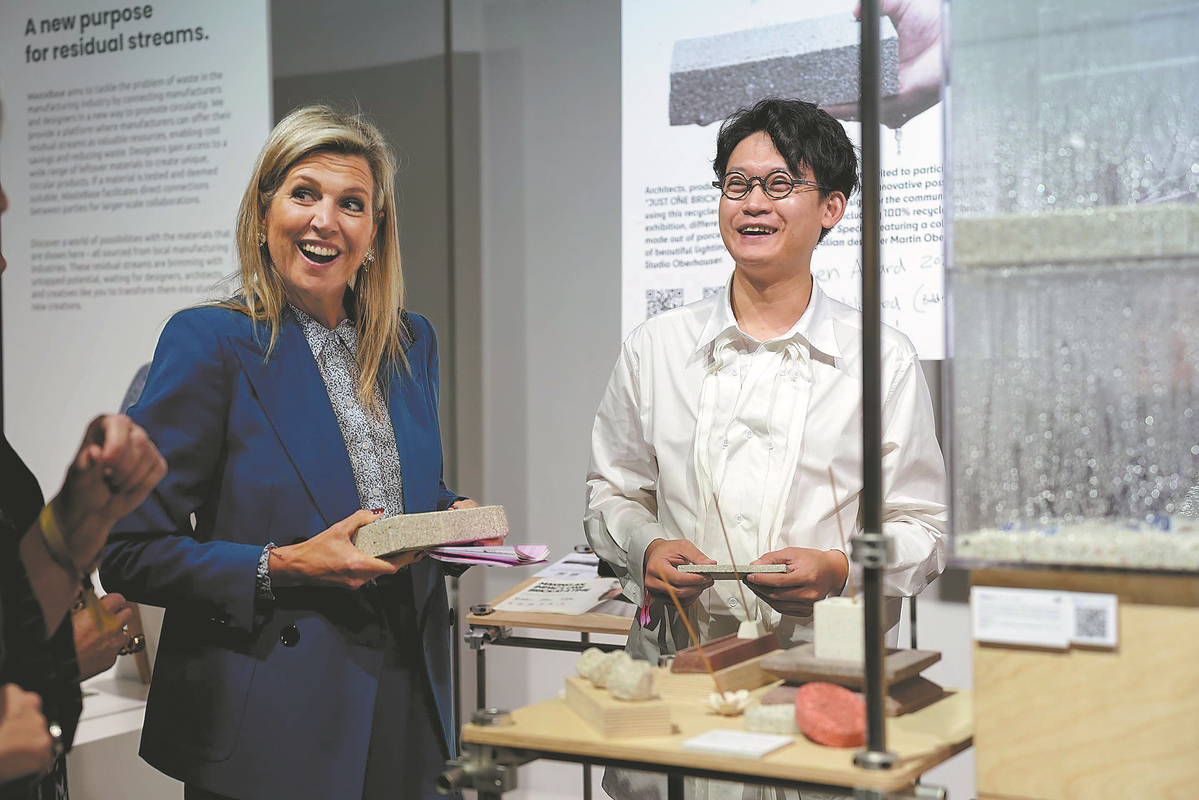
"Ceramics are not degradable, and burying them takes up a lot of land. Moreover, some glazed ceramics waste may contain harmful chemicals that can be released over time, posing a threat to the environment," said the professor.
Ceramic waste disposal can also pollute the air and contaminate groundwater quality, he added.
In recent years, China has placed greater emphasis on environmental issues, and attitudes have changed gradually.
The recycling project at the Pottery Workshop Creative Market was initiated in 2021 by Yi Design, a Chinese materials company.
Caroline Cheng Yi, the founder of the workshop and one of the co-founders of Yi Design, has been advocating sustainable recycling of ceramic waste for a long time.
According to Cheng, when she and her team arrived in Jingdezhen in 2005, they noticed a lot of ceramic waste scattered around the city's garbage bins.
"About 40 percent of the population there was involved in ceramics, but there was no system for recycling the material," Cheng said.


- Chinese 'self-media' accounts penalized for misleading publishing
- Tourists flock to Hainan for May Day holiday
- A Date with Shandong: Weifang, the city painting the sky
- Liuzhou incident leaves 4 dead, 1 injured; investigation underway
- Communist Youth League of China has nearly 78.34 million members
- Niche tourism steals spotlight in China's bustling May Day holiday travel season





