



Unveiling the realities of mutual defense between Washington and its allies









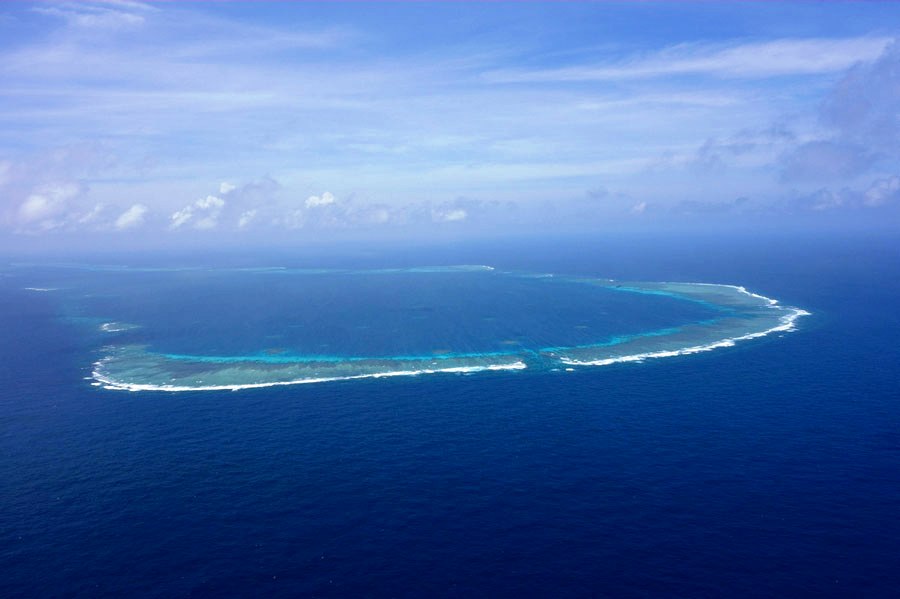
Washington has recently claimed that any attack on Philippine aircraft, vessels or armed forces in the South China Sea would invoke the mutual defense treaty between the United States and the Philippines.
While the US concept of mutual defense appears to protect an ally, in reality, it serves as a security guarantee from a dominant power to its subordinate and emboldens it to engage in aggressive behavior.
Washington and its allies lack legitimate shared interests to defend together. Instead, Washington often exploits mutual defense agreements to pursue an ulterior motive, collectively infringing on the interests of other nations.
NATO serves as a glaring example. Calling itself a regional and defensive organization, the bloc, which Washington pieced together to counter the Soviet Union, did not dissolve at the end of the Cold War.
Instead, it has incited global conflicts. From the Balkans to Afghanistan, Iraq to Libya, Syria and beyond, NATO's actions have left a trail of devastation.
Washington's allies have failed to gain true security through mutual defense with the United States. The ongoing Ukraine crisis can be directly attributed to NATO's relentless eastward expansion, which has squeezed Russia's strategic space. Other examples are the heightened tensions on the Korean Peninsula and in the South China Sea.
Why so many conflicts? It comes down to American motives. Washington's primary concern is not the security of its allies but creating dependency instead. To maintain its hegemony and pursue absolute security, Washington is willing to sacrifice its allies' security interests without hesitation, pushing them to the forefront of conflicts.
In the US alliance system, the asymmetry of power determines that the so-called mutual defense can only be based on the choices of the United States. Whether the United States can or is willing to fulfill the defense commitments to its allies is entirely uncertain.
In May 2017, then-US President Donald Trump did not reaffirm the commitment to Article 5 of the North Atlantic Treaty, which pertains to collective defense, during his NATO summit speech. This broke with the stance of previous US presidents on this issue since the founding of NATO. It has also led many allies to remain concerned about the US commitments and dissatisfied with its dominance.
Meanwhile, the United States' defense commitments come at a considerable cost to its allies. Not only must they permit the deployment of US troops and the construction of military bases on their soil, but they are also burdened with significant financial obligations for these efforts.
Furthermore, military alliances with the United States typically involve substantial arms sales and technology transfers, further making the American military-industrial complex profiteer.
Even worse, these allies have had to endure a gradual erosion of their sovereignty and autonomy to maintain their alliance with Washington.
British political analyst Ian Martin correctly noted that the United States often acts in its own interests. That reality is unfortunate for its allies. It means they live in the shadow of an empire.





