



Fast-fashion brand opens up to others
Move aims to capitalize on company's slick operation, fend off competition









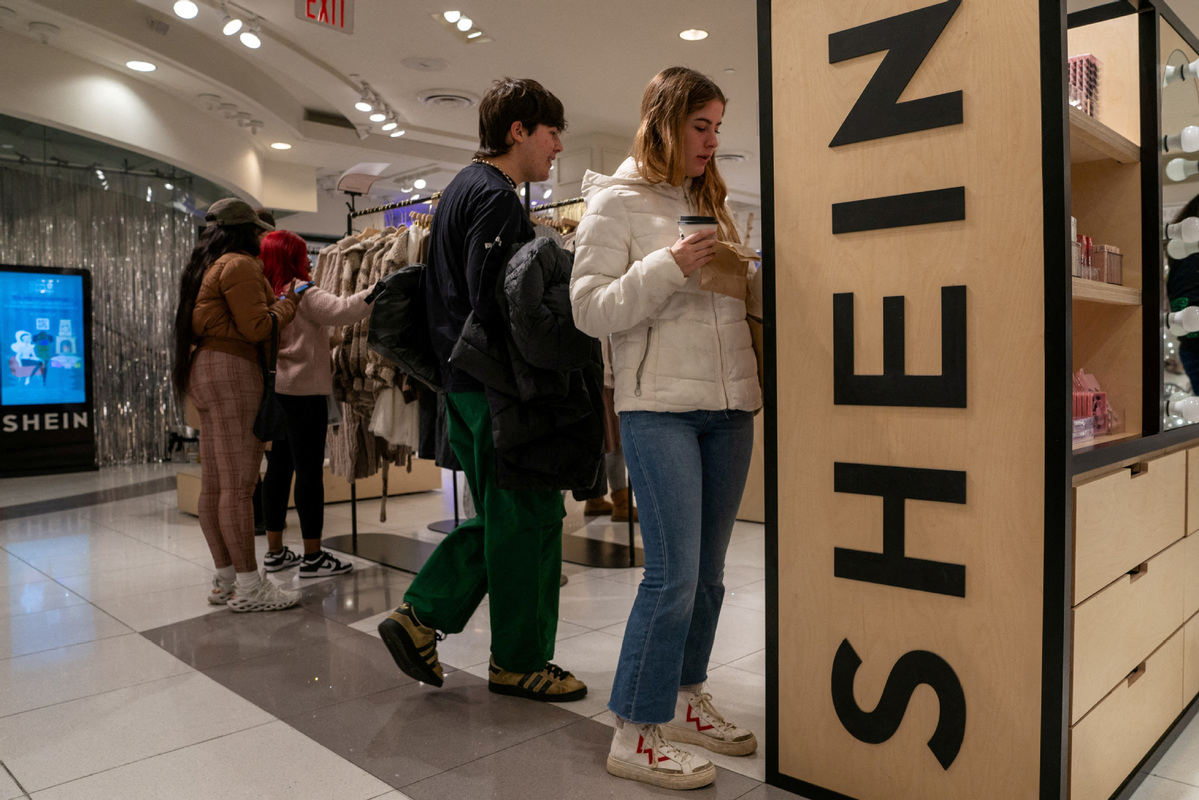
The popular online fast-fashion retailer Shein will open up and market its unique supply chain operation to other brands, which will be able to learn from its slick operations to design, make and deliver fashionable clothes at top speed.
The company, with headquarters in Singapore, built its hugely successful store by using goods made in China and local suppliers and manufacturers, which created a lightning-fast supply chain.
However, in its next phase it will change gears and give outside designers and brands the chance to use its design teams, which create in small batches to test a product's popularity with consumers while creating less wasted inventory.
Shein's executive chairman, Donald Tang, told investors in a letter last month that the new initiative would be dubbed "supply chain as a service", The Wall Street Journal reported. The aim is to keep the company one step ahead of the competition.
George Yip, emeritus professor at Imperial College London and distinguished visiting professor at Northeastern University in Boston, said: "Today with everything online, the Chinese just spot whatever trends there are. And, of course, they're able to send out hundreds of stocks, keeping units of hundreds of designs and see what sticks, and then respond very quickly. They have low-cost manufacturing capability."
Shein made its US debut in 2015, and its sales soared amid the pandemic. The company had a revenue of about $22.7 billion in 2022.
The e-commerce company's revolutionary approach to fashion manufacturing means that it has contracts with more than 5,400 third-party factories in China that make tens of thousands of items of clothing each day.
Even though its website features a lot of stock, it makes goods only in small batches.
When customers browse the site, Shein monitors what they look at, put in their cart, hover over, or click on, allowing the company immediately to see what is popular. It then creates new designs based on what customers like.
Once Shein places an order with a supplier it can be delivered in days. Managers rely on real-time data to determine what is in demand and order more as needed.
This approach cuts the cost for storage, a primary reason for its ultralow prices such as a $10 dress and a $2 T-shirt, which have proved popular with consumers in more than 150 countries.
As Shein enters the new phase, it has given some emerging designers access to its technology under its Shein X incubator program.
Under the partnership with independent designers more than 4,600 designers worldwide have displayed 41,000 original designs.
Shein's new approach comes as it faces growing pressure from Western regulators and politicians over its business practices.
Shein filed an application for a US stock listing in November, but the Securities and Exchange Commission has yet to make a ruling.
The basis of Shein's business has been remaking fashion from the runways by houses of high couture more cheaply and selling it to fashion-conscious consumers, especially young, social media-savvy young women.
Shein has outpaced well-known European fast-fashion companies such as H&M, Primark and Zara even though they have had a solid online presence, and brick-and-mortar stores for decades and are considered the pioneers of fast fashion.
Making inroads
Over the past few years Shein has also made inroads into the Western market by buying a stake in Sparc Group, operator of the US brand Forever 21. It also bought the online British fashion brand Missguided.
Shein's approach puts it in direct competition with Amazon of the US, which wants to fend off the new rival.
Amazon is reportedly trying to offer consumers a broader selection of goods and improve its delivery speed, especially for same-day items, to regain consumers lost to both Shein and Temu, The Wall Street Journal reported.
Temu has quickly become popular in the US and is the second-most popular shopping app in the country by monthly users.
Last year Shein launched a marketplace in the US, Brazil, Europe and Mexico. It gives third parties the ability to sell different types of goods such as fashion, home goods and electronics, much like Amazon.










