



Healthy competition in bilateral ties stressed
Experts air concern over Washington's technological restrictions on Beijing









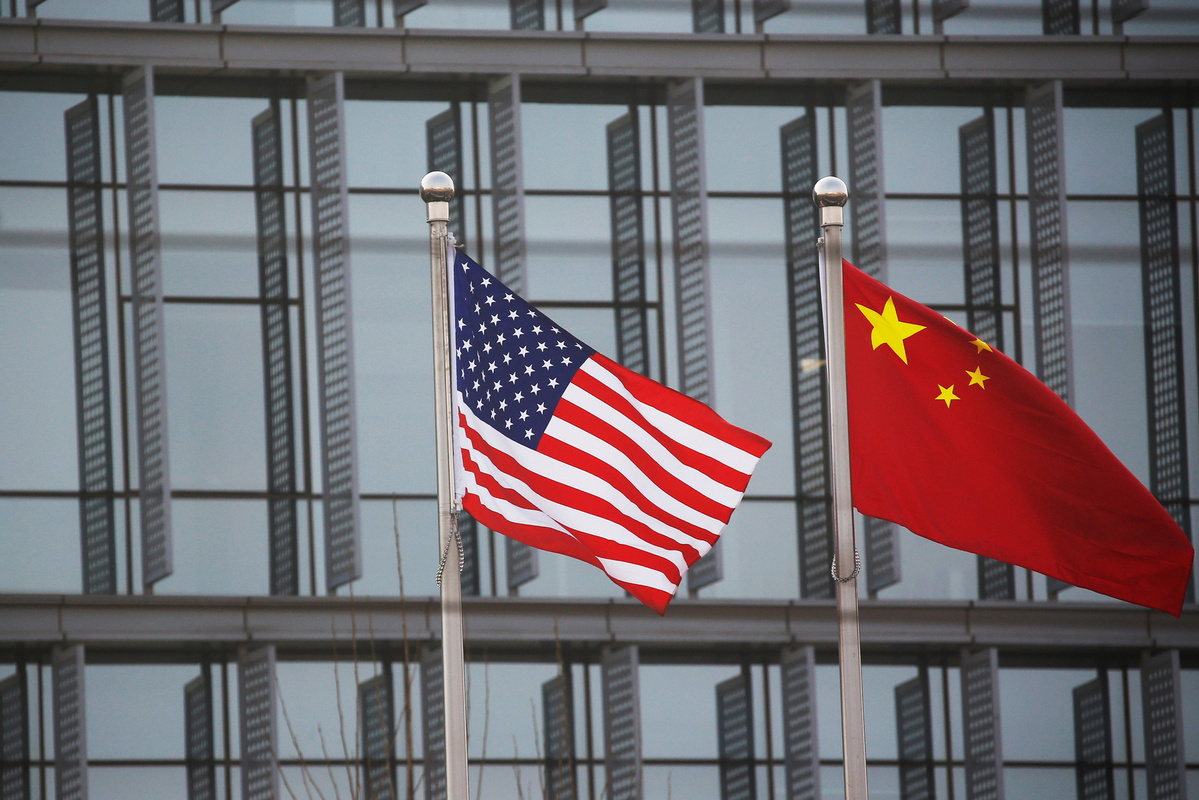
US Deputy Secretary of State Kurt Campbell emphasized the necessity of fostering healthy competition between the United States and China, but experts expressed concerns over US technological sanctions and their impact on global trade and technological development.
Campbell said there are elements of competition in US-China relations and the US wants to keep those elements healthy and "keep that competition from veering into confrontation or conflict".
"We believe that the way to do that is to keep lines of communication open, and the ability to be able to engage when there are misunderstandings or potentials for accidents. But then at the same time, find those areas where it will be essential to maintain communication and working together," he said.
Campbell made his comments on Tuesday in a discussion held by the nonprofit organization National Committee on US-China Relations.
The discussion, moderated by Stephen Orlins, president of the National Committee on US-China Relations, came a week after Chinese President Xi Jinping's phone call with US President Joe Biden.
The US and China are having a series of high-level engagements. US Treasury Secretary Janet Yellen paid a visit to China from April 4 to 9. US Secretary of State Antony Blinken is also planning a visit to China soon, according to media reports.
These engagements "are all indications that both sides, I think, for now, are determined to keep US-China relations on a steady, stable path", Campbell said.
"We underscore fundamentally the need to work on existential questions like climate change. We think the people-to-people dimension, which is intimated so much of our relationship in the hopes of people on both sides, seeking steps to increase trade travel. Those things are practical steps that we need to take," said the State Department's second-highest diplomat.
He thinks the US and China are now back to a situation in which lines of communication are "almost fully open". The US is seeking more engagement on the military and operational side. "And I think the Chinese system is ready to take those steps and we're ready to meet them halfway and in keeping those lines of communications open," Campbell said.
He elaborated on US strategies toward China in three ways: controlling investment in key areas of national strength, "which increasingly will be technology issues"; working closely with allies and partners to "build a consensus around maintaining the global operating system, particularly in the 'Indo-Pacific'"; and building a substantial bilateral commitment to finding common ground, but also "being clearheaded about engagement with China".
Campbell emphasized continued technology scrutiny because technology "is the high ground for national power and strategic competition".
He thinks it is important for the US to explain what it means to have "high walls" or "high fences and small yard", to make sure that "only the most careful things that require scrutiny are observed with respect to potential controls, or areas that we would prevent certain kinds of engagement with China", and many of those efforts tend to be in technology areas, like artificial intelligence and chips.
Rhetoric slammed
"While Campbell's statement seems to ease restrictions on Chinese technology and appears to be less confrontational, the nature and approach of US technological sanctions against China, limiting China's technological development, remain unchanged," said Sun Xihui, an associate research fellow with the National Institute of International Strategy at the Chinese Academy of Social Sciences.
"Campbell's remarks reflect a shift from a broad approach toward precise targeting of US technological sanctions against China, aimed at containing China while minimizing US losses, as these sanctions are a double-edged sword, restricting China while also limiting American companies' exports to China," Sun said.
China has strongly opposed the US' technology sanctions, calling them not "de-risking" but creating risks.
"The US sanctions significantly limit normal trade and tech collaboration, posing major risks to global orders. First, such sanctions, potentially fueling trade protectionism under the guise of national security, endanger the already fragile global free trade system and economic recovery," said Sun.
"Second, the US' moves will introduce the risk of fostering confrontational blocs and conflicts among major powers, as the US is likely to pressure its allies to partake in its technological sanctions against China, artificially creating conflicts between the United States' allies and China. Besides, these sanctions can also lead to the fragmentation of global technological development, potentially leading to stagnation or regression in technological progress."










