


China's rice technology nourishing Africa's needs
Perennial varieties reduce costs, provide higher yields, have potential to boost continent's food security










Practical benefits
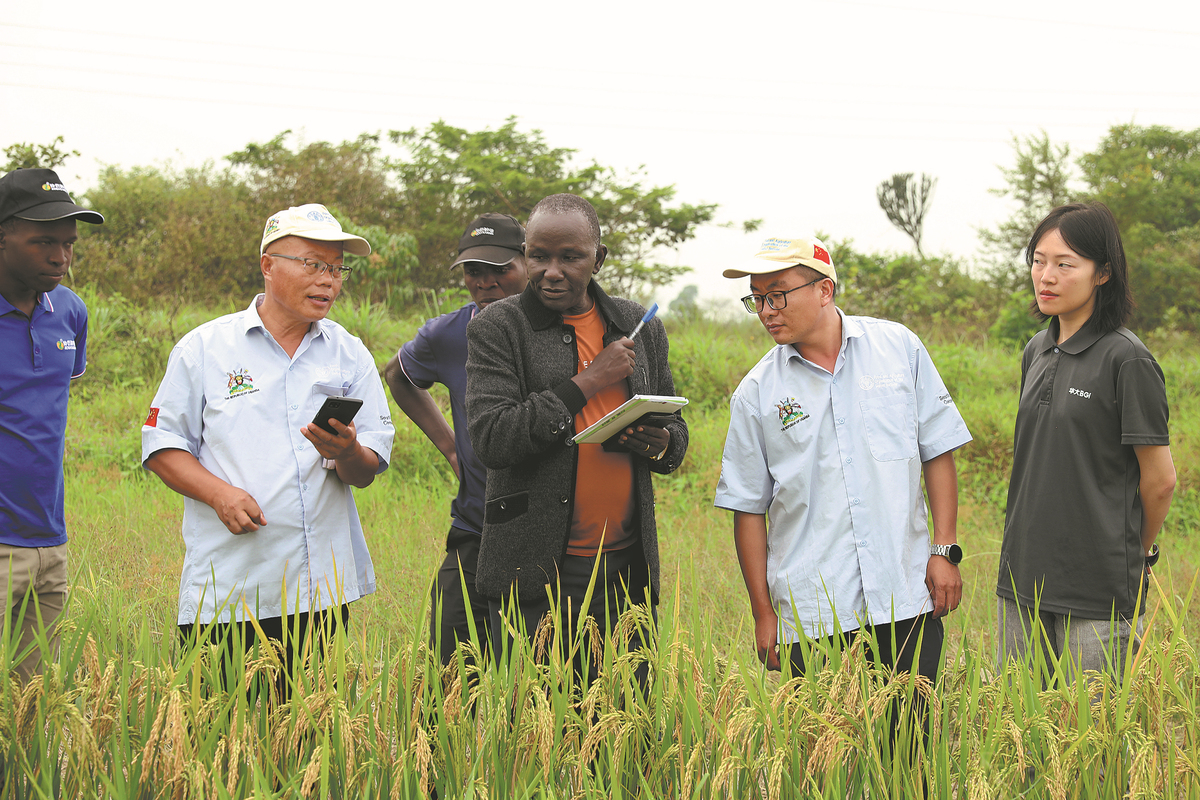
George Katwalo, a farmer in Luwero who has been given the opportunity to plant Chinese perennial rice, said the yields are higher than traditional varieties.
He harvested 1.7 tons of perennial rice from a field that normally produced one ton or even less.
"I now prefer perennial rice because it gives me a good income. Its demand in the market is also high. I encourage other farmers to try it," he said. "When cooked, it's soft and has a good aroma."
Since witnessing its advantages, Katwalo said he plans to plant perennial rice over a larger area.
According to the Chinese Ministry of Foreign Affairs, China is committed to helping Africa establish production bases and large-scale warehouses for several major grain products such as hybrid rice, cassava and soybean, to enhance some countries' capacity to ensure food security and self-sufficiency.
Lamo said the presence of China in Africa and its sharing of new commodities could revolutionize agricultural production on the continent. He noted that China is advanced in terms of value-added technology as well as mass production, while Africa has plenty of arable land.
Africa has 65 percent of the world's remaining uncultivated arable land, an abundance of fresh water, and about 300 days of sunshine each year, according to the African Development Bank Group.
In addition, more than 60 percent of Africa's working population is engaged in agriculture, and the soil in many African nations is rich and fertile.
"Soybean and rice rotation improves fertility, increases income and provides the opportunity for large-scale marketing. Cassava, on the other hand, is an industrial crop and food crop. We need it in hospitals, confectionery (production) and in other areas at the same time," he said.
With warehouses in strategic locations and China's aid in the development of the road network across Africa, the continent's agricultural sector is poised to greatly benefit, Lamo said.





