



China's driverless vehicles taking fast lane to success
As consumers look to upgrade to smarter electric autos, fully self-driving cars are getting closer









Levels of autonomy
New energy vehicles will account for 70 percent of new vehicle sales in 2030 in China, with annual deliveries reaching around 20 million units a year, Ouyang said.
Smart functions, with autonomous driving features at the core, are proving to be more important as automakers try to distinguish their products from others on the market.
As these functions become more commonplace, more car buyers expect them to be offered as standard features, which will push automakers to make them a major focus of their technological development strategies.
He Xiaopeng, CEO of Xpeng, said his company will spend 3.5 billion yuan this year alone on research and development of smart functions.
"Today, the job entails a lot of computing power, a huge amount of data, a lot of money and a lot of people," he said.
Investment across the sector will see the technology make huge strides in the coming years, he said.
A high-level smart-driving system requires 0.1 human interventions per 100 kilometers on the expressway, but it requires over 10 per 100 km on urban roads, the CEO said.
"The system will do as good a job in urban traffic as on expressways in 18 to 36 months," he predicted.
Xpeng offers vehicle functions capable of urban navigation in over 240 cities in China. Relying on visualization — instead of high-precision mapping — it takes a few days for the company to make such functions available in a city.
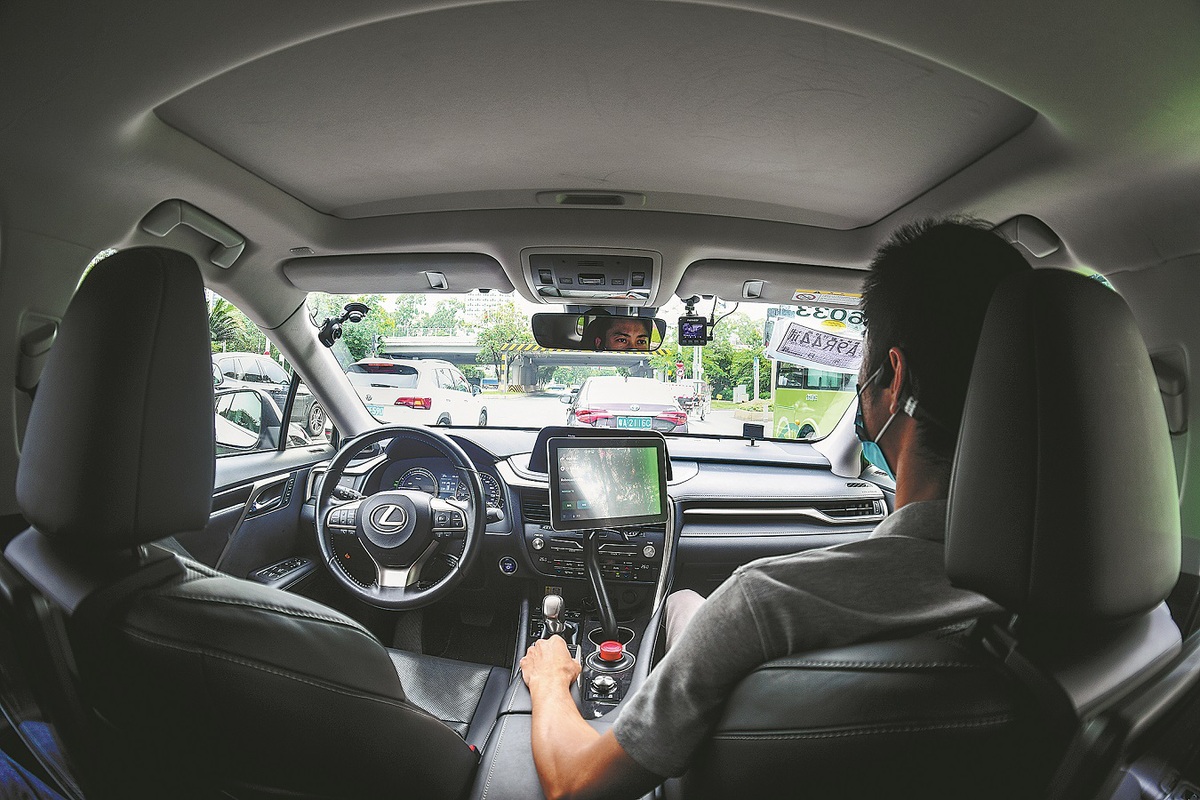
However, to date, all such functions available in the market have been legally defined as Level 2, or "combined driver assistance" autonomous driving.
At this level, a vehicle can control steering, acceleration and deceleration, according to the Society of Automotive Engineers. But Level 2 falls short of self-driving, as a driver sits in the car and can take control of the vehicle at any time.
The society divides autonomous driving into six levels from 0 to 5, with Level 5 classified as true fully autonomous driving.
Some automakers argue that their vehicles have functions that are more advanced than Level 2, and want a "plus" category between levels 2 and 3.
From a technological perspective, the jump from Level 2 to Level 3 is substantial, according to Synopsys, an electronic design automation company based in California.
Level 3 vehicles have "environmental detection" capabilities and can make decisions for themselves, such as accelerating past a slow-moving vehicle or braking to prevent crashing into obstacles. However, they need driver intervention when necessary.











