AI model offers support for traditional medicine









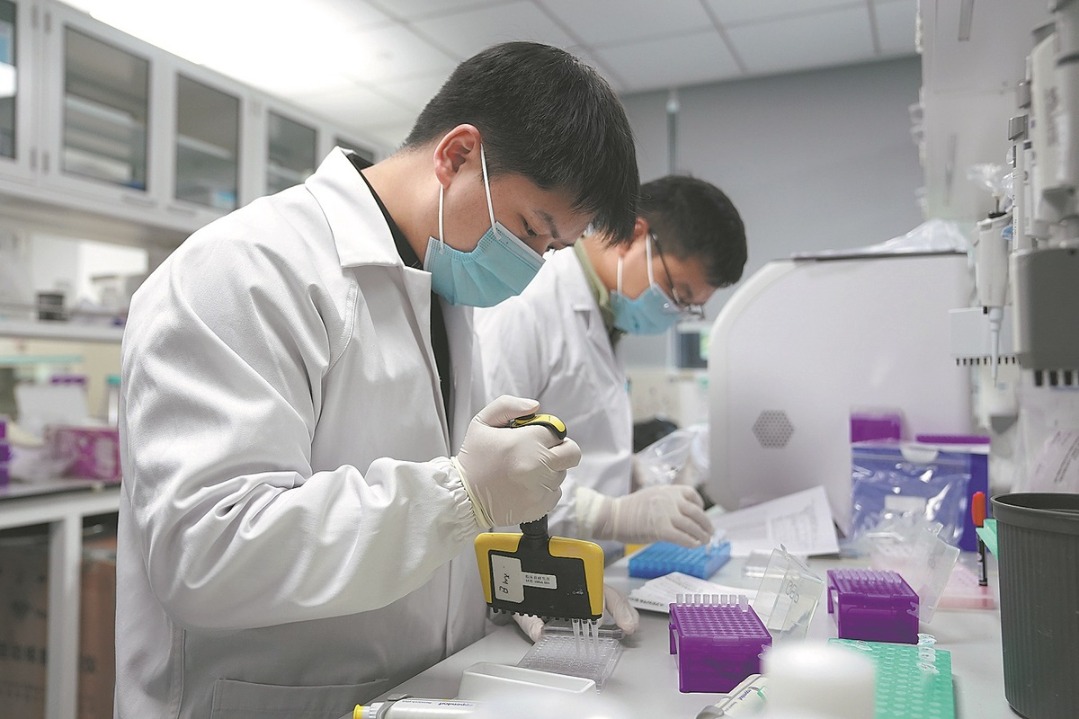
The testing of an artificial intelligence model dedicated to traditional Chinese medicine has been completed, with its developers now looking to countries involved in the Belt and Road Initiative as their first overseas markets.
The Haihe Qibo model — named after the Haihe, the mother river of Tianjin, and Qibo, a legendary TCM doctor from ancient times — was unveiled in Tianjin on Saturday during an event hosted by information technology giant Huawei and Tianjin's Hebei district government.
"Setting itself apart from previous TCM big models, this model offers multi-language services and robust data, and boasts rapid AI compatibility," said Wang Xin, vice-dean of the School of Artificial Intelligence at Tianjin University.
The model was developed by Tianjin University, Tianjin University of Traditional Chinese Medicine, the Tianjin Artificial Intelligence Computing Center and the startup company Graph Intelligence. It features 240 gigabytes of Chinese corpus, 1GB of TCM data, 45 national TCM textbooks, the medical collections of the Daizhige information database, 703 medical books in the Complete Library in Four Sections — one of the most comprehensive compilations of Chinese classical texts — 221 ancient TCM books from an open-source library and a TCM examination database containing more than 5,000 entries.
Jia Yongzhe, CEO of Graph Intelligence, said he expects the model will initially be deployed in China and Southeast Asia, where TCM has deep roots.
"The model is expected to support community medical services in precise diagnosis, pharmaceutical companies and retail drug shops," he said.
Ma Ben, CEO of the Tianjin AI Computing Center, which was established last March in Hebei district, emphasized the model's computational capabilities.
"Within a year, the computational capacity has surged to 300 petaflops (1 petaflop equals 1 quadrillion floating-point operations per second), ranking at the forefront in China," he said.
Zhang Junhua, vice-president of Tianjin University of Traditional Chinese Medicine, said AI technology can help analyze the components and mechanisms of traditional Chinese medicine, improve the success rate of new drug development, and monitor and control parameters such as temperature and humidity during production to ensure consistent product quality.
"The integration of AI with TCM culture can elevate the quality and market competitiveness of traditional Chinese medicine products, and also promote the innovation and refinement of the traditional Chinese medicine knowledge system," he said.
- China expects 9.5b passenger trips in upcoming travel rush
- China spends big on urban renewal in 2025
- Mount Qomolangma scenic area closes due to heavy snowfall
- Senior CPC official highlights united front work to support 15th Five-Year Plan
- Widespread rain, snow to hit central, eastern China
- Fujian strengthens cross-Strait ties