


Picturing a lost era
Exhibition examines how China was portrayed, literally, before photography boomed, Lin Qi reports.









New techniques
Western paintings were believed to have been brought to China by European envoys and missionaries around the 16th century, and the 18th and 19th centuries saw a boom in the production of Western-style art, increasing its influence in the country, according to Wang Lan, the exhibition's curator and an associate professor of the Faculty of Humanities and Arts, Macau University of Science and Technology.
He says the Western painters, then living in China, and their Chinese pupils, left a trove of xiyanghua — oil works, watercolors and gouaches — a valuable visual legacy, which "records the vibrant urban landscapes, folk customs and social luminaries in Macao, Guangzhou, Hong Kong and neighboring areas".
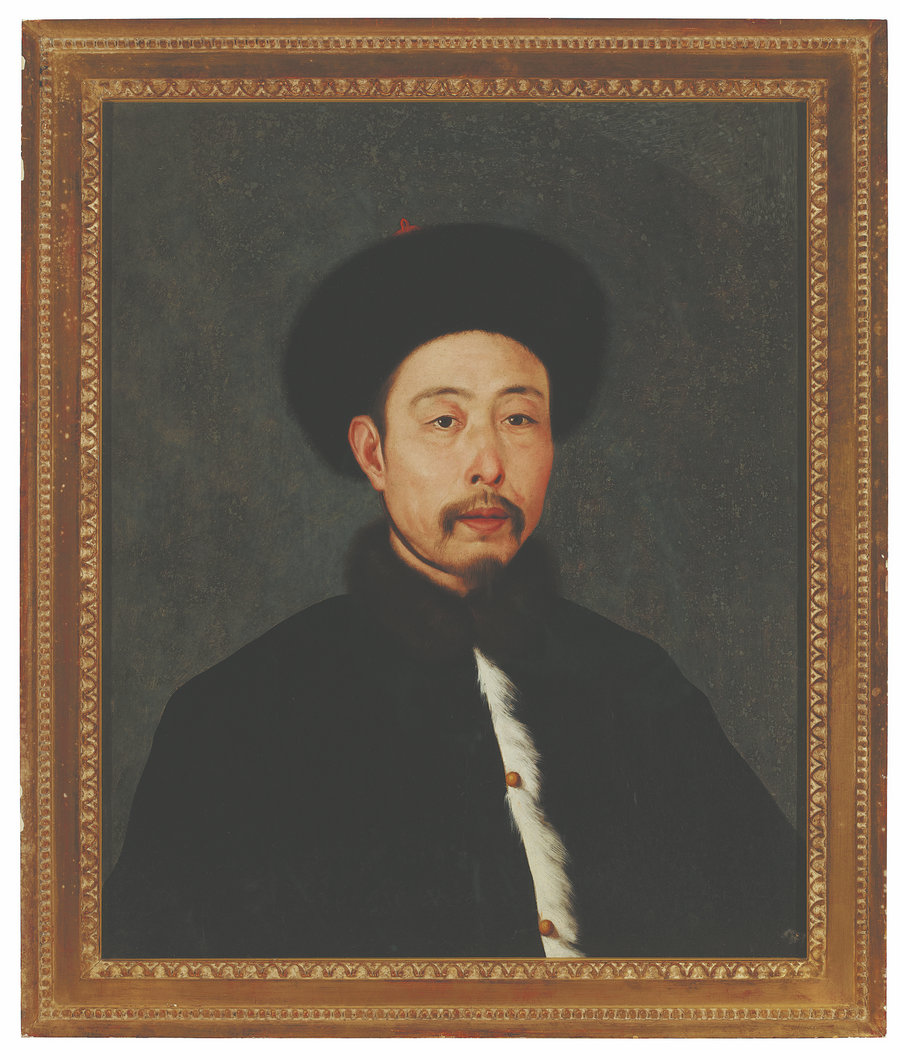
Western paintings and techniques were introduced to the imperial palace and impressed the incumbent emperors, who commissioned paintings of a similar style to document court events. Italian missionary and painter Giuseppe Castiglione is the best known figure to have contributed to this trend, first arriving in Macao and later serving in the court of the Qing Dynasty (1644-1911).
He came to the attention of Emperor Qianlong, an avid patron of the arts and an ardent collector. Castiglione was commissioned to depict the emperor in landscape paintings and stand-alone portraiture. The exhibition shows Castiglione's work, Portrait of Emperor Qianlong in Winter Suit, created with oil pigments but on paper.
Some other artists, like Chinnery, chose to stay in Macao and lived on commissions and trained local painters.

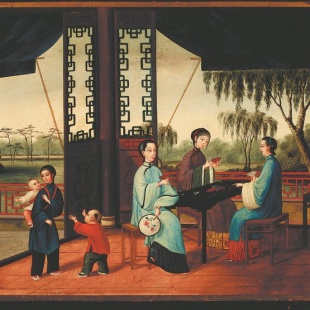
Besides painting merchant ships and coastal views, both Western and Chinese painters also revisited popular motifs, such as Chinese gardens and courtyards, and the daily life of women and children of the upper-class families living in these places.
While fusing the different techniques of Chinese and Western art, these works were sometimes created to show China as imagined by European buyers. For example, Chinese pavilions and bridges were unnaturally arranged in the composition of a Western courtyard, or Western buildings were placed in between the mountains and waters in China; and the faces of people look more like Westerners than Asians.
Liu Xiyan, a senior researcher of the Art Museum of Central Academy of Fine Arts, says these paintings highlight unique Chinese elements that would interest Westerners, such as the flower pots to decorate the gardens and interior spaces.
"These potted flowers enrich the views of the single-story residential houses while also showing the diverse vegetation in Lingnan region (areas surrounding Guangdong)," she says.