Fish farms turn murky waters clear in Liaoning
Province winning battle against algal blooms in its lakes and reservoirs with solution that also generates commercial revenue









Editor's Note: As protection of the planet's flora, fauna and resources becomes increasingly important, China Daily is publishing a series of stories to illustrate the country's commitment to safeguarding the natural world.
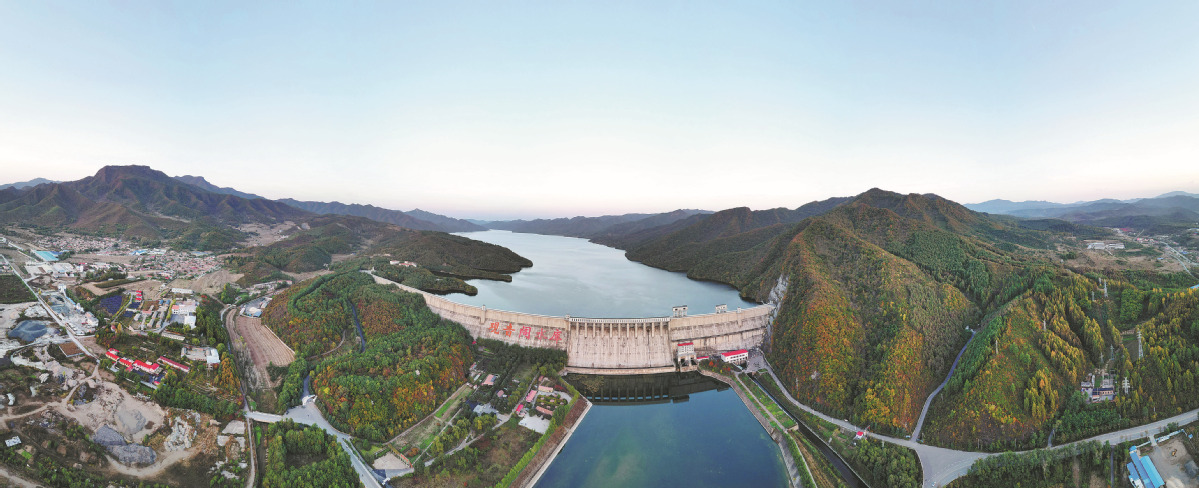
The once murky waters found in lakes and reservoirs across Northeast China's Liaoning province are being made clear again thanks to the help of a partner found in Mother Nature — fish.
The State-owned Liaoning Water Resource Management Group in 2016 began implementing a plan introduced by the then-ministry of agriculture to establish fish farms in algae-plagued water bodies to improve water quality and provide a secondary source of revenue.
Algal blooms emerge as nitrogen and phosphorus build up in lakes, reservoirs and other slow-moving waters due to agricultural runoff and contamination from untreated urban sewage.
The blooms endanger the ecosystem of freshwater lakes and can cause taste and odor problems in waters used for drinking.
The water management group, which operates 16 reservoirs across Liaoning and supplies nearly 70 percent of the province's water, has long wrestled with algae.
By introducing fish into water bodies, the water resource group is able to control algal blooms, clean up the water and then re-catch the fish to sell on the market once they've reached maturity, bringing in revenue and bolstering the nation's food security.
In recent years, provinces such as Yunnan, Anhui and Shandong, where freshwater lakes are abundant, have also rolled out similar programs.
However, these programs' custodians have warned the process is not as simple as it seems.
"Not all fish can thrive in reservoirs," said Guan Wankai, who oversees the group's operations at Guanyinge Reservoir in Benxi, southeast Liaoning.
Guan said to make the program work, the group has looked to filter-feeding fish including carp and types of catfish, that guzzle particles suspended in the water.
He said the fish in Guanyinge Reservoir are mostly silver and bighead carp.
Citing research data, the official said harvesting a kilogram of carp is equivalent to removing about 20 grams of nitrogen, 1.5 grams of phosphorus and 118 grams of carbon from the water. When calculated by the biomass of algae, 40 kg are eliminated from the water with every kilogram of fish caught.
In a written response to China Daily's request for comment, the group said it had released 7,945 metric tons of carp and other species across Liaoning by last year, and the harvest amounted to 28,100 tons.
In 2023, 4,600 tons of fish were caught, with the group raking in an additional 71 million yuan ($9.86 million), it said.





- China to introduce policy documents to address the impact of AI and promote employment: ministry
- Chinese scientists identify key Ebola virus mutation
- University of Chinese Academy of Sciences unveils the School of Space Exploration
- Senior CPC official urges high-quality development of social work
- Senior Chinese official urges steady, sustained sci-tech progress
- Chinese scientists actualize near-complete genome assembly of protected fish species