Advisers call for nuclear to be included in green energy transition









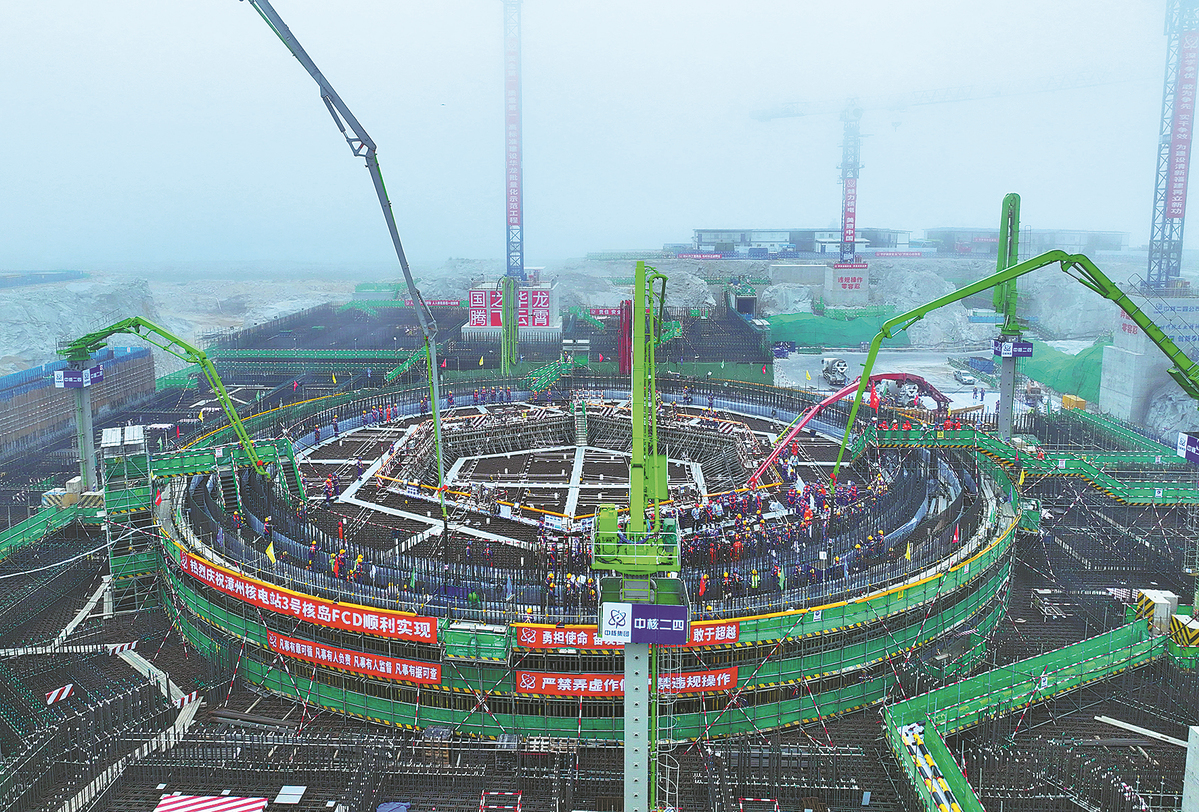
Nuclear power has massive potential to boost green electricity development in China and should be included in the country's green electricity system for low-carbon development, according to national legislators, political advisers and industry experts.
Nuclear-generated power should be certified as green electricity in China, as the country's expanding fleet of nuclear generators is capable of providing over 160 billion kilowatt-hours of electricity per year, said Yang Changli, chairman of China General Nuclear Power Group, China's largest nuclear power operator by installed capacity.
"Including nuclear power in the green electricity certificate system can help provide an authoritative certification platform for the green and low-carbon attributes of nuclear power, meeting the purchasing demands of the market," said Yang, who is also a member of the National Committee of the Chinese People's Political Consultative Conference.
China established a green electricity certification system in 2017 to promote the transformation and development of green and low-carbon energy. Wind and solar power sources are awarded certification and gain a premium in electricity market trading.
While several countries in Europe and the United States have included nuclear power, a stable and reliable high-quality green and low-carbon electricity source, in the category of green electricity at the policy or implementation level, it has not yet been included in China's green certification and green electricity system, making it the only nonfossil energy source excluded from the system, he said.
Yang said the fact that nuclear power companies do not have access to official green electricity certification has prevented them from meeting the rising market demand for green electricity and has curbed the supply of green power.
"The inclusion of nuclear power in the green electricity trading system would not only benefit the environment but also develop a new form of productivity to support the nation's high-quality development," he said.
"It could also increase enthusiasm in purchasing nuclear power, enhancing the competitiveness of nuclear power in the electricity market while promoting the effective realization of the low-carbon value of nuclear power."
According to CGN, the domestic and international carbon reduction situation has led to a continuous increase in demand for green electricity from various entities. If nuclear power was included, it could greatly alleviate the constraints placed on the supply of green electricity to society.
According to the International Atomic Energy Agency, electricity generated from nuclear power stations has the lowest carbon emissions among renewable energy sources, with one kWh of nuclear-generated electricity only emitting 5.7 grams of carbon emissions, compared with 74.6 grams from solar, 64.4 grams from hydropower and 13.3 grams from wind.
Lu Tiezhong, assistant general manager at China National Nuclear Corp and a member of the National Committee of the CPPCC, also called for the inclusion of nuclear-generated electricity into the country's green electricity certification system.
While the scale of nuclear power in operation in China will soon be the largest in the world, and the nation has the foundation to lead the development of the global nuclear energy industry, the value of nuclear energy has not been recognized in current green electricity trading.
Accelerating the inclusion of nuclear energy will help promote China's transition to a green and low-carbon energy mix while supporting its high-quality development, he said.
According to the China Nuclear Energy Association, the total installed capacity of nuclear power generators in operation and under construction in China exceeds 100 million kilowatts, accounting for 21.2 percent of the world's total and has a first-rated safety record.
As of the end of last year, China had 55 nuclear power generators in operation, generating 4.86 percent of all power generated in the year, which helped reduce carbon dioxide emissions by 323.3 million metric tons, it said.
China is looking to develop its nuclear power sector as part of a broader push for renewables and domestic energy security. Nuclear is expected to contribute about 10 percent of power generation in the country by 2035 and 18 percent by 2060, with a total generation capacity of 400 gigawatts by 2060, the China Nuclear Energy Association said.


- Chinese scientists identify core pathological brain network underlying Parkinson's disease
- Top political advisor meets Taiwan delegates to CPC, KMT think tank forum
- Taiwan public opinion says CPC-KMT think tank forum benefits cross-Strait peace
- Insurance fraud by psychiatric hospitals under probe
- Xi, Lao top leader announce launch of Year of China-Laos Friendship
- Hong Kong to set out its 1st five-year plan, says HKSAR chief executive