



Women's work: Time to recognize their critical role in agriculture – and invest in it!









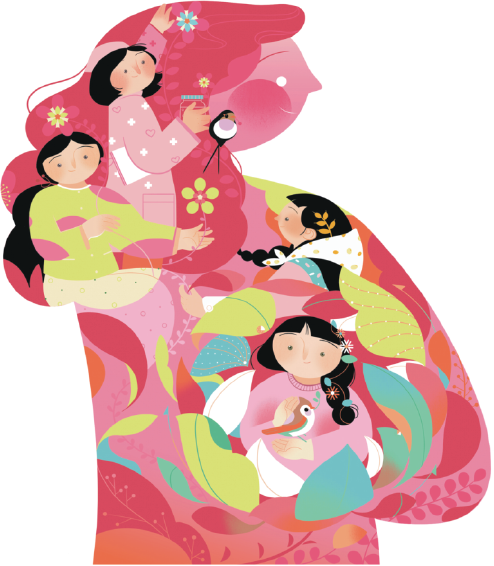
Despite women's significant contributions to our agrifood systems in the Asia-Pacific region, women continue to face persistent obstacles, including limited access to resources, services, and discriminatory practices all along the food value chain. As we gather to celebrate this year’s International Women's Day (IWD), it is time for action, to fully recognize women's indispensable role in the fields, in the factories, and those running small and medium-sized companies, associations and cooperatives – all of which produce the nutritious food we eat each day.
But recognizing and acknowledging this is not enough. In Asia and the Pacific, there is a critical need for financial investments to achieve gender equality in agrifood systems. This would play a huge role in the region’s agrifood systems transformation – now underway across the region – a transformation endorsed by 40 FAO Member Nations at the recently convened FAO Regional Conference for Asia and the Pacific, in Colombo, Sri Lanka.
This year's IWD theme, "Invest in Women. Accelerate Progress," underscores the urgency not only to increase investments but also to ensure better investments for creating an enabling environment and sustainable results toward gender equality.
While the importance of investing in women's economic empowerment is well-established, financial investments, specifically those geared towards gender equality within the economic and productive sectors, have remained inadequate. This under investment has contributed to insufficient progress in advancing women's economic empowerment and hindering women’s opportunities in agrifood systems. According to FAO data from 2023, by narrowing the gender gap in farm productivity, and the wage gap in agrifood system employment,the world’s gross domestic product would rise by 1 percent (nearly USD 1 trillion). This would also reduce global food insecurity by about 2 percentage points, decreasing the number of food-insecure people by 45 million.
So, what can we,collectively,do to bridge this financial investment gap? In addressing this question, it is imperative to thoroughly review both traditional and innovative financial and policy instruments. Gender Responsive Budgeting (GRB) is a key approach, but it is essential to recognize the wide array of strategies available for investing in women.We need to hear more from women, we need to learn from their past successes and focus on impact by accelerating investment. This should create space for development partners, including rural women and their communities, to share experiences and join forces to create a realistic chance of achieving the 2030 agenda, where gender equality is essential.
While addressing visible gender gaps is crucial, efforts to promote the voice and leadership of women, and tackle the root causes of gender-based inequalities, are equally important for ensuring long-term results.
FAO takes action to ‘walk the talk’
To ‘walk the talk’, at FAO headquarters in Rome, the Director-General, Dr QU Dongyu recently announced establishment of an Office for Youth and Women. Building on the work of the Women’s Committee, the Office will continue, among other things, to provide a “safe space” to discuss topics affecting women in the Organization, such as gender parity, sexual harassment, and parental leave provisions. The Office will also promote advocacy, communication, innovation and outreach through regular dialogue forums to better connect female colleagues around the globe, exchange experiences on specific themes of common interest, and learn from successes from FAO and other organizations in empowering women in the workplace and beyond. And it will further strengthen visible leadership and accountability of managers for gender mainstreaming through its “She Matters” initiative geared at fostering transformational leadership for women’s empowerment and the welfare of female staff at all levels of the Organization.
Worldwide, we see that discriminatory norms often expect women to take on most of the unpaid care work, exacerbating gender disparities in labour markets – both rural and urban. Globally, women dedicate 3.2 times as many hours to unpaid care work as men do. But in the Asia and Pacific region, the ratio is four-to-one. There is a need for acknowledgement, alleviation, and equitable distribution of unpaid care labour, as well as better and more accessible care systems. This will help to foster transformative changes to support families, urban as well as rural, in enhancing their livelihoods and wellbeing.
But we need to take that critical step beyond fostering and supporting. We need to invest in the technical and leadership skills of women to support their entrepreneurship and income generation, including the creation of, and strengthening of, existing networking and learning platforms.
FAO's Regional Gender Strategy and Action Plan for Asia and the Pacific has identified the need to mobilize the participation of both men and women to transform our agrifood systems through an equitable distribution of responsibilities. Creating inclusive spaces for dialogue and reflection is vital for empowering women and reshaping power dynamics across different levels. Farmer Field Schools and relevant actions targeted at women are supported by FAO in field projects as an inclusive approach to engage both men and women.
FAO is committed to closely collaborating with its Member Nations and development partners in Asia and the Pacific to achieve gender equality in a sustainable agrifood systems transformation. Gender equality is indeed a collective endeavor, and we all have a part to play in advancing towards achieving gender equality and empowerment of all women and girls – one of the SDGs (SDG5). As we reflect on this International Women's Day, let us not only recognize the challenges but also reaffirm our commitment to action. Let us unite our efforts, amplify our voices, champion change, and “Invest in Women. Accelerate Progress” towards a more equitable and sustainable agrifood systems transformation.
The author is assistant director-general and regional representative for Asia and the Pacific of the Food and Agriculture Organization of the United Nations.
The views don't necessarily reflect those of China Daily.
If you have a specific expertise, or would like to share your thought about our stories, then send us your writings at opinion@chinadaily.com.cn, and comment@chinadaily.com.cn.





