



Experts' take on China's fiscal and tax reform









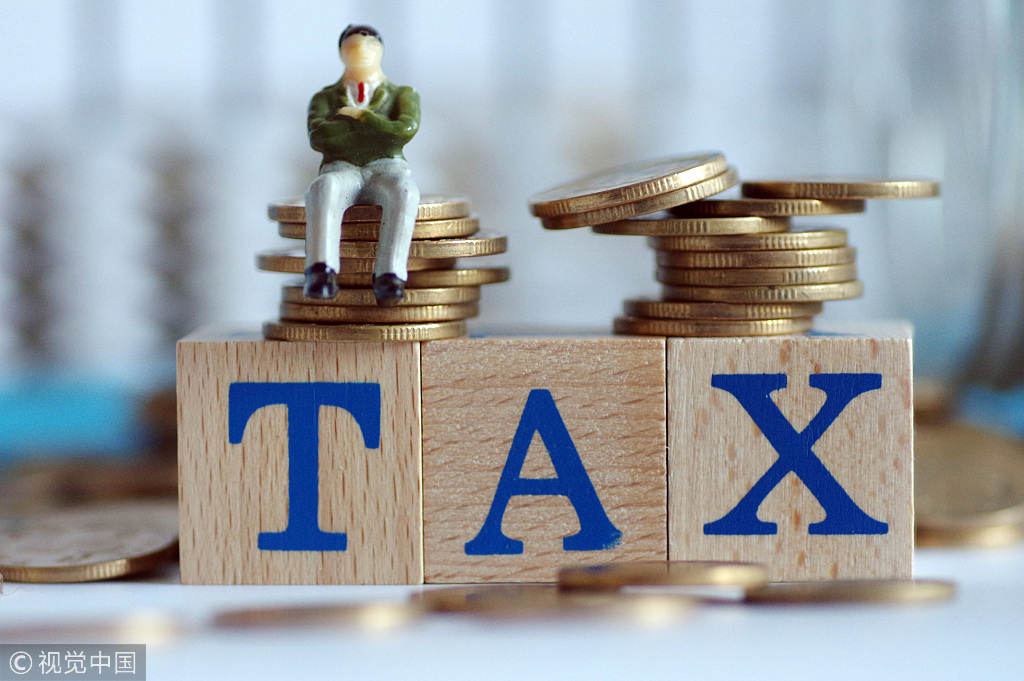
Editor's note: China is expected to carry out a new round of fiscal and tax reform, in a bid to help promote high-quality growth and improve the well-being of the people. Three experts share their views on the issue with China Daily.
Horizontal and vertical, tax-sharing reform
By Jia Kang
The Central Economic Work Conference of 2023 emphasized the need for a new round of reform measures, including new fiscal and tax reforms.
Since the launch of reform and opening-up in the late 1970s, several significant reform measures have been initiated at the macro level, with fiscal policy being chosen as the "foundation and important pillar of national governance", and its institutional reform serving as the vanguard. The imminent implementation of the reform measures has once again placed the deepening of fiscal and tax system reform on the agenda.
A brief review of China's more than four decades of reform and opening-up shows a shift in the fiscal system toward serving the overall situation, starting from the early 1980s with the "division of revenue and expenditure, and graded contracting" ("separate kitchen for each family") system.
The most significant milestone in this transition from "administrative sharing" to "economic division" was the establishment of the "tax-sharing system" in 1994. This breakthrough reform, which essentially involved economic division, addressed not only the relationship between the central and local governments, but also that between the government and enterprises, the central and local governments, and various levels of government and taxpayers, thereby ensuring that these three major relationships were properly handled.
Following the establishment of the tax-sharing system framework, all enterprises, regardless of size, administrative level and economic nature, were treated equally when it came to tax laws. This key institutional reform established a "level playing field for fair competition" for all enterprises.
Subsequently, the administrative levels of State-owned enterprises became less important, allowing for mergers and reorganizations across different administrative levels and economic structures. This reform made possible the previously inconceivable mixed-ownership reform of SOEs and non-SOEs, as well as cross-administrative-level mergers and reorganizations.
To move toward a modern tax system, the 1994 reform provided a relatively standardized framework, consolidating the previously fragmented individual income taxes (for foreign experts), personal income taxes for affluent Chinese nationals, and income taxes for individual industrial and commercial households into a relatively standardized personal income tax system. This could be further deepened through subsequent reforms.
In summary, the proper handling of the three relationships — between the government and enterprises, between the central and local governments, and between various levels of governments and tax payers — has been institutionalized since the 1994 reform which in turn has facilitated modernization.
However, due to various constraints, the 1994 reform had to compromise on several issues. The government has taken a series of measures to deepen fiscal and tax system reform since 1994, which have improved China's economic and fiscal conditions, and to this day, the tax-sharing system framework between the central and provincial governments remains intact.
However, the tax-sharing system below the provincial level is yet to be fully implemented. It is still complex and variable, and is subject to negotiation and bargaining, including dividing revenues.
To build a high-level socialist market economic system, as required by the central government, it is imperative to explore and timely introduce a new round of comprehensive fiscal and tax system reforms.
Therefore, there is a need to fully adhere to the basic institutional achievements of the 1994 tax-sharing system reform, recognize the root causes of the financial difficulties at the grassroots level, local hidden debts, and "short-term behavior of land finance", which are not due to the tax-sharing system per se but because of the inadequate deepening of the tax-sharing system reform both "horizontally and vertically," especially below the provincial level.
The overall approach for this new round of fiscal and tax system reform should be to rationalize the functions of the governments at all levels, help their transformation and standardization, and align them with the "flattening" of government levels by streamlining institutions. The higher authorities should rationally allocate the powers and expenditure responsibilities of the central, provincial, municipal and county governments, and improve the transfer payment system.
The higher authorities should also deepen the reform of the budget management system, build a reasonable local tax system, promote tax reform for "structural adjustment and mode transformation", and strengthen and optimize comprehensive budget performance management. This approach will enable the fiscal and tax system, and fiscal allocation to play their rightful roles in helping realize the strategic goal of the rejuvenation of the Chinese nation through modernization.
The author is former director of the China Academy of New Supply Side Economics. The views don't necessarily reflect those of China Daily.





