



New model to hike Huawei's market share
Competition in foldable smartphone sector fiercer as firm unveils Pocket 2









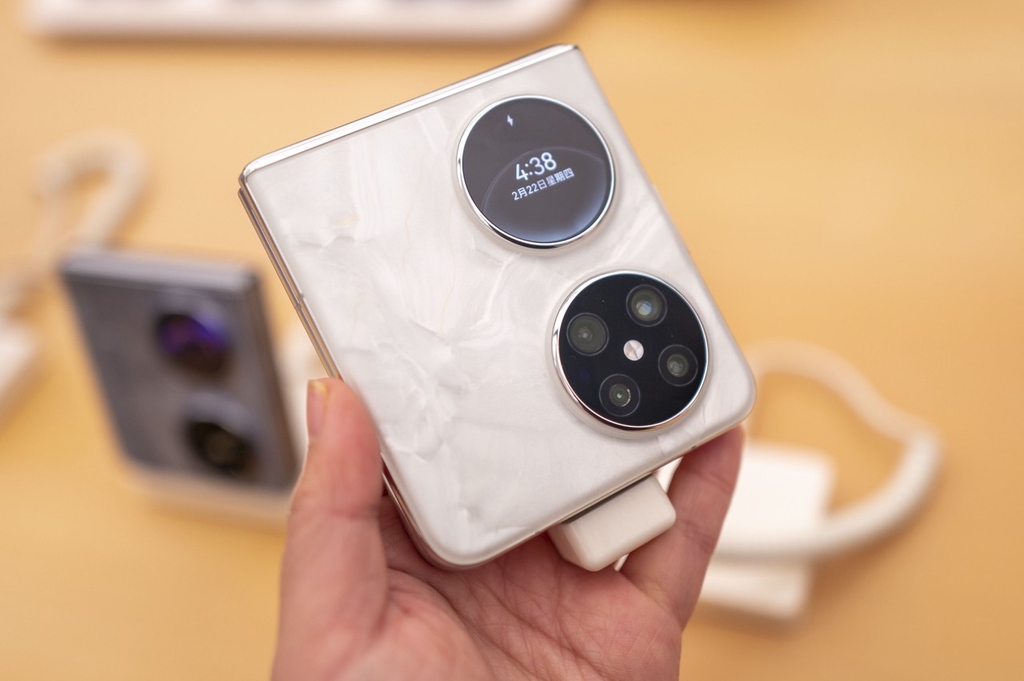
Huawei Technologies Co unveiled its latest clamshell-style foldable smartphone series Pocket 2 on Thursday, after the company regained the No 1 spot in China's smartphone market in the first two weeks of 2024 amid the US government's prolonged restrictions.
The move also came as Huawei consolidated its position in the Chinese foldable smartphone segment as the top vendor amid intensified competition from players such as Oppo and South Korea's Samsung.
Yu Chengdong, CEO of Huawei's device group, said the Shenzhen, Guangdong province-based tech behemoth now accounts for 51.2 percent of the Chinese foldable smartphone market.
The foldable form factor has been heralded as the new frontier in mobile technology. Currently, clamshell-style foldable smartphones sell better than tablet-like foldable smartphones among female consumers.
Yu said the new model is priced from 7,499 yuan ($1,042). Pocket 2 features cutting-edge camera lenses and artificial intelligence technologies which can help consumers capture better photos and videos.
Global foldable smartphone shipments are expected to pass the 100-million mark by 2027 from 13.1 million units in 2022, with a compound annual growth rate of 51 percent during the period, said market research company Counterpoint Research.
Tom Kang, research director at Counterpoint, said: "At the moment, foldable smartphones remain niche. But it is an important segment for brands looking to maintain leadership in innovation and a premium market presence."
Kang said China emerged as the biggest foldable smartphone market globally in 2022. "If you want to make it in foldable smartphones, you have to make it there."
A survey conducted by Counterpoint spotlights a strong interest in foldable smartphones among Chinese consumers. As many as 64 percent of smartphone users in the $400 and above price bracket in China are considering foldable smartphones for their next purchase, with 20 percent already committed to the idea and an additional 44 percent weighing it as an option.
Meanwhile, as AI impacts all corners of the devices market, smartphones are expected to be the device driving the AI revolution into every home, said a report by global market consultancy IDC.
IDC's preliminary forecast suggests 170 million next-generation AI smartphones will be shipped in 2024, representing almost 15 percent of total smartphone shipments and a sizeable jump from the roughly 51 million shipped in 2023.
This share is expected to climb rapidly beyond 2024 as industry players push aggressively towards new chips and use cases that evolve further, IDC said.
IDC defines next-generation AI smartphones as devices with a system-on-a-chip capable of running on-device generative AI models such as ChatGPT more quickly and efficiently leveraging a neural processing unit.
Xiang Ligang, director-general of the Information Consumption Alliance, a telecom industry association, said Huawei's comeback in the Chinese 5G smartphone market coincides with good timing, as AI smartphones are expected to trigger a new round of growth.
Huawei will cut into Apple's market share in China and also weigh down its domestic peers, especially Honor Device Co Ltd, a spinoff now independent from Huawei, which was formed three years ago, Xiang said.
In August, Huawei showcased its enhanced in-handset AI capabilities.
Jia Yongli, president of AI and smart full-scenario business department at Huawei's device group, said Celia, the company's voice-activated assistant, has become super smart.
For instance, Celia can quickly translate a 3,000-word English news report into Chinese, write a summary and provide relevant data so that readers can better understand it.
Celia can not only understand user instructions, but also assist users in creating videos and copy-writing, and in providing personalized suggestions and recommendations, Jia said.
But as other companies have already discovered, two aspects — computing power and cost — pose the biggest challenges in integrating next-generation AI into smartphones, said Lu Yanxia, research director at IDC China.











