


A cultural crossroads across time










An ongoing exhibition connects the stories of the societies and ethnic groups that have come together over millennia to create a cohesive Chinese civilization, Wang Ru reports.
A remarkable event in China's history that heralded the solidarity of different ethnic groups was Princess Wencheng's marriage to Songtsen Gampo, ruler of the Tibetan Tubo regime, which lasted from the seventh to the ninth centuries, during the Tang Dynasty (618-907). The story has become a household tale.
Tang emperor Li Shimin (599-649) arranged for the princess to travel from what is now Xi'an, Shaanxi province — the Tang capital — to what is today the Xizang autonomous region, to marry Songtsen Gampo, significantly increasing the closeness between the Han and Tibetan ethnic groups. She brought with her tools, seeds, grain, books, medicine, musical instruments and musicians.
An ongoing exhibition at the Museum of National Palace of Ethnic Cultures in Beijing displays a drum and a guqin (a seven-stringed Chinese zither) that belonged to the princess nearly 1,400 years ago.
This guqin has a special bent shape. The museum's director Tao Ying says this style was popular during the Tang Dynasty, but few examples have survived. They are mostly seen in murals or ancient paintings.
"The drum and guqin were kept at the Jokhang Temple in Lhasa, Xizang, and were passed down until they became part of our museum's collection. This is the first time they're being exhibited," says Tao.
The Exhibition of Cultural Relics and Ancient Books on Forging a Strong Sense of Community for the Chinese Nation, organized by the National Ethnic Affairs Commission, is a display of more than 1,500 artifacts and ancient books that tell how China became a united multi-ethnic country.
"The exhibition takes the development of Chinese civilization as its main thread. The exhibits bear witness to the long history of Chinese culture, and the communication and integration between different ethnic groups during this historical process," says Tao.
"They show the strong cohesion and centripetal force of the Chinese nation."
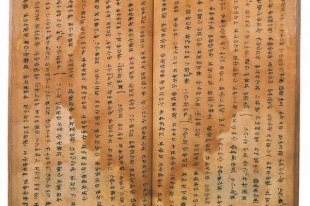
Tao explains that the exhibits were chosen from 150,000 artifacts and 510,000 ancient books at museums affiliated with the commission. These items include tools, seals, coins, costumes, ritual items, calligraphy and paintings. The texts are about political governance, the histories of China's ethnic groups, cultural integration and religion, she adds.