



Latest Fukushima leak exposes failures in nuclear crisis management









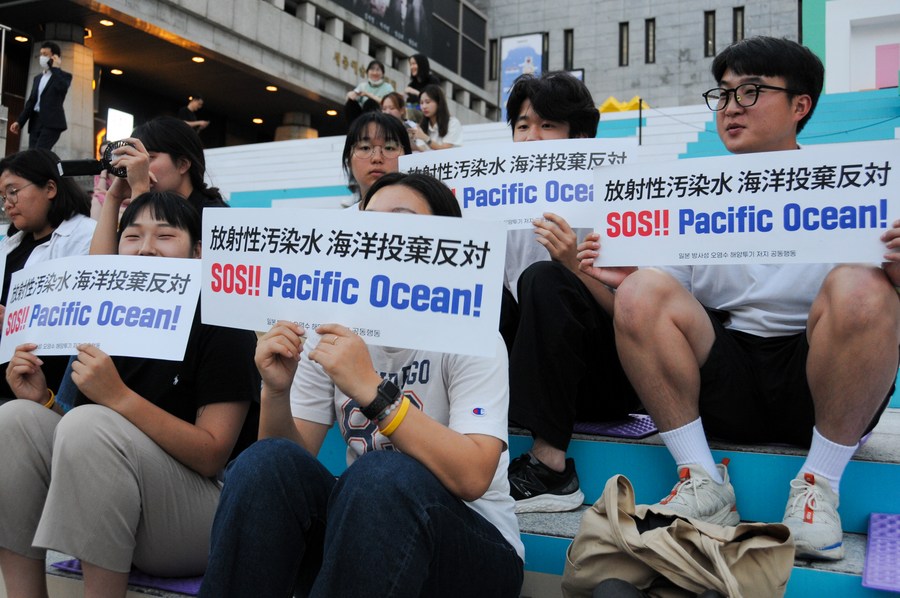
In a chilling revelation that sent shockwaves through the world, a new nuclear waste leak has unearthed the gaping crack in Japan's professed claim of responsible handling the accident at the Fukushima Daiichi nuclear power plant.
The leakage of about 5.5 tons of water containing radioactive materials from the plant also highlights the need for international supervision of Japan's controversial discharge of the Fukushima nuclear-contaminated water into the ocean.
It is estimated that 22 billion becquerels of radioactive materials such as cesium and strontium are contained in the leaked water, and the plant's operator, Tokyo Electric Power Company (TEPCO), claimed on Wednesday that monitoring of a nearby drainage channel did not show any significant radiation level changes.
This begs the question: What constitutes a "significant" level?
Nearly 13 years after the catastrophic earthquake and tsunami, recurring leaking incidents still hint at the utility's mismanagement and the Japanese government's inadequacy in overseeing it.
On Oct. 26, 2023, just one week before Japan started the third round of release, two men were hospitalized after being accidentally splashed with radioactive liquid at the plant. On Aug. 11, 2023, days before the first round of discharge started, TEPCO found leaks in a hose used to transfer nuclear-contaminated water, which, as it said, would not affect the discharge plan.
Even more concerning, the causes of these incidents have fully exposed the chaos and disorder of TEPCO's internal management. The leak on Wednesday stemmed from a valve left open during cleaning operations, while the October incident resulted from a loose hose channeling contaminated solutions. In August, TEPCO attributed a leak to cracks approximately four centimeters in length found in a hose.
The deficiencies in the fundamental equipment raise questions about the potential for similar occurrences and whether TEPCO conducts regular inspections of its equipment.
While TEPCO this time claimed that there is no risk to the public and that the surrounding environment remains unaffected by the leak, its history of cover-ups and opacity has eroded public trust.
For instance, it took TEPCO over two years after the 2011 tsunami to acknowledge that radioactive tritium had leaked into the Pacific Ocean, contradicting its initial assertions that the toxic water had been contained within the plant's premises.
Also, in February 2015, TEPCO admitted that since April 2014, it had been aware of radioactive substances from a rainwater drainage ditch linked to one of its buildings being leaked into the sea when it rained.
Until meaningful reforms are enacted, the specter of Fukushima will continue to haunt Japan, serving as a sober reminder of the country's failure to protect its citizens and the broader environment.





