


Tracking down the dragon throughout history










Wen Yiduo (1899-1946), a celebrated Chinese scholar and poet of his time, posited that the image of a Chinese dragon formed gradually during tribal wars: One particularly powerful snake-worshiping tribe, during their subjugation of other tribes, combined the features of their enemies' totem animals with their own one, to create something truly invincible.
This mighty tribe, which played a leading role in shaping the arch emblem of China, could have been led by Huangdi, the Yellow Emperor.
Su Bingqi (1909-97), one of the foundational figures of modern Chinese archaeology, proposed that the Yellow Emperor lived around 3000 BC, a time marked by "incessant wars given rise to by a combination of factors, including the accumulation of social wealth and the stratification of the society itself", to use the man's words.
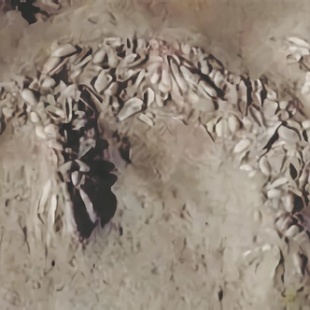
In 1980, four painted pottery plates with dragon design, dated to around 2600 BC, were found in four burial chambers in a huge archaeological site of 40,000 square meters. The site is in Xiangfen county, Shanxi province, in the Yellow River Basin area where the Yellow Emperor is believed to have been active.
"Out of the 1,309 crypts excavated on the site, only four contained the plates," Guo says. "Judging by their scale and holdings, all are high-level ones belonging to members of the social elite. It is clear that the dragon, which most probably commanded a spiritual significance in this context, had become a symbol of power and privilege, and most likely of civilization and early statehood."
If one thing unites the myriad forms of early jade dragons — more were made during the Shang Dynasty (c. 16th century-11th century BC) — it is their circuitous shape.
"If you look really closely, they resemble an embryo, or a newborn — be it a pig, a bear or a deer — which always tend to curl up, until it's time to stretch," says Teng Shu-ping, a leading scholar from Taiwan specialized in ancient Chinese jade.
These jade dragons, created by people whose society and art were still in their infancy, are "a reflection of a deep-felt amazement with the transformative force of life, and an intangible, cosmic energy that breathes vitality into the whole universe", she says. "This life force, an eternal pulse behind all creation and renewal, gives the Chinese dragon its heartbeat."