



Quake questions safety of nuclear power plants: China Daily editorial









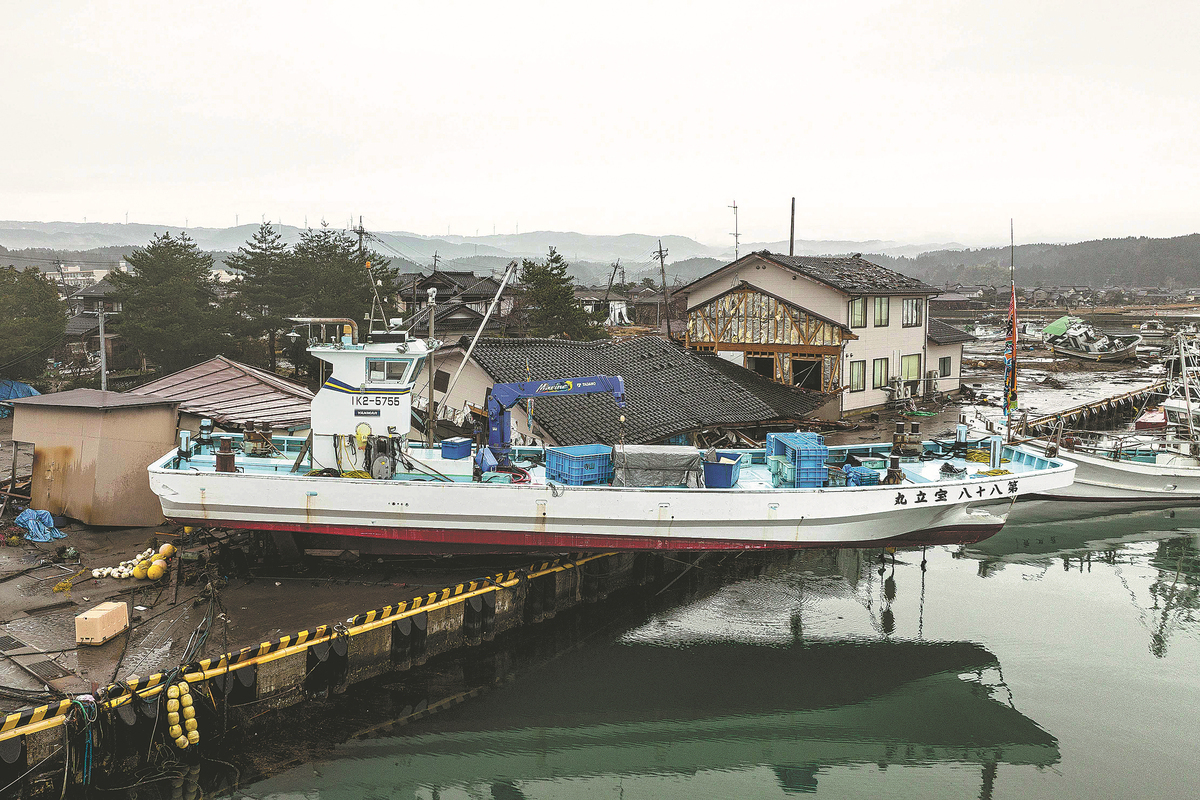
The 7.6-magnitude earthquake that hit Japan's Ishikawa Prefecture and nearby areas has so far left at least 77 people dead and 35 missing, and rendered at least 33,000 people homeless.
Japan's response to the earthquake — the deadliest since 2016 — has so far been viewed as a success, mainly due to the experience it has accumulated over the past decades dealing with the many natural disasters that have befallen it. The country's sophisticated earthquake and tsunami warning systems, high-standard quake-resistant building code, and a well-trained public ready to follow established emergency procedures, have all contributed to minimizing the number of human casualties and the damage to infrastructure.
But with hundreds of tremors continuing to strike the region, raising fears of landslides and further damage to buildings, Japan is still facing huge challenges carrying out rescue and relief operations.
China has expressed its willingness to provide relief assistance to its neighbor, and Premier Li Qiang has sent a message of condolence to Japanese Prime Minister Fumio Kishida, expressing deep condolences for the deceased and offering the Chinese people's sympathies to the bereaved families and the injured.
It is hard to imagine that any other country could have responded in a better way to a disaster of the same magnitude. Notwithstanding that, grave concerns have been expressed about the safety of Japan's nuclear power plants after the New Year's Day quake. Which is not without cause. After all, the memory is still fresh of the devastation caused by the 8.9-magnitude earthquake and the resulting tsunami 13 years ago, which struck the northeast coast of Japan and knocked out the cooling systems of three of the reactors at the Fukushima Daiichi nuclear power plant, causing a triple meltdown that spewed radioactive fallout over large swaths of land around it.
Tokyo's decision to release the nuclear-contaminated water used to cool the nuclear fuel rods into the Pacific Ocean, starting last summer, remains a thorny issue between Japan and its neighbors.
Fortunately, all of Japan's nuclear power plants escaped serious damage this time. But one plant in Ishikawa reportedly saw its electricity system partially disabled following the quake, while water from a spent fuel pool at another nuclear power station in Niigata Prefecture spilled over due to the quake, although no abnormality in operation was detected.
Japan relies heavily on nuclear power. Twelve nuclear power plants have been officially restarted since 2011, while another five have received permission to restart. Another 10 reactors are also undergoing inspections for a possible restart. It is imperative that Japan double down on its regulation and supervision efforts to ensure the safety of its nuclear power plants for the good of itself and the rest of the world.





