



Quake highlights safety issues for Japan's nuclear power plants









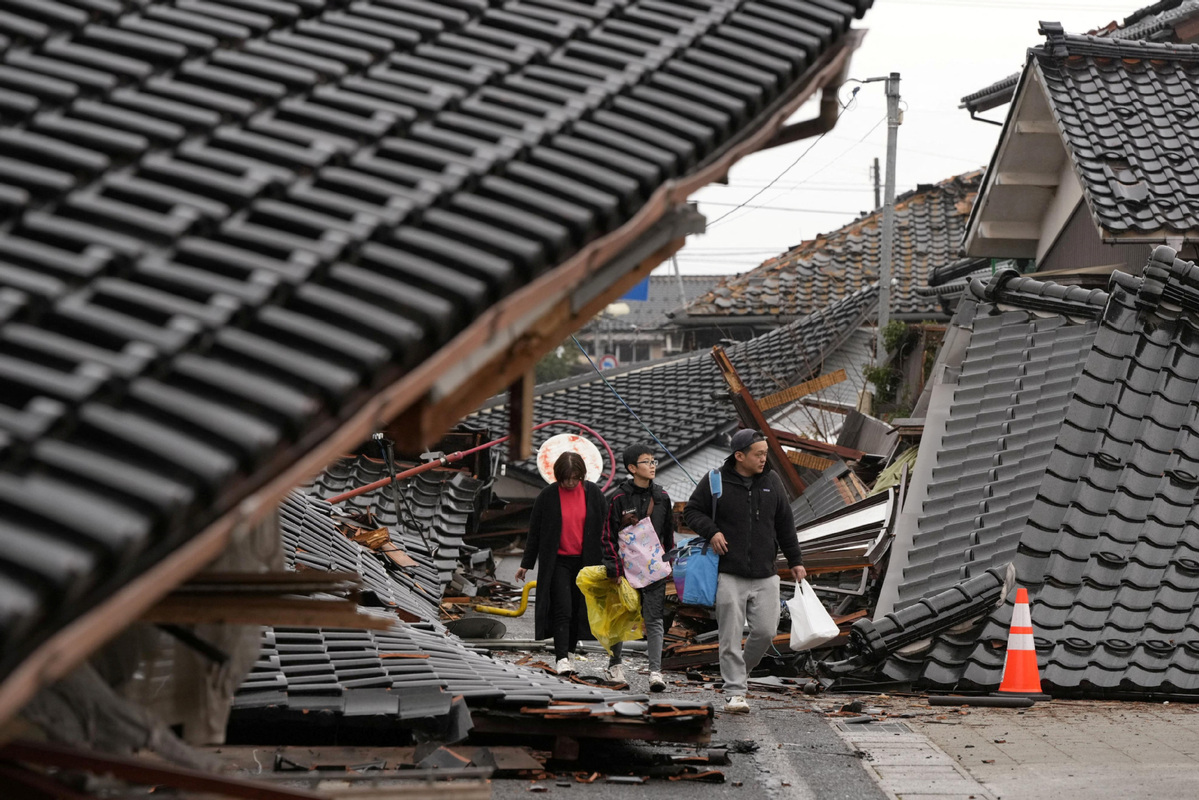
Japan has once again caught worldwide attention with the latest earthquake causing spent fuel pool water to overflow in a number of nuclear power plants. This comes even as the aftereffects of nuclear radiation from the Fukushima nuclear power plant following an earthquake 13 years ago still remain unaddressed.
On the day of the latest quake, the Japan Nuclear Regulation Authority said that one set of external power supply systems at a nuclear power plant in Ishikawa Prefecture had broken down, but because another set of such systems was running as normal, the cooling of the spent fuel pool was still going on. Because of the quake, water from the plant's spent fuel pool spilled into surrounding areas, but no radioactive material was involved. The Tokyo Electric Power Company also claimed that water from the spent fuel pool of some units of the Kashiwazaki-Kariwa Nuclear Power Plant's units 1 to 7 in Niigata Prefecture had overflowed and the water's radioactivity level was being ascertained.
It will take time to evaluate whether the spillover will have an impact on people or the environment. And the incident once again raises questions about the safety issues of nuclear power plants. Given that current technologies cannot fully guarantee the safety of nuclear power plants, the first thing all countries should consider is whether nuclear power plants can effectively withstand natural disasters such as earthquakes and avoid the disasters caused by human negligence.
The safety of nuclear power plants hinges on their ability to withstand natural disasters and a swift response to human errors, as well as the safe disposal of nuclear waste. All nuclear power plant reactors produce spent fuel, which needs to be disposed of at all times.
Being short on fossil energy, Japan is dependent on nuclear power. But the latest incident exposes that strengthened supervision of nuclear power plants should be a top priority for the country that is affected by around 2,000 quakes of various magnitudes each year on average. The spillover of nuclear wastewater this time also indicates that the wet storage method and technology adopted by Japan's nuclear power plants are problematic.
The earlier tsunami-inflicted nuclear leakage incident and the latest quake-caused spent fuel pool overflow should remind Japan that it is time to rethink its nuclear power management approach from the perspective of nuclear safety.
BEIJING NEWS





